The end of search (as we know it)
Listen on
Around the table
 Will BalBonfire
 Emma HollinsSynergy
Coming to SOS27?
| Dates | 24 & 25 August 2027 |
| Venue | Optus Stadium, Perth |
| Tickets | On sale 11 January |
Listen on
The Alchemists · episode 08
Transcript
Automatic captions, names checked:
[0:00] when you consider the bias of the language model and then the bias of the audience that’s built into the algorithm and you put those two together that has the potential to lead us to a scary place even if it’s not the intention hello and welcome back to The Alchemist a limited series podcast you quickly come to know as your number one love interest for State of Social 2024 my name is Andrés López-Varela and you can call me ALV um actually an old boss of mine was capable of pronouncing my name so that’s where it all started just to sign I should be and that’s that’s the rest of history as they say today we’re recording on the traditional lands of the wadjuk Nar people live at State of Social 2024 and I have to say I’ve been looking forward to this chat uh the
[0:45] whole the whole conference because I’m a card carrying Search nerd uh and I think we all need to be talking about the end of search as we know it excellent before we dive in I want to remind you that the entire um series of the Alchemists is now live wherever you get your podcast make sure you hit subscribe uh to see all the apps in your feed and with that it’s time to make the magic happen I’m very happy to welcome two Alchemist to the show today who are I think as nerdy as I am hello to Will Bal account director at performance marketing agency bonfire how are you will hello yes I’m good good to have you here good I’m great I’m excellent and Emma Hollins the principal experienced designer at Synergy wa’s largest energy provider hello hello thank you so much for having me so happy to have you Alchemist welcome to the show um before we get to this current generational shift in search that we’re living
[1:34] through I want to start by um uh going back to 2015 that is uh at least in my opinion last time we had a really like seismic change of the search landscape when I think that was the year Google revealed that searches on mobiles outnumbered those on desktops for the first time and so um you know I mean there have been a number of changes since search was you know invented obviously a number of iterations on the user experience as well since then um but that was the last time I think we had sort of like a reset because up until then we were thinking about SEO just you know like on page or technical SEO and suddenly everything was about location and context um as well as SEO which was a pretty big deal um and sort of saw the introduction importance of you know more content-led stuff right rather than only the technical stuff so
[2:21] um what do you think will that massive shift then kind of can teach us about how to adapt to this shift that we’re living through now oh it’s a good for a very long time particularly around 2015 16 17 didn’t you kind of feel that um you know you’d maybe do some research on your phone but if you had to kind of do anything real like buy something you’d still have to go to the desktop and kind of yeah finish the job maybe you print something out from there as well um yeah look if you don’t like change in response you’re probably kind of in the the wrong industry I think I don’t know what particularly we can kind of learn about um that shift from moving to Mobile other than hey if you respond and you respond quickly um you can you can benefit from that right like when Google kind of moved to more of a mobile first optimization websites that that
[3:09] weren’t optimized well for mobile fell behind so um I talked a little bit about it in my talk um basically it’s an opportunity um for you know a new incoming brand to to maybe outrank some of the incumbents so to scooper an established brand yeah exactly so I’d look at it as an opportunity it’s a good thing 2015 as an opportunity for you to kind of Leap Frog your competitors and I certainly think right now do your G is it an opportunity or is it a bit scary I think I mean you’re always going to have people who opposed to change um I think at a point though you have to adapt and it’s kind of your choices if you’re going to invest in it early and sort of you know capitalize it on that opportunity or be dragged up the hill by everyone else I think you know Tech drives a lot of that change and evolution and then it will bring the
[3:57] customers with it so as a at a as a brand and it’s your choice do you want to meet the C adapt and meet the customers with where they’re going and where they are you know we 2015 when there was that emphasis on mobile first and you know Brands had the choice did they want a clunky desktop website that didn’t adapt to mobile or do they want to be a really great mobile experience and cement themselves in their customers lives so I think it’s up you know up to the brand really you’re in control of your own destiny I think you know the smart advice would be invest now and get prepared yes yes it’s certainly though I think the the the the most interesting fact about that change I think is is that it really put the focus on the quality of the content uh you know perhaps even outweighing the technical aspects uh and those that all kind of is still in the mix you know we see we
[4:46] don’t know what the secret source is necessarily but you know all the tools tell us that the technical stuff matters less and less and what it used to the content stuff matters probably more and more now when we’re looking at um this change uh particularly when it has to do with new not new players I’ll say but but you know people’s preferences changing uh and people searching in places that they didn’t used to search um what do you see emmer as sort of the biggest driving factors in the disrupt in the disruption of that traditional search landscape yeah I mean I think you know genz as we all like to call them but you know beyond jenz just those who are a bit more techsavvy and sort of lean into that change as well searching where they are and they um I read it online the other day like they’re asking
[5:34] they’re not searching and so they are you know on social media or they’re going to chat to PT and they’re in the context of their own environment looking for the answer that is relevant to them um so I think that you know we will I think the future of search serves that well in the sense that um and will talked about it in his talk with the Google AI overviews having the answer that you want served to you um with a very little noise around it that noise is so right how many times you have such a like crap experience on Google like looking for your recipes and the pop-ups and the videos and you scroll to the bottom and know these are people that trying to obviously game the system kind of make money they should make money they written a recipe right like they’re
[6:25] entitled to it but it’s a pretty crap experience um I was really surprised with like how many people are actively like I’m self-confessed non- Tik Tok user I like actively chose kind of not to kind of get into it and I’ve been blown away by like how many people are using it what they’re using it for um and certainly like plenty of the the talks across the last sort of day and a half kind of shine such a light on that it’s um if Google doesn’t respond and give a better experience it’ll just become less and less relevant right absolutely we’ve seen this kind of flight away from Google um you know generationally maybe sort of literate like how Tech literate you are as well is determining that um who are the big winners of that change then right like where are they where are they fleeing to I know that for example you
[7:12] know I have held an opinion for a long time that Pinterest is a search engine not a not a social media Network um and I think many years ago it was it was said that they were like the number three search engine in the world who’s winning now from this change who’s picking picking up those kind of like you know users and who’s serving that lat and demand the best will well I dis I disagree I I don’t I don’t see so much like a flight away from Google like certainly um with our clients we’re not seeing declines in organic sessions to websites we’re not seeing declines in paid traffic to to websites um if if we look perhaps organic is like a really good Baseline right so organic session someone that’s done a Google search and not clicked on
[8:00] a paid ad and come organically through the website we’re seeing really growth year on on year on year um so we’re not seeing this dramatic um drop off um for for paid search we’re seeing um increased cost per click um and as for a number of factors and number one Google’s actually just manually putting prices up um more competition um more people kind of entering that space so our clients are having to spend more to to get the same same result um so from that aspect I’m not seeing a flight away from Google um but like absolutely we’re seeing people pick up different social platforms and engaging in different ways um I would suggest that um platforms like U Tik Tok and insta meta and stuff perhaps just Another Touch point along
[8:47] that Journey um certainly right here and right now we’re still seeing people come through to client’s website to complete a purchase from a lead or or get information are they still coming predominantly though through good Google or you know has has that organic traffic you know is it coming from Tik Tok or from Reddit when people are punching in questions into I’m so I’m sorry to say because I am like an advocate for more diversity and not this one huge Monopoly that is just but it’s it’s huge it’s massive it’s just it’s the the top channel um if you’ve got your your shopping orders absolutely normally organic um if the Shop’s on order um and by shop I mean just website having everything in place um and then then paid if if you’re fortunate enough to have the budget and pay for the traffic um and then like a very pale third and and fourth will be
[9:37] the social channels but I mean um maybe em you could speak to her more I mean these these platforms aren’t designed for you to click off to a customer website that’s not why people are there no and I think it you know I think as well as social I would say that chat GPT is in the mixed in terms of providing those answers to people um I think I think it’s always so um particularly with social so contextual to the search like if you’re searching for recipes I think you know that’s where we all you know we searching for hacks on how to do things like you know how to format my Excel or what’s this Excel formula like there’s a whole plethora of content on Tik Tok it’s wild um people go wild for EXL um but I think so in some contexts social search is really lifting but I
[10:24] think you know Google still is the big say for a reason we say I’m just going to Google something when we when we’re going to search for something um and I think they will adapt like I don’t think they’re just going to say oh no technolog is changing let it let it run we had a good run while we were at it but I think they will adapt and they’ll get there and they’ll you know pick up a lot of the learnings that the innovators have made in this space and roll it into their platform so I SP I spoke with um uh a person at the the conference and she was using chat GPT to um work out her not not citizenship but to get permanent residency I just thought what like a brilliant use case for C GPT to do that yeah cuz could you imagine Googling to try and do that yeah right
[11:13] like oh you’re going to get a whole bunch of rubbish you’re going to get a whole bunch of lawyers and immigration people that are pain shitty government websites to yes shitty government we you’re going to have no idea they’re going to show you all the different options and her experience with chat GPT just tells me what to do do one do three do three do four I’m like next step you’re permanent resident yeah still if she wants to use a lawyer she’s still going to have to kind of Google but maybe have a better idea as to what she’s looking for yes or be more prepared for that interaction at least yeah so that’s a good point because like I said you know Google is adapting it’s always going to adapt you know it’s it’s very good at it I guess um how do we think brands are adapting to this change and the behavior in the technology because I mean I guess with the dis maybe not the displacement of Google but certainly with those supplement M tools
[12:00] I think the example you just mentioned about um you know this person using chat to help them write a recipe I guess to you know for their migration um application it’s a good one and you know for younger audiences and those audiences that are more um you know Tech literate that are using AI is there like a really solid Playbook yet for how to make that shift how to adapt your Brand’s kind of online presence if you like and the user experience to make sure you’re not flat footed H it’s it’s really hard like it is really hard with the with the the many clients that I I work with um some of which are fortunate to have a a marketing team of more than one person and a a coordinator already it’s very difficult um even with an
[12:46] agency just to manage paid search um organic uh and maybe run you know through the meta platform two or three channels and then to take all of that data and somewhat make sense of it and is it actually working is it actually moving the needle are we actually getting a positive return on investment that’s really really difficult so in terms of um product shifting and changing and Tik Tok Ian has been on the market for ages now I there still a lot of clients difficult to respond to that and should we be running and should we be paying ads and how do we do it and it’s very difficult um for Brands to kind of change and and adapt to to what’s coming but what do you think in terms of the the way that um the user experience needs to adapt because presumably when people come in through different front doors or side doors or whatever you know like you can’t just
[13:35] serve them the same experience right yeah no absolutely and I think um something we have been hearing over this conference which has been so good was you’ve got to assess your strategy within like where the remit of your brand and where does your brand play and where are your customers playing or what do they expect from you and I think that is really I don’t I don’t think there’s a playbook for how we how any brand tackles this you know new world but I think Brands still have to look at it and figure it out and if you as a brand can work out what’s true to you and what’s true to your customer and then build an experience that is you know true to that and you know aligns with that um there are always going to be you know the the basic things or the I say basic but they’re so important like you know you’re going to have to work out
[14:23] what your SEO looks like in this new world and you’re going to have to get all those foundational things right but the experience that you are building for your customers in this new world work out what they want work out what they expect from you and then go and build that can we look to maybe um you know how the technology is changing for some cues or should we be you know trying to be on the front foot in order that the technology you know hopefully serves us rather than feeling like we have to be a slave to it this time I mean I think no one ever has a crystal ball and so if you’re not in the tech IND really yeah I left it at home I’ll go go back and get it yeah um the I think you want to be on the Forefront of it but you’re always
[15:10] going to have to be responsive in some like way and things are going to change that you didn’t expect I think understanding where it’s heading and getting you know the advice from your agencies or your consultancies or your experts in you know where they think it’s heading is always a great move but I think at the end of the day if you know what your customer wants and how how you deliver value to them and then can apply that as everything changes y then you’re going to ensure that your your maintaining your success throughout it’s if you drop the ball and you know go down the Garden Path with you know AI when your customers don’t expect that from you or want that from you then you know why are you doing it and why are
[15:57] you wasting your investment yeah totally agree i’ also Saye it’s it’s doesn’t have to be that competitive like it it’s still competitive here in Australia don’t get me wrong but you’re not going to lose out if you don’t jump on that shiny new thing tomorrow because it’s just been released you can you can take your time um one of our other speakers was talking about that 70310 sort of split for a but I love that right like spend 70% what you know is going to work tried and tested um do something a little bit more exp experimental and then spend 10% % kind of maybe chasing that signy new thing be genuine yeah people smell the rat like absolutely and that’s the thing like if you know your customer if you know that they’re not the kind of customer who’s going to like jump on all of this or evolve overnight like you you
[16:45] don’t you don’t ask them to and you don’t need to either you can be more considered with it and think about how it is eventually going to apply to them when they get there yeah I guess the interesting thing with search in particular is that it is very minimal user EXP experience uh people don’t need to learn a new like quote unquote language if you like to interact with that so it’s become so natural for them to search for something by typing in a word or saying hey Google and then like getting it to answer and then um you know asking for a recipe for ravioli or whatever like that is so frictionless uh and with AI generative generative AI um being added to that mix it removes the friction even more um that really at the end of the day that
[17:31] this shift in in search in the search landscape now is increasingly about removing friction right um and ultimately we might think that that’s a good idea but are we commoditizing this experience are we setting standards that are unrealistic to meet for Brands because we get really annoyed now when a web page takes more than 1.5 seconds to load for example you know yeah it used to be Miracle like you know as you should I remember when I was like busy people I was like I don’t know 10 and like going on the internet for the first time the fact that it took 30 seconds to load a web page was like magic for me right so so you know like we want to creat this friction you know with this shift into this new phase uh you know
[18:19] evolution of search is there not enough friction that we won’t value this stuff properly yeah that’s a great question I think in experienced design we talk a lot about seamless and efficient and frictionless and sometimes friction is actually good you don’t you don’t want friction to become frustration but friction can actually help you know make sure the customer is making the right choice as an example so as an example on you know this isn’t search but on your Uber Eats app you put your order in and then it gives you 5 seconds before it actually confirms the order and that would be classed as friction because it’s stopping you from what you want but when you go oh Bugger I should have added spring rolls you can cancel it and go in and do it so there
[19:06] are moments that friction is good and I think within search one of the areas that’s going to be that I’m probably most interested in and um how we ensure that this doesn’t become the case is that reliability and credibility of information and you know it’s going to be so seamless to get an answer that’s tailored to you and I can really see the role the Ali coming to give you the you want and reinforces your bias in the process so I would be interested in how search engines build into their user experience some friction to you know make sure that in the you know in the case where we’re serving up that information that is possibly and most likely bias how how where does the friction come in to um alert the user
[19:54] and to help ensure that the user doesn’t just go oh y no cats of the devil that’s great that’s it when you know they’re not actually they just think it is yeah that’s the problem isn’t it probably thinking cats the devil it’s wrong it’s wrong it’s wrong obviously we know that know don’t get me don’t get me on that high hor right um I wonder if if Google is perhaps not so much of an echo chamber necessarily favoring a a left or a right sort of agenda like maybe your social care maybe it is I don’t know depends what you’re searching for YouTube is certainly clearly you know yeah it’s very it’s very assertive with it with the way it directs content and the problem is AI still has biases built in and I think that’s been a lot a big part
[20:40] of the conversation and I don’t um quote to uh preach to be an expert on that by any means but I think when you consider the bias of the language model and then the you know the bias of the of the audience that’s built into the algorithm and you put those two together that has the potential to lead us to a scary place even if it’s not the intention yeah so I want to put the tech aside for a second but still talk about in related to what you’re talking about em um it seems like one of the most important things we have to kind of keep in mind is for marketers to adapt the way they show up in these I’m going to call them like search places I guess you know CU not always web sort of sometimes they’re sort of hidden in layers right search places based on what their customers tell them which is what you said so
[21:28] let’s say rather than being rigid about where and how you appear in search this is how this is how we do it this is how we want to be is it more important to be present across those multiple search places or environments is is it better to have an MVP in all these different places where people are looking for stuff rather than being like well we’re just going to be in four places but nail it what do you think will ah yeah it’s like another great one like in a perfect world you’d be like across multiple channels all the time but it’s just not it’s not it’s not possible and I don’t think it’s it’s necessary to kind of string yourself out as a marketer or marketing team or a department and do everything semi good or dipy toeing for just a few weeks and then pull out again because you didn’t get the ROI immediately um so me personally I I
[22:16] would much rather be in four channels and do it really really well and have really even when it comes to those search kind of places like you know I had this conversation with a with a ex- colleague a short while ago about Wikipedia and about well you know people might go and find information about your brand and their CEO and what to see if their values are like that’s a quote unquote that’s what I’m saying it’s like a search place or a search environment you know like good point you should have your Wikipedia up to date correct but I guess more like in terms of like a marketing strategy right you should have your your back of house in order correct information on your website wikipedias and and YouTube channels Etc but certainly as a marketing team executing a campaign I wouldn’t feel the need to be in multiple channels all the time like if we had a really good clear bottom funnel strategy that is great people are searching for XYZ product or
[23:05] service where we’re here we’re doing it well you don’t necessarily have to spend a fortune but do that well and have a really good middle funnel Channel you it’s not not so much whether we should be in Tik Tok or whether we should be on Facebook and Instagram but have a a good middle funnel Channel that’s giving people more information about you your USPS like what you’re about and your product or your service and and kind of giving people that little bit of extra information that um perhaps not going to find in the search engine but that’s kind of more your middle funnel um and then ideally then move a bit further up and have some always on a mode of branding of course that sort of fun stuff yeah yeah yeah absolutely I completely agree I think again like I was saying earlier it’s also going back to that brand experience and what’s expected of your brand if your Brand’s got no business being on Tik Tok and you don’t have the money and the time to invest in a Tik Tok strategy that’s
[23:54] going to work for you then like don’t bother being on Tik Tok so is the key really if your audience expects you to be somewhere even if it’s maybe non-traditional search place quote unquote for you you should be there if they don’t expect you if they’re not searching for you on Pinterest don’t be on Pinterest but if if you have some evidence that they are searching for you there set up a shop front there I think you can always lead the audience there if it’s someone that somewhere that the audience would be anyway like I’m probably not going to be trying to get to my mom on Pinterest um but if the audience is there and there’s a credible and relevant reason for your brand to play there or that they could play there then you can always you know look at that and weigh that up as part of your investment strategy it doesn’t have to be my audience isn’t looking for my brand name right now on Pinterest or on
[24:43] Tik Tok but if there’s a reason that’s true to your audience and a reason that’s true to your brand then sure if you’ve got the go ahead knock yourself out yeah knock yourself out if you’ve got the time and the money go for it but I think if you’re true to those things then that’s sort of the foundation of a good Strate yeah okay I want to run something by you both right I have a theory that this um shift away from the default way of searching for Stuff the change of the landscape is a reflection or a symptom of a broader movement broader cultural change of not trusting established authoritative sources in our society right yeah you can see what that you know where I’m going so we see it obviously in the like increasingly polarized response to traditional news outlets we see it in the rejection of Knowledge from experts and academics is sort of you know people suspecting that
[25:31] as being malicious the skepticism or the doubting of like long proven scientific findings and and mistrust of big public institutions has Google or the traditional search become the latest victim of this change I don’t know if they’re the a victim of this change but I think this changing trust landscape is really interesting and there’s a um report that’s done every year by it’s called the Edelman trust B and they found this year that um people like me along with Scientists were the trusted the most trusted audiences um but that was they were the clear winners and then everything else was sort of not trusted big golf big Golf and so I think the people like me thing there is really interesting because I do think we are
[26:22] seeing people go to social media to find answers to certain questions um because that’s where their peers are and that’s where the people that look like them and talk like them and you know are interested in similar things um hang out so that’s I think there is that shift there they’re fortifying the echo chamber yes absolutely which is very scary very scary yeah so maybe it is kind of uh part of that same societal movement yeah yeah and I do think that there I think you know there are contexts of search that suffer as a as a result absolutely but I don’t think that means that Google is you know dying or I think it just means that there are other areas where people go as part of
[27:08] their journey and as part of their process to get that answer um where they want to hear from people like them the recent something else which when we were when I Was preparing for this episode um which I thought is kind of related in a sense is the recent antitrust rule in the US um against Google’s advertising business that it was found to actually have created a monopoly um does that kind of obviously that’s different because that’s a legal finding how does that have the potential World to Change even more change the search landscape even more from what we from a marketing point of view like you know behind the curtain how we’re using it how does that potentially have the impact to change the way that we might interact with this Behemoth I I I think that there’s
[27:55] probably a general feeling that nothing’s going to change and it’s going to be the same and despite Google being found having a monopoly nothing will change and the the last time this sort of happened was at the turn of the century with the big sort of uh I was thinking more so the Big Oil Titans back at the turn of the century um but I’m glad you mentioned Microsoft because it it actually was fairly recent and it was only 1995 99 with the release of Windows 95 that Microsoft was ruled to have a monopoly and kind of forced to to unbundle its products um and so yeah that really interesting case right Microsoft had a really big Monopoly and they were bundling all of its products and squashing out competition and kind of not really giving um new browsers such as Netscape kind of a a chance to kind of grow that’s a throw back yeah so
[28:44] but they they were found having a monopoly and then they were ordered to break up that Monopoly like they were ordered to break up the Monopoly and there was a change in the white house and they never actually had to do that but it kind of changed the culture of the business and um there there’s there’s argument that it kind of laid these foundations for for Google and these other tech companies to kind of Rise off the back of that um so what what am I getting at is I I think it would be potentially a good thing to to actually break up a Monopoly with a company that has just such a strangle hold on such an important Market the search market across the globe um and then that Monopoly has like a flowing effect into its other services and obviously funds what what else it can do and the strangle hold that it has so um I I know if I’m I’m right or not maybe
[29:29] there’s a general consensus it won’t happen but it could bloody happen like they could break up that Monopoly and um give search engines such as perplexity or or other channels kind of more room to to grow so we could change the whole DMP landscape that’s for sure yeah I don’t know is it a good thing or is it a bad thing maybe better the devil you know yeah I’m sure Google would say that’s that was the case good me personally I I think it would be a good thing to to kind of democratize that that landscape a little bit more um yeah I can’t com on social trends whether that’ll prove echoed Chambers or not look we’ve been very measured and deliberate with our conversation so far so I’m very excited to ask you to play fast and loose with your opinions now before we finish up I have some questions that are meant to make you feel a little uneasy but don’t worry
[30:17] you’re Alchemist so you know it’s like just water off a duck’s back basically I’ll ask each one of you a question or two um and then you hit me with first thing comes to mind then the other one you know we can agree disagree we can get riled up or you know whatever might feel right yeah cool you’re going to go first well love it okay so as an alchemist you uh rewrite the laws of the universe with your new discoveries what is the latest thing that you’ve learned that you want the audience to know about to Don’t You Can’t Ignore channels and changes and you know I’m I’m 100% guilty of putting Tik Tok in the two hard basket and that’s not except you can’t do it you can’t do it so there’s one huge huge takeaway it’s um you can’t kind of just live in your own reality and own Echo chamber you really um need
[31:03] to consider all the opportunities I think it’s good L em as an alchemist you make a magical compound in your Apothecary that can wipe out one of the social mediums just like that goodness gracious which one do you use it on and why Tik Tock Tik Tok Tik Tok I know I J Zed at my door with pitchforks yes I just don’t think that on the whole it’s the best thing for the world y That’s um I think at the very least people would have like 2 3 hours 4 hours a day back in their lives and oh my God what could you do with that but I think this the echo chamber as we’ve been talking about is a big problem and I think you know we are seeing a lot of
[31:51] negative social impacts of that e um Echo chamber and so I would probably say to Tik Tok yeah sorry j High FES in the room here fair enough all this one you’re both going to answer right as Alchemists you understand the important relationship between humanity and the natural world the delicate balance that exists right so who runs the natural world is it cats or dogs oh oh cats cats yeah are you’re just saying that no I’m not a cat fan but cats would run the r i mean say that I you’ve raised a really good point there I think the cats no no dogs dogs dogs dogs sorry yeah no they they just could be a bit more ferocious I think they’ve you know I think they’ve become too kind I think they’re all the dog treats certainly my dog but I think
[32:39] become a softy yeah I think they become a softy but if they had to I think they’ve got it in they could step it up they could Step It Up imagine a little cat on the back driving that dog around I mean I think I think that would the dogs would overthrow eventually well and Emma this has been great thank you I really appreciate you both nering out with me this afternoon on this topic and helping explain this really important shift and what we should be keeping our eyes on thank you again for being part of this uh of this show uh and go soak up the rest of State of Social thank you thank you so much that was great it’s been fun there is plenty more to wrap your ears around on the Alchemists including heaps of in-depth chats with this year’s State of Social speakers so make sure you follow the show wherever you get your podcasts and if you like what you heard give us a festar review and tell a
[33:28] mate or two or three tell your mom the Alchemists is a co-production of State of Social and Creative Fix the show is produced by me Andrés López-Varela and Aaron Matthews from Creative Fix with additional production support by Cal McClain Meg Coffey is our executive producer on behalf of all the Alchemists I’m a I’ll catch you next time
SEO and Search are digital marketing staples, but things are changing. Generative AI is one key catalyst for this change. But are there other technological, cultural and societal factors at play? And what does it all mean for marketers and brands? Find out in episode 8 of The Alchemists.
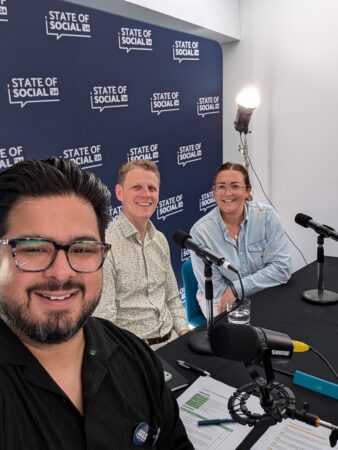
For this episode, our host Andrés López-Varela is joined by:
- account director at performance marketing agency Bonfire, Will Bal
- principal experience designer at Synergy, Emma Hollins.
Join Andrés, Emma and Will as they zoom in and nerd out about the seismic changes in Search, the impact of generative AI and more. They tackle all the big Search questions:
- What are the biggest factors driving the disruption of the traditional Search landscape?
- Is there a solid playbook for how brands should adapt to the evolution of Search?
- What’s driving the flight away from Google and traditional Search?
- Who are the big winners of this change?
- And much, much more…
Take this with you
- Put about 70% of your effort into what you know works, run a few experiments, and spend only around 10% chasing the shiny new thing.
- Add a little friction where it protects the customer, like a five second window to cancel an order before it confirms.
- Choose four channels and do them really well, rather than doing everything semi good or dipping in for a few weeks then pulling out.
- Run a clear bottom of funnel search presence, a middle funnel channel that explains your USPs, then always on brand activity above that.
- Keep your back of house correct across your website, Wikipedia page and YouTube channel, because people search there to check your values.
Keep reading
- SOS26Nine years in, and the theme argued back
- Delegate resourcesThe reading list
- Delegate resourcesWhat to pack for State of Social