Hard Refresh on digital audio
Listen on
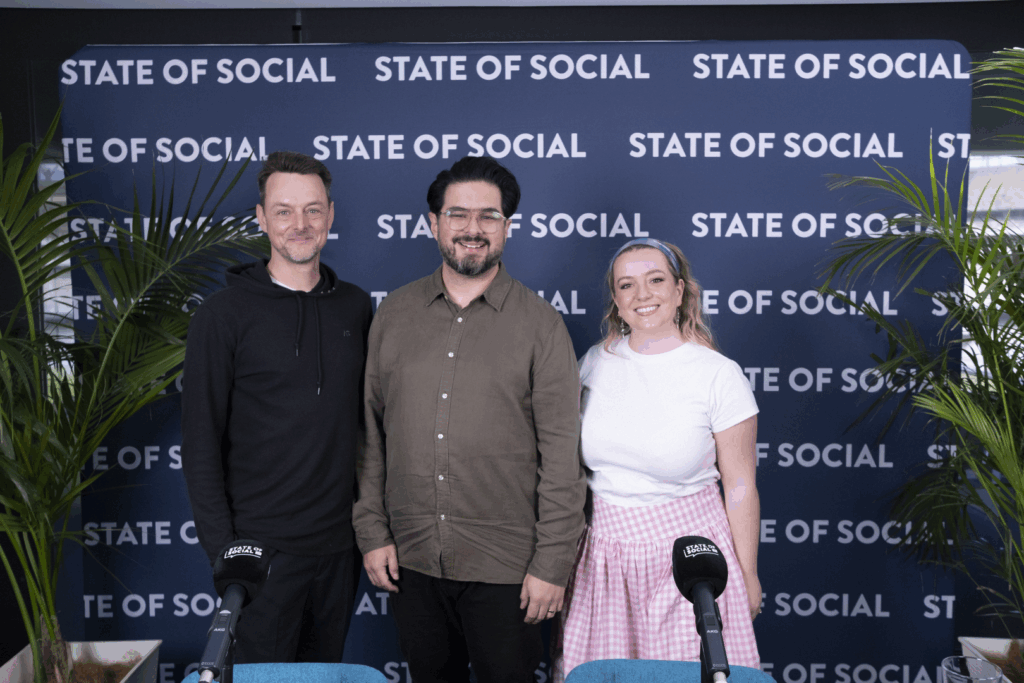
Around the table
 Adam JohnsonOriginal Audio and Nova Entertainment
 Georgia Tappysocial media consultant
Coming to SOS27?
| Dates | 24 & 25 August 2027 |
| Venue | Optus Stadium, Perth |
| Tickets | On sale 11 January |
Listen on
Hard Refresh · episode 09
Watch 37 min

Transcript
Automatic captions, names checked:
[0:05] Hello, welcome to Hard Refresh, the official podcast from State of Social 2025. You might ask, what are we doing here? Well, we’re polishing off the old standard issue State of Social Crystal Ball and taking a deep dive into the next 25 years of digital marketing. We’re talking about the trends, the technologies, the cultural shifts, and maybe even the controversies that are going to shape this industry for the next 25 years. and perhaps even society at large. My name is Andrés López-Varela. You can call me ALV. Everybody does. And today we are recording on the traditional lands of the Whadjuk Noongar people live at State of Social 2025. In this episode we do a hard refresh on digital audio.
[0:47] Digital audio has moved very much from background noise to center stage with podcasts, smart speakers, Tik Tok sounds, and brand playlists shaping culture online. But where does it go from here as platforms pivot to video first strategies? Will audio fight to hold attention or will it become the secret source behind every volume on experience in your feed? We’re going to explore how music, sound design, and voice could evolve in the next 25 years of digital marketing. And we’re going to ask, are we on the cusp of a new sonic boom for brands, or will audio get drowned out in the noise of endless scrolling and streaming on social? And joining me in the studio to talk about what’s next for digital audio is Adam Johnson, the co-founder of Original Audio and the chief growth officer at Nova Entertainment. Adam, welcome. How are you?
[1:31] I’m very well, thank you. Thanks for having me. Thanks for being here. And Georgia Tappy, social media consultant and honestly, in my opinion, one of the internet’s best Gen Zed whisperers. How are you, Georgia? I’m great. I’m so happy to be here. It’s good. I’m so glad to have you and and so happy that you guys are, you know, uh here to talk about this topic. Are you enjoying State of Social so far? Yeah, love love coming here for this. Um, it’s a just Yeah, it’s just a a brilliant event and just the variety of speakers and stimulus is, you know, it’s it’s one of the best out there. So, it’s good to be part of.
[2:00] Yeah. Great. Great. And you’re you’re you’re a repeat offender, George, right? I am. I came here last year and I had to come back. It was so much fun and I’m having a great time again. That’s excellent. It’s really awkward when you come here and then you don’t get asked back. So, I mean, that hasn’t happened to me yet, but we’ll see. There’s still time, right? All right. You ready for this? Let’s do it. Time to do a hard refresh. All right. All right, let’s start with something fun. Keep it light and breezy. If the internet in 2025 had a soundtrack, what would be on it? Like what Tik Tok sounds, what podcast, what music um would we be just, you know, playing over and over Georgia?
[2:32] One of my favorite YouTube creators, Todd in the Shadows, has been doing this for about 15 years and he does a recap at the end of every year and he mashes up all the like trending songs and I cannot wait to hear what it’s going to be like this year because I think like broadly speaking, we haven’t really had in American terms the song of a summer. like we haven’t had a big cultural song that’s taken over. So, I feel like it has been like every couple of days just a new song is trending and then it dies, which I’m very curious about if you look back on your Spotify playlist like what it’s going to look like. So, I honestly can’t answer that question. And what do you think, Adam, that tells us about the way that people are connecting with brands online? Uh, I I think as as George says, there’s there’s so much variety of particularly music out there that kind of has its
[3:13] moment and then and then pets away. It it probably is a deeper reflection on attention um a little bit. Um you know brands brands have their moment in the sun in the way that kind of pop culture icons do. I I think more than anything it it underscores the benefits of consistency. Um and I think one of one of the you know one of the soundtracks to social you know the past few months um I’m sure it’s come up on this podcast so far is is Jet Two Holidays. Yeah. Um, and that’s and that’s that’s not by design. That was by accident. But what was by design was the fact that the the consistent use of of voice and music allowed that to become a meme because particularly in the UK, it’s just so ingrained in people’s memory as the way that that brand goes to market in a very standard and honest way, which is this
[4:02] is why you should book your holiday through this company. Here’s a nice song and here’s a voice that is familiar to you. That familiarity and that consistency allowed that to effectively to become a meme and and I think every brand can it might not end you might not end up as a as a Tik Tok or internet sensation but it certainly means that you’ve that brand has built deep neural pathways in people’s brains that allows it to take on this whole new life. Yeah. Yeah. Yeah. It’s fair enough. And it’s good. I’m glad you mentioned that. We have had a few mentions of that. It’s definitely I’m sure that’s that’s the cover image of the playlist of the soundtrack of this year I think. Yeah. It feel it feel anything I would add as what Jordan I think I guess and I say this as a as a a British B in his mid-40s feels like that Brit pop summer
[4:42] in the UK has definitely been a thing and with is coming to Australia in in uh in November I’m I’m seeing I’m going to see a a wave of you know of of indie music coming back. I’m looking forward to that. Looking forward to that. I hope it’s not all Tik Tok sounds out there for us. Um, but you made a good point about the the the neural pathways that this stuff can create. You know, from Netflix’s to that sort of like Intel like we’ve all heard how and we know how sound can stick in the memory, how activates memory. Do you think this form of this sonic branding is underutilized or are we like actually on the leading edge of a real, you know, iconic sound for more brands than ever before?
[5:27] I I I still think it’s the domain of the few rather than of the many. Yeah. At the moment. Um and one of the reasons for doing original audio is to try is to try and you know help brands do do more of that. We our only plea is that that marketers obsess about how they sound as much as how they look. When you think about the 75page brand guidelines document that, you know, stipulates what the Pantone references of your third accent color, the Lego exclusions are. Oh, totally. A small space version and a and a reverse version. All all those kind of things that we we obsess over, you know, why marketers don’t obsess over the consistency of how they sound, I think is just a genuinely a missed opportunity. Why why do you think that is? Is it is it a lack of like training for one of a better term?
[6:11] Yeah, I think I think it’s a lack of awareness in terms of the benefits of it and one of the reasons why we love doing the talks that we’ve done this morning at State of Social isn’t, you know, to talk to an audience and show them the data behind why this stuff works. Um, and then just we’re just busy people, right? And it’s like, yeah, the logo is good. Um, and you know, off off we go kind of thing. It’s also less, you know, this sounds like a a wildly obvious thing to say. also less visible as a you know it’s not something you can put on a wall in your office. Um whereas actually creating consistent user experience when you think about an intore experience for a physical retailer that you know everything has a sound and that sound should reflect on the brand. Um and I think one of the things that what you know I think there was a danger probably three years ago that social became a a a mute medium. Um you know Instagram
[7:00] launched effectively as a photo sharing um app and it’s only since the advent of Tik Tok which has forced meta in into reals which has meant that actually it’s now very much a soundon experience. And some of the research that we showed this morning is that having a sonic Q in the first two seconds of a Tik Tok video, which is research done by system one um has like 191% um uh positive impact on brand recall by having a sonic Q in the first two seconds. So don’t think of it I think we all think of it as the the Intel inside because that was the that was the kind of the I guess the progeny of the whole thing. But actually brands brands don’t have to spend $100,000 on on a massive Sonic branding project. They can just make sure that every one of their Tik Tok videos has the same sting at the start and you’re on your way.
[7:46] Yes. Yes. Yes. I think that’s fair. It’s good insight. And I think of course you’ve mentioned it like that. Um the way that social media has gone all in on sound on I guess um for the most part um especially if you’re sitting on a train with a bunch of elderly people. It seems we’ve all got sound on. Right. It’s my biggest pet peeve to be honest. I will tell people off on trains if they’re playing things out loud. I’m like, headphones exist. They’ve existed for 20 plus years. Like, yeah, but they ruin our ears though, Georgia. Right. That’s true. I didn’t think of that. It’s the collective good though. If you’re on a busy packed 8 a.m. train to work, I don’t want to hear your TikTok sorry.
[8:18] That’s it. That’s it. That’s it. I mean, like they’ve turned these sounds and trending audio, Jet 2 Holiday is a perfect example, into hits overnight and then their creators into sometimes marketing, you know, um, must haves, you know, by the end of that week. What do you think this is about, George? Like, is this a trend or a fad? Or is sound perhaps like the last true differentiator for brands on social media? Such a good question. I mean, obviously sound has been part of the human storytelling since forever. Like, that’s how we’ve always communicated stories, oral story, oral storytelling, I should say. And I think you’re right. I think it’s an underutilized piece of law building. I think an example that springs to mind is Superman came out earlier this year and the creator of the movie created Spotify playlist where if you typed in Superman into Spotify, it would ready make
[9:05] playlists based on the character that you most identified with. It was very interesting to me and I was like, I’ve seen no one else do this and it’s a way of continuing to tell the story long past being in the movie theater, long past remembering that conversation you had with a friend. So yeah, I feel like great brands that do it well, wonderful. But I am always cautious about telling brands to do something if they’re not quite ready for it. I I agree with you, you don’t need 100 grand to do it well. But I hate when people jump on things and they haven’t thought about it properly. Like where how will we make this actionable for everyone? How will we make it easy for everyone in the brand to do it well? Like having a brand logo guideline. Is there a way of, you know, sonically showing people what we’re about? And do you think that like um in relation to that kind of readiness for brands, is there a sense perhaps that this is
[9:53] still a I mean you mentioned it earlier, it’s kind of a secondary consideration. It’s not as visual. Um but surely we’re all on social media chronically. Surely we know better. Like surely our own personal experience, Adam, can inform that knowledge gap, right? Yeah, you’d think so. You’d hope so. Maybe it’s um I mean, you know, when I think about content creators, um they’re predominantly thinking about how they or or their content looks. And I think from a production point of view to your point Georgia about how do you
[10:32] make it easy every content creation team in in a business or in an agency they need to be given it needs they need to be they need to have the folder on their desktop or whatever with all those little wav files earons you know sound design techniques or all the things that make up how your brand sounds readily available to drag and drop into into the content creation project. Um, and that’s not that doesn’t come readily to mind in the same way that they’re clipping they’re clipping videos. So, there is definitely an education piece to do and we’re kind of kicking around original audio kicking around like a lowcost branding product for purely for social media creators. So, from a from a usage point of view, you can only use on social. So, you couldn’t use it on TV or radio because that’s when your costs blow out. But here is a here’s a 3second
[11:18] Sonic logo, a 1second version, and six different sound objects that you can use that make sure that every video that you do has a level of consistency um and people immediately know that this is from Brand X. Is this a generational thing, Georgia? Do you think that, you know, um perhaps younger generations as they kind of come become baby marketers, are they more likely to understand this? I do think from my research on young people that they are more likely to listen to videos with sound off and I do think there’s an accessibility point there for other marketers to make sure you have captions obviously but I think it’s like this this sounds to me like a really great space and definitely the next level and I would like it to be more part of a marketing mix but I’ve worked for a lot of agencies a lot of lot of brands and there is a lot to juggle and sometimes I think unless it
[12:07] is something that is cried out for your specific target audience like you know that they listen the sound on, you know, that’s important to them, then I do think it it moves around a lot. And I can see why some content creators prioritize the visual look of it because we know no matter what, if you’re on social media, you are looking at something. That is the medium. As you said, Instagram started as a video, I’m sorry, a photo sharing app. So, I don’t know. I I don’t know if I can speak for an entire generation, but definitely What do you mean? That’s what you Oh, true. Give me three hours and do it in 1 hour. Um, no. I think I mean like as you’ve spoken about, it’s it’s a huge way of getting in someone’s brain like the earworm effect. And I personally am sick of hearing the Jet 2 holiday thing, but I’m over it. But I am a marketer and I hear it constantly.
[12:50] I think if you were that brand, you’d be ecstatic with that. You’d be so happy that that people are still milling that around and they’ve twisting it themselves. That’s like the key to a great campaign when people start to share it in their own way and make make their own make their own. Yeah. Even if they’re making fun, I think more brands need to lean into that. Like it’s sometimes a bit hard being like I don’t want to be made fun of. Well, sorry. People are doing it anyway. You might as well like lean into the joke and enjoy that moment cuz it probably won’t last forever. This time next year, next day to social, I bet you’ll all be like, what was that Jet 2 holiday thing? Yeah. We’re not talking about Bunnings cuz that that was last year. The Bunnings rave thing. Yeah, it was huge last year. Yeah. And the brand lent into it and they they put on the they put on the rave, you know, kind of thing and then, you know, it’s a firework, right? It flies and then and then it fills us out.
[13:33] But I think you’re right as a brand, if it’s not damaging, just absolutely lean into it cuz it’s reward. It’s reward for the investment you’ve made and the consistency that you put into into how you show up. It’s relevance. It’s demonstrating relevance. Yeah. Yeah. And I do think that speaks to your point about quality versus quantity. I’d rather spend a lot of time crafting something really important that lines up with the storytelling I’m trying to do versus trying to pump out a bunch of different audio cues that just don’t Yeah. really work. Yeah. Yeah. Um I want to um start looking towards the future and start talking with you know obviously talking about this 800 lb gorilla that is podcasting right.
[14:09] Yeah. I mean I feel like it’s all over my social like most of my social feed is like podcast like snippets of hope hopefully like what this show is going to be like where we do a snippet and we put it in people’s feeds. Um, and you know, like I guess thinking about the landscape over the next 5 years, is there much of a runway left for podcasts to grow in terms of their format and the style and the approach or are we kind of reaching the edges, Adam, of what the medium can do? It all it comes down to and we’re definitely not going to solve it on this show because um I’ve spent hours with various colleagues in the audio industry trying to get to the bottom of what what is a podcast like you know existentially how do you define what what a podcast is
[15:01] and I would say no we haven’t reached the edges because every time we do we then push those edges out into something else and I probably would have said 18 months ago we’d reach the limit of how from a format point of view what you can with a with an audio first podcast and from an audience literally amount of hours that people have waking hours they have in the day. We got to the kind of we got to the one in one out situation which is if I’ve got a new podcast I want to listen to I’ve got to stop listening to that too. Yeah. Um so thanks for the recommendation but I can’t fit in unless I just sleep less. Um uh so I but then and then but then videos come along and it’s and it’s and it’s you know it’s effectively given
[15:42] podcast a whole new dimension and definition almost. It’s clearly created a business model for Spotify and for YouTube. Um and therefore I think that I think I mean the the name podcast you know came from came from Apple based on a piece of audio that was downloaded to your iPod. Um is I remember iPods. it stopped being that you know 10 years ago. Um, so it’s it’s a word that’s almost lost meaning, but because of that has gained a level of kind of malleability. Yes. To it that is great. It’s if it’s it’s and I think a lot of creators now just talk about even as I did just then accidentally just talk about it’s a show
[16:20] um and it’s a show that is delivered on various platforms that the trick is um is being disciplined to go this is a visual first podcast or this is an audio first podcast because trying to do both is really is really hard. Yeah. Um, and from a Nova point of view, as a as a creator of podcasts and a partner with lots of creators to help them monetize their podcasts, we give them a lot of guidance on what are you trying to do first and foremost? What do you what are you best at? What and and and ultimately what does your audience want. Um, and just because there’s a camera in front of you doesn’t mean that you’re a TV star. Yes. The camera’s incidental almost. Exactly. But I do worry and and it’s a more of a human condition thing which is oh there’s a camera pointing out to me therefore I’m going to talk about
[17:07] very stiff and suddenly like hello there instead of being your real self which is which is the beauty of podcast. Podcast came from people having conversations and the minute I kept the cameras in the room it changes that dynamic. It also means that they started to change the language. Like I was listening to one this week and people talk about viewers um not listeners and as an audio guy that kind of like you know I’m screaming at the in the car. Um like you know old man shouts at clouds type situation. Um but um it’s um it is it’s it’s a you know we’re going through a a massive transitional phase of of the medium and like I say I think we just we it’s more healthy I think as an industry to think about them as as as shows of anything from 20 minutes to an hour long that appear on you know appear regularly in a
[17:53] feed be that you know on your YouTube homepage or on your on your um it Apple podcast app um that somewhere along the line unless Unless it’s ABC or BBC, somewhere along the line, someone’s going to make money from it. So, and is that through product placement? Is that through bakedin reads? Or is that through dynamic ad insertion? And the great thing is that creators have got loads of different levers to pull to get rewarded for the time and the energy that they put into creating these things. Yeah. More and more so, obviously. Yeah. Um and so, like, looking forward to the next 5 years, thinking about the format. And thank you. I I’m so glad that you made that that um important distinction between video and audio first. Right.
[18:33] So, because obviously we’re filming this, but it’s definitely audio first. We’re not doing anything special or spectacular in the background or anything like that. You know, there’s no cooking demonstrations between two fans. It is. Yes. Thank you. It’s giving Zackis, right? Between two fans. Yes. Yes. But what do you think um as we move forward, as we take this this um this format forward to probably become one of the preeminent formats, you know, of the internet, you know, in the next 5 to 10 years, eclipsing many others. Do you think Georgia that the intersection of um podcast and social media becomes, you know, more cluttered?
[19:08] Is this the way that people discover podcasts um you know, almost exclusively? I do think it is a huge proponent in if you are starting a podcast you do need to find a way of clipping your media. It’s frustrating I’m sure for a podcast host to be like we want it to be you want to listen to the whole 20inut thing but you know it’s almost like a trailer for a movie. You want that that sound bite that’s maybe a little bit juicy and makes people want to listen more. Um some of my favorite podcasts like the one I love most at the moment is Stabby’s World and he he answers listeners calls and he has a very offbeat to your point very casual attitude. is not stiff at all. And he’s great on socials cuz he is just answering as if a mates’s called him up and said, “I got too drunk on the weekend. What should I do?” And I love that. I think retaining that human element. And it’s I think the problem really is is like how do you be human
[19:54] and weird and flawed and still have brand deals and not be off-putting to brands. And I think I would encourage brands to not be so vindictive when they’re vetting podcasts and letting people be humans. They may slip up. They may swear. They may bring up parts of their past that aren’t quite, I don’t know, corporatized, but still finding a way because your your audience is obviously listening to them and connecting to them. So maybe loosening some of the brand guidelines when you’re thinking about sponsoring a podcast. That’s just my opinion. That’s fair enough. I I also want to talk about um you mentioned about podcast advertising, the way that it can be monetized. You both mentioned it. Um I feel like I skip through them as often as I can now. like you know the the the 15-second sort of like when I hear that that sound that it’s going to the ad
[20:37] break I just go tap tap tap tap I mean they feel like the audio equivalent of the YouTube like you know bumper ad I guess do you see this as a viable advertising channel in 2030s kind of become a mass channel moving forward especially for um creators that are perhaps smaller and looking to be rewarded for their effort uh and they’ve We’ve only got one or maybe two shows. Yeah, I it comes down to effectiveness really. So, so it it is it’s a challenge for the industry around we don’t have control over the end uh distribution platform in that as podcast creators or monetizers, we don’t control the UX of Spotify or Apple or whatever app you’re listening to. Um so um but there’s lots of work
[21:25] happening in and around the industry to ensure that that you know ads get listened to more than more than not. I I I I believe I genuinely believe that and we see this through effectiveness studies is is that they must be listening because when you run a podcast campaign whatever metric you’re measuring be that be that recall or things like uh you know the good old coupon code for example um it’s working. So so people people are listening. So yeah, there’s a subset of people that will that will skip and and we want to move towards a world where we know exactly how many do and therefore and therefore kind of address that. The other thing is that it’s almost it’s almost priced in as well. Like the podcast advertising is so cost effective that it’s almost you kind of it is priced it is priced into it. You’re accounting for that for that.
[22:10] Yeah. Yeah. Without having the exact ratios. It’s definitely it’s undermonetized in terms of the audience and you’re and the you know the the people trust that environment so much. They’re so engaged. Um that I think is still unbelievable value to advertisers. I think where we are what we are seeing particularly in a world where lots of creators are signing up to Spotify’s video deal, which is where all of your advertising is served by Spotify. Um um because you’re publishing as a video first podcast basically. um that um it’s almost we’re almost kind of what was old is new again. We’re going to go back to the baked in read kind of thing which is that sits within the content um uh because that bit can’t be stripped out by the platforms. Um and again measuring that is difficult because you haven’t got it’s not delivered off by an ad server and all those kinds of things.
[23:04] But actually, you know, the good old, you know, can of drink on the on the desk and then the person talking about it, um, the ads, the the end distribution point is they can’t they can’t they probably will they’ll find a way at some point because they’re clever people, but at the moment that stays in the content. Um, so it’s definitely more fragmented now with with Spotify’s video product, um, with YouTube and then with, you know, what we call DAI, dynamic ad insertion. Um it’s it’s it’s relatively fragmented, but the but the big shows like the Diary of a CEO, one of the ones that we we represent, even across those three ways that you can show up in that product, the audiences are just ginormous still. So you can choose one or you can choose all of them. Yes. Yeah. And I I think that’s um like I think the the the there seems to be a trend across all these conversations that we’re having on
[23:55] all these topics looking forward to the next 25 years or whatever where there seems to be a sense in our in our industry that we’re sort of going back to some old school ways of doing things. Um and I think that that’s really interesting and compelling. I wonder though, will Gen Alpha and Gen Zed recognize those tropes? Yeah, absolutely. I think this is like part of growing up on the internet is like what you said before that’s very common for young people to skip through the ads and I know it’s frustrating for marketers but it is it’s like when we used to watch TV and you would walk off during the ad break. You go grab boil the kettle. This is a big thing in England, right? There’d be the tea break. Put the kettle on. Absolutely. No, I meant like the energy crisis that would happen at 5. Yeah. Go on. Yeah. So, it is it’s human nature to be like, I’m being sold an ad and I don’t really feel like watching this ad. I’m going to walk off. And the goal, I think, for advertisers is to tell a story that’s
[24:46] just as compelling as the content, ideally. Like, that’s easier said than done, obviously. But if you’re trying to disrupt someone’s favorite program, and these podcasts are like hanging out with friends for some people. It’s like your daily way to unwind. It’s how you get home from work. Yeah, make that that ad part of the narrative and make it fun and exciting and make it like I’m sure you’re very good at this already. So, it’s just listen to the experts. they know what they’re talking about, but young people will skip the ads if you’re not careful, especially if they’re even a little bit boring. So, going back to that old like, you know, the can of drink on the on the desk and everything is actually probably more effective because they can’t skip that, right? It’s like movie product placement. I find it very jarring and I do think as marketers we’re much more attuned to it than probably regular people are. But even then, I’m like sometimes I will be
[25:28] watching someone eat a, you know, a Big Mac in a movie and I’m like, hm, maybe I do want McDonald’s actually. So, yeah, it’s affected. Adam says it works, right? It does work and humans are not as smart as we think we are and we are very susceptible and like this is the point audio stuff is can be very manipulative like music is very nostalgic for us and there’s a lot of memories associated with it so I would caution brands to be careful with that but also yeah have fun with it basically it’s quite powerful yeah other thing you could think about is having non-s skippable ads with a live podcast with some songs in the middle oh yeah it’s called the radio oh yeah that yeah that could be a Good, mate. That’s good. Well, well played. Well played.
[26:09] Um, I want us to look a little bit further now. I want us to like gaze into the crystal ball. Um, let me set the scene. Let’s pretend the year is like 2040. Gen Zed is as old as elder millennials are now. Um, they’ve got smart speakers. They’ve got AR glasses. Maybe they’ve got neural interfaces in their home. I mean, what role, Georgia, do you imagine audio playing for those audiences like in their in their house? Are we talking, you know, sort of a background sort of ambience? Are we talking more immersive worlds? Uh, or maybe something creepier like a brand’s literally whisping whispering in your ear in the bathroom going, “Time to brush your teeth.” Yeah, I actually think it’s going to be like that. And I don’t like forecasting in such a negative way. But I do imagine with the way Google is pricing some of these products, these like immersive
[26:54] products. I think it will be in a lot of people’s homes. And I think as Gen Z grows up, maybe they’ll get married, maybe they’ll have kids, maybe they’ll buy a house. They’ll go through the same patterns of adulthood that we all have where, you know, life is stressful, life is hard, you just want to relax, you want to give away some of your the things that are hard in life, like remembering to brush your teeth for some of us. Um, you might give that up to a a machine without maybe thinking about the consequences. And I definitely see this a bit already like people coming home and being like, “Hey Siri, play this playlist.” And I wonder again with the under 16 band that’s coming in, how much privacy, how much data we’re giving. I don’t know. I’m always very nervous about that. But in 2040, I do think it’ll be a huge part of people’s homes. I think some people might even have like a gaming room, which is literally just a place you can step into and you can explore whatever world you want and it’s very immersive with music just in one space. Yeah, that’s fair.
[27:41] And Adam, what do you think? Like what is the potential for digital audio in those sort of more ambient environments? I I think that voice will continue to voice as a way to interface um will continue to grow. We, you know, I think I think that we’ll look back on Siri and Alexa um and the like as kind of the very early days of getting rid of the need to use your thumbs to interact with the internet. Um because it is a we when you think about it like you know the way that I’m extracting information is like literally pressing keys kind of thing. It’s you know we look back and go well that was we’ll look back at that as that we think about fax machines now. I imagine like early man with his tools and carving stuff out. It’s like, yeah, we’ve always used our hands a certain way, but now it’s going to be about 100%. Yeah.
[28:27] And and you know, I’ve got friends with my my kids are younger, but I’ve got friends with with teenage kids and and they will walk around with one AirPod in their ear all the time. Um, and that’s and you never know whether they’re when you talk to them whether they’re listening to you or not. Choose not to listen as well. Even if they’re not listening to anything, they’re like, “Yeah, I’ve got my headphones in actually.” So it’s almost it’s a step towards kind of um you know bionics ultimately which is which is have having a having a because obviously an airpod is both a microphone and a speaker. So you have both you have both directions in terms of audio. I can you can command and you can and you can listen. And I think that I think that will only as younger people get used to I’ve always got something in my ears whether I’m chatting to my mates, I’m gaming or I’m you know or I’m you know I’ve asking chat GPT to do my homework
[29:12] for me that is that there is a a level of comfort with that that will as these as this generation then grows into being homeowners and and those kinds of things will be kind of it’ll be built into our lives. I think that the the fork in the road is going to be does that become does that mean that we all have our own unique soundscape in our lives which is so mine I’m I’m sitting next to you but I might be listening something completely different to you are from an ambient point of view and does that take away this notion of shared experience I I I remain optimistic in the human condition that we as people still love to share experience exactly that and it’s the reason why it’s the reason why again predictable thing for me to say but radio listening remains you know kind of rock solid
[30:00] because there is only one there’s only one thing that that ultimately if you’re in the car with you know seven seven different ages in the car that one thing which will serve all of them from a community point of view is something like that which is programmed for that reason. So, so yeah, look, I think that I think it’s I think it’s going to be absolutely fascinating, but yeah, voice voice will be everything. And I think we’ll have we’ll probably have a little AI pucks or something that we carry around with us that sits on the desk and you and you talk to it listening all the time. Exactly. Yeah. Yeah. So, um yeah, it’s going to be it’s going to be great. I love that. I love that. Before we wrap it up, we have just enough time for the refresh round. So, these questions are for you to just get spicy and no holds
[30:37] bar. Okay. In 2050, will brands as we know them still exist or will we have hit a refresh on the whole idea? I feel like we are moving to a place at least with social media. I can only speak for what I’m an expert in where brands have kind of crowded out young people in the platforms that they loved. Like I think about be real got destroyed by brands. Tik Tok setting that way. Um, it does feel like the life cycle of a new platform is people discover it, people love it, people share it with their friends, then their family, brands discover it’s cool, they take over, it stops being cool, people leave, brands follow them. So, my fear is that one day we will just be like brands off completely. Um, but I don’t know. It’s so easy to say that. What does brand mean from an existential Yeah. point of view?
[31:23] What’s one marketing buzz word, Adam, that you would refresh straight into the garbage? Oh. I know my answer. Oh, you can go then. Authenticity. It’s like, what does that mean? What are you trying to say? What’s the actionable advice you’re trying to give your client? Be more authentic. Well, the whole point of socials is it is there’s a camera in my face right now. I’m not behaving the way I would. So, yeah, I just think that’s BS basically. Uh I I feel like I feel like the metaverse seems to have come and gone.
[31:54] That’s an interest that’s an interesting one. It’s kind of like what what did what what is AI doing that the metaverse didn’t do and and and how different are they because it kind of it went boom and bust quite quite quickly. So so yeah that can that’s probably in the bin already. I’ll have to think think probably for the best though to be honest. Yeah, I agree. I definitely agree with the authentic thing like particularly working in in podcasting myself like you know you go to podcast conferences and everyone says just be authentic like yeah yourself just be vulnerable and what are the consequences of being truly authentic as well? I don’t know. I just like it’s a very glib answer, but No, that’s fair. It’s fair. All right. If AI got a chance to refresh your job description, what would it throw out? What would it look at and go, “Oh, you don’t need to do this anymore.”
[32:36] I I think AI is um is wonderful when it frees you up to do higher value tasks and I do a lot I still do a lot of low value tasks. Um and I’m I’m lucky I have a big team and you know all all kind of support systems around working in in a big company like I do at Nova. But you still find yourself, you know, busy work. Yeah. Yeah. Busy work, you know, things things expenses and and diary management and those kinds of things that that is I’m sure there are people that are way more way further down the curve than I am that have gone, “Yeah, mate, I was, you know, I was doing that two years ago. I need to kind of get on get on the train with that kind of stuff.” Yeah. Um but then it’s having the discipline to fill that time with high value, you
[33:16] know, genuine kind of value creation exercises rather than just doing doing more You’re doing more Um so yeah, there there’s a level of discipline there in terms of in terms of time allocation. For sure. Yeah, fair enough. That is such a good question. I think I believe that the low value stuff leads to more powerful highv value stuff. I think it is frustrating. doing a big part of my job is community management and reading horrible comments all day. But from that I get a lot of insight into my audience and know what they care about, what they don’t care about. So whenever I’ve thought about like offsetting reporting to AI or offsetting community manager to AI, I go well then I just be creating content in a vacuum and I don’t think it would be as effective. So maybe I’m I’m an anti-lite. Maybe I’m below the curve.
[34:00] But I just think at the moment AI can’t do much and do it well and not make mistakes that I would rather just do myself. It’s the reason I do this job. Yeah, fair enough. Fair enough. And uh when Gen Alpha refreshes marketing in 20 years time, they look back at us. What are they going to roast us for the most? I think that they will look back and particularly probably in the last 10 years and challenge how obsessed we got with performance. M um I feel like when you when George you were talking about brands and extentially what I what are
[34:33] brands I do believe the brands are they provide shortcuts for us as in as in it’s a promise and if the brand keeps that promise I know I’m going to get what I want from that and I genuinely believe that there will there will forever be value um in that and the fact that I think in the past 10 maybe 15 years um that as particularly through Google’s dominance of search that it We just got obsessed by cost per insert brand metric here. Um, click attribution. Yeah, totally. And I think I think the brands that will that either have fallen by the wayside or or will do are the ones that have insulated themselves against the the unbelievable change that is coming at us. um because their brand doesn’t stand for anything because they
[35:18] they got to they got they put all of their investment and thinking and and enterprise value into into you know into last click and those kinds of things and didn’t think about why do people spend time be that mental or physical with us in the first place and and whe whether our product is delivered I mean look at Netflix whether our product is delivered in the post or via the cloud um it’s I still trust this brand to do to do what it’s promised to do um and and that means you and survive disrupt, not survive, sorry, but you can definitely insulate yourself against disruption and gives you the permission to do new things as long as it’s as long as you stay true to that promise that you’re making. I like that. I hope I hope I hope that’s what Jen Alpha does. That would be great. Me, too. Yeah. Yeah. Well, thank you guys. This has been fun.
[36:00] I’ve really enjoyed this. I think there’s a lot of um potential forks in the road for digital audio in the next couple of decades. Uh Adam Johnson, Georgia Tappy, thank you so much for joining me for this chat. I hope you enjoy the rest of State of Social. Thanks so much. Thank you for having us. If you like this refreshing conversation, you’re going to love the rest of Hard Refresh. Join me and the smart minds of the State of Social 2025 crew as we dive into all the big topics to understand what’s coming next in digital marketing. All episodes are now live wherever you get your podcasts. And remember what your mom said, sharing is caring. So tell a mate if you like what you hear and give us a rating so other people can discover the show, too.
[36:38] Hard Refresh is a co-production of State of Social and Original Audio. It’s produced by me, Andrés López-Varela, and Aaron Matthews from Original Audio. Big thank you to Cal McClain for production support and to our executive producer, Meg Coffey. I’m ALV. Thanks for tuning in and join me again next time when we hit refresh all over
From podcasts to TikTok sounds, digital audio has moved from background noise to the cultural main stage. In this episode of Hard Refresh, host Andrés López-Varela is joined by Adam Johnson (Co-Founder, Original Audio & Chief Growth Officer, Nova Entertainment) and Georgia Tappy (Social Media Consultant) to explore what the next 25 years could hold for audio.
They debate why brands obsess over their logos but not their sound, how memes like Jet2 Holidays became earworms by accident, and whether podcasts have hit their ceiling, or are only just beginning. Together, they imagine a 2040 world where audio surrounds us, from neural implants to AI-generated soundscapes.
In this episode:
// Memes, music, and memory
Georgia points to Jet2 Holidays as proof of how sonic consistency can turn into a cultural meme, building “neural pathways” for a brand in the public imagination.
// Why brands ignore sound
Adam argues marketers will spend so much time on Pantone colour codes for how they look, but rarely define how they sound. He calls it a “missed opportunity,” noting sonic stings in TikTok ads boost recall by 191%.
// Podcasting’s evolution
The panel debates whether podcasts have peaked; Georgia sees video podcasts as expanding the medium, while Adam worries cameras risk stiffening the natural intimacy of conversation.
// Advertising in the audio age
Baked-in reads and product placement are making a comeback as the most resilient formats, even as audiences skip ads at record rates. The panel likens it to radio jingles and old-school TV tea breaks.
// The sonic future
Looking ahead to 2040, Adam and Georgia imagine homes where AR glasses, smart speakers, and neural interfaces make audio an ever-present layer, raising questions about privacy, shared experiences, and manipulation.
This episode was recorded on the traditional lands of the Whadjuk Noongar people, live at State of Social ’25.
All episodes of Hard Refresh are now live on YouTube, Spotify, Apple Podcasts and other podcast players.
Take this with you
- Give your content team a ready folder of brand sounds: a short sting, a one-second version and a few sound objects to drop into every edit.
- Decide whether a show is audio first or video first before recording, and build for that one.
- When the internet starts remixing your brand and it does no harm, join in rather than shut it down.
- When vetting a podcast to sponsor, loosen the brand guidelines: the host’s unpolished voice is why people listen.
- Make ad reads as good as the show around them, because younger listeners skip anything boring.
Keep reading
- State of social indexHere’s how social really works in Australia
- SOS26Nine years in, and the theme argued back
- Delegate resourcesThe reading list