Hard Refresh on culture-making
Listen on
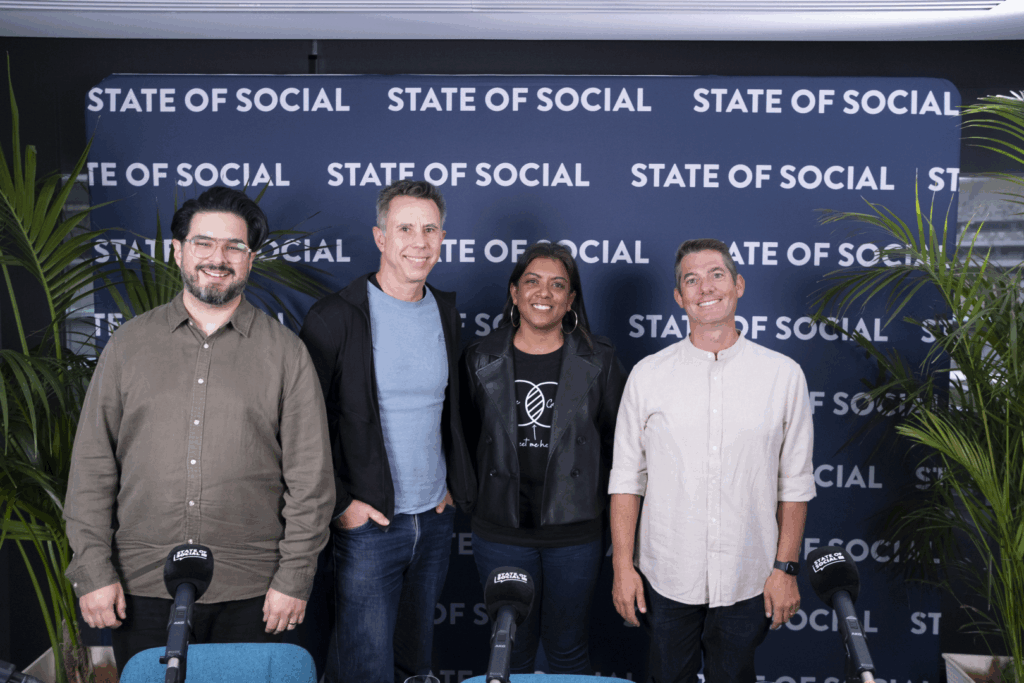
Around the table
 Jonathan Harleymedia and tech executive
 Tess PalmyreBrandable
 Tim DugganDigital Publishers Alliance
Coming to SOS27?
| Dates | 24 & 25 August 2027 |
| Venue | Optus Stadium, Perth |
| Tickets | On sale 11 January |
Listen on
Hard Refresh · episode 10
Watch 39 min
Transcript
Automatic captions, names checked:
[0:05] Hello, welcome to Hard Refresh, the official podcast from State of Social 2025. What are we doing here, you might ask? Well, we are polishing off our standard issue State of Social crystal ball and diving deep into the next 25 years of digital marketing, trying to understand the technologies and trends, the cultural shifts, and maybe even the controversies that are going to shape marketing in the next 25 years and society at large. My name is Andrés López-Varela. You can call me ALV. Everybody does. Today we’re recording on the lands of the Whadjuk Noongar people live from State of Social 2025. In this episode, we do a hard
[0:41] refresh on culture making. Culture has always been the setting for marketing. But in the next 25 years, will marketers and creatives be bystanders? Will they be genuine culture makers? Will they be parasites? We’re going to dive into the ways brands might create culture-defining moments in the future, how cultural movements might rub up against marketing strategies, and whether authenticity can survive the commoditization of identity and values. With politics, climate, diversity, and technology all reshaping society and our expectations of one another, it seems the stakes are higher than ever. So, do
[1:17] marketers help write the script for tomorrow’s culture, or are they just trying to remix someone else’s track? All right, I’m so happy to have a trio of big thinkers on this topic in the studio today. I’m very happy to be joined by Jonathan Harley, media and tech executive who has worked at Canva, Twitty, Twitter, 60 Minutes, and more. Jonathan, howdy. Thanks for being here. Hey. Yeah, look great to be here. Very happy to have you. Thank you. Tess Palmyre, who was named uh an ad news champion of change in 2025 and who was also the founder of Brandable, an agency that’s building inclusive brands. Tess, so happy to be sitting across from you again. It’s really great to be back. Thank you. and Tim Duggan, award-winning author, columnist, and chair of the
[1:53] Digital Publishers Alliance. Thank you very much for joining us straight after your your deep dive presentation. Tim, thanks for having me. It’s going to have a great hopefully have a great conversation. Yes. Yes. We’re getting to the end of State of Social now. It’s almost it’s getting to the end of day two. Has everyone had a good time? Fantastic. Yeah, it’s really good. Such a great vibe in the room, isn’t it? It’s quite amazing. I I um spoke three years ago, but I was on Zoom. I remember and it is I I obviously don’t feel a thing when you’re on Zoom. You just see this room and it’s quite amazing to see the community of people and the number of people. Yes. Yes. It’s phenomenal. It’s such a great event for my money. And of course,
[2:26] I’m not contractually obligated to say this, but I will say it’s I think it’s the best marketing event in Australia in my in my opinion. Anyway, everyone ready? Ready? Absolutely. Time to do a hard refresh. I know we’re going to talk about the future here, but I want to ask a question first about the recent past. Kind of help us get our bearings. I’m going ask you to jump into the fire first, Tess. When you think of the biggest cultural moments of like the last say five years from, you know, like Black Lives Matter to Barbie, how much credit or how much blame do you think belongs to marketers? Like are we leading this culture or are we hitchhikers on this culture? That’s a really great question. I think um for the most part we do we do really
[3:07] like shiny things and when there’s something we can you know bandwagon to jump on it’s really tempting and it’s really hard to to go against that you know that temptation but um I think some people do go against it. They’re the ones that are going to challenge whatever the status quo is or whatever the norm you know messaging is. They’re going to challenge it. um it’s just too tempting. I mean, there are opportunities there. It’s really short-term gains. So, you know, I think people like to jump on board and um make
[3:41] the most of it. There’s always exceptions to the rule. Um you know, I always talk about that in in my presentations and other talks that I’ve given in other places. You know, you have to decide whether you’re going to reflect the world as it is or the world that you want to see. Like, are you going to perpetuate the status quo or will you challenge it? And I think that that really comes down to the individual marketer. What do you think, Tim? I think we’re entering a new era of brands where I think that brands have been pushed a little bit to the side. Yeah. Um I particularly when you think
[4:23] about ways in which brands in the past might have led conversations I feel brands now have to follow conversations and I think this is coming from a global perspective. So think about Trump in the US for example um something that’s happened this week was a logo got changed of Cracker Barrel if you saw that which is a um chain of restaurants in the US that changed their brand and Cracker Barrel had a a man um sitting like sitting on a rocking chair next to an old barrel and they changed their logo. They refreshed it and made it a little bit more modern and it
[4:59] entered the culture wars. Donald Trump, the president of the United States was tweeting about the brand, the logo saying go back to what it used to be. All the conservatives then boycotted it. And what I saw 4 hours ago is they’ve gone back to the original brand. Back to the original brand. And I kind of feel that brands are now kind of part of this like washing machine. I know that’s an US example, but they’re part of this washing machine of they’re reacting to what happens in the world instead of leading what happens in the world. I think that’s a really interesting um point cuz I’ve been talking about this with quite a few people um and I talked about it in my my session yesterday. I think you’ve got to be true to your
[5:38] values. I don’t know if you saw the Bluey session. Yes. You know, be guided by your values. the brands that stick to their DNA and who they are, they can I still think they can ride through that. Not many brands do. Yeah. Except when except when values are all good and important, but when politics and the president, the most powerful man in the world, steps into your logo redesign. Yeah. Like what can you do? You might have all the values in the world, but the CEO is getting thrown under a bus. You’re still going to a brick. Yeah. You’re still going to go back to the old logo. And I I just think the fact that the president of United States is talking about a logo change, which is something that really concerns people in
[6:15] this room who spend all this time on it, you like that to me is just wild. It’s become part of the culture because what you’re seeing here is both an acceleration of culture and a magnification of the stakes effectively or the sense of the stakes. So in other words, things go bigger, cultural moments go bigger and they move much more quickly. Right? So that’s a great example where suddenly what should have just been a pretty rudimentary refresh, brand refresh became this great cultural, political,
[6:52] you name it, moment about which is, you know, of course in some ways just super cynical and calculated and distracting, but is also powerful because it’s feeding into what is this really acute sense of identity or an identity dynamic that’s happening politically, culturally, etc. And to your point, Tess, that’s why the values piece as an anchor is all the more important as that I think of it as balanced in the hole in these kind of cultural seas that are all the more rocky and all the more
[7:30] turbulent that that all brands are trying to navigate on. Absolutely. I think this relates to this kind of leads me into a related topic which is about um purpose the use of purpose in marketing. I think brands have hit this hard especially since the pandemic. You know, I think maybe in some ways maybe we’ve seen overcorrection. Not sure, but it feels like, you know, played out or disingenuous at this stage, but it does seem like those brands who say that their values are in some way perhaps aligned to whatever their interpretation of purpose is. Um, like does that need to stay in the brand toolkit for the
[8:07] future, Jonathan, or like has it become this kind of expensive boondoggle that we can’t get rid of? It absolutely has to stay. And one of the primary reasons why it has to stay before you even think about audience or customers, it’s actually increasingly an important part of recruitment. I think we’ve seen this massive and you know, Tess, I’m sure this is familiar in your work. You’re seeing the next generation of um of of workers and employees. And you know, Tim, it touches on your work as well. They expect a an employer or a
[8:44] brand a business which has a very clear sense of purpose to help them understanding the meaning of how they’re allocating their time. So even before you get just you know as you’re building and and running a business to getting the right people in you need that clear sense of purpose and I think that is equally reflected out in the external in the public in the consumer realm because where it’s most powerful is if you can get that alignment that internal alignment between how a team and a business is running and how it’s turning up in the outside world that’s the red
[9:22] thread that you need to achieve. And again, can you do it without it? Probably. But I think it’s really hard, too. Yeah. I’m the biggest fan of purpose in the workplace. However, I’m starting to become really cynical about it. I am particularly seeing the way that things like diversity and DEI um around the world has been a little bit thrown to the side by political minations. And you can’t tell me that there’s organizations that wouldn’t have said that part of their purpose is making sure that all their employees feel valued or that everyone has a say and then political minations happens and DEI
[10:02] gets a little bit thrown down and the businesses just throw it off the side and keep going because their purpose is to make money. I think that’s not real purpose, you know, like it comes totally agree. Yeah. So I think the difference here is um is your marketing team using purpose as some sort of marketing lever or is it a real part of their of the brand’s DNA? And like you say, you know, it’s about attracting the right people. Your people make the brand. even if it’s not a um
[10:38] service, you know, um brand, you know, even if it’s a product based thing, they’re building the products and their thoughts and the decisions they make go into the experience that people have of that brand. Yeah, I had a really interesting uh firsthand experience of this um at Canva as we were building out the partnerships team at at Canva where I’ve always think it’s about value, an alignment of values and then a creation of value, right? Especially in the partnerships game and I actually had an incident where prospective partner hopped I hopped on a zoom call. It was middle of co and they led with this is a
[11:17] great partnership because we’re both missiondriven purpose driven values driven businesses and and established that as a clear fact and I was I was like great tell me tell me where you see the alignment and they couldn’t so they just said it because they just asserted it but there was nothing there’s a slogan on you could just see through it straight away I was just like and I literally was just like honestly We start with values, then we talk value. Totally nice assertion. It’s not there. Thanks very much. And it just didn’t stack together. We didn’t
[11:51] go any further. So, you’ve got to be able to walk the talk. It’s got to have, you know, it’s got to actually mean something. And and sadly, I think we are in this moment, Tim, where where that is being really sorely tested. Yeah. Uh, and in many cases, you know, the results aren’t great. Yeah. I I think I think purpose is one of these things that in the easy times, yeah, it’s so easy to say it and it can be meaningless words on a wall and then hard times happen and you have to make a decision. Are you actually going to live by that purpose or is it just something
[12:29] that you said in order to attract good talent? And we are seeing, I think, some businesses and some brands um either living up to that or as Warren Buffett said, when the tide goes out, you see who’s not wearing any swimmers. Absolutely. And that’s what we’re seeing. I mean, Target um in the US was an example I used yesterday of of a a brand that just bailed this year, you know, after all the anti-Dei backlash that happened in the US and the political pressure. they backed right off their DEI commitments like a lot of you know a lot of companies did. Um their CEO um announced that he was going to step down just last week.
[13:08] Um and their competitor Costco in the US their foot traffic has gone up. Um Target has gone down. So the difference though is Costco was consistent with their values. Wow. Um all the way through. Consistency is key. Yeah. And I don’t think people are going to forget this. I I I think you know when a brand times will change you know political is the one constant is that change is always going to happen and there will come a moment again where target will realize that it’s beneficial for them to come out and say we actually support every person and I don’t think people are going to forget the the people have long memories
[13:46] and um I think it’s great that it’s catching up with CEOs and with businesses. Yeah, absolutely. So I want to thank you for that. I want to um you know move forward a little bit in time. Join me in the you know 2030s let’s say you know flying cars, hoverboards, all that kind of stuff. Let’s make a reasonable assumption that culture as you said Jonathan continues to move at like warp speed. Um you know even faster than warp speed. Um and that there isn’t that’s kind of dissolving the idea of monoculture. You know that there is no monoculture at all. It’s just fragmented into a million subcultures and it’s driven by everything from Tik Tok sounds to, you know, spicy subreddits and AI slop, uh,
[14:26] you know, all that stuff, right? Um, imagine that’s the space, right? And tell me, Jonathan, do you think marketers should even try to play in that space? You made the point before that it’s all, you know, culture is moving so fast and it gets so big so quickly, but then it also disappears really quickly and we move on to the next thing. And is this something it’s should should marketers just kind of stay out? It’s going to be so hard to make anything meaningful that sticks. Uh look, I think it depends. I think it depends on the brand. I think it depends on the strategy. Uh and but what I would say is you just can’t you can’t escape
[15:02] culture. You can’t ignore it. So you’ve always got to be keeping a very strong eye to um you know what is happening, how you’re playing in it. I mean I think there’s huge value in opportunistic cultural moments and leveraging those. You know I think as was said yesterday, you know, timeliness beats perfection every time. So if you if you can be in that moment and you can leverage it, fantastic. But you know that’s um that’s not an easy thing to do. So you got to you know so that’s again also about the sort of empowering your team being able
[15:40] to move quickly being able to you know bounce to that moment and having that the right sort of governance around it. I mean the Cracker Barrel example is a great example right you know like what was it say like between two or three days culture sucked it up turned into something big Trump talked about it and then it’s kind of like okay well now let’s nothing to say here. It’s it’s it’s seems to me in the future it’s just going to be too fast for most brands to actually take advantage of that. But what’s the alternative? As in the market is just not going to market. I think the marketers are going to have to
[16:15] find a way in order to insert themselves into whether that’s the AI slop or whether it’s the you know social video feeds going down to 1 second views or sub one second views. you know, if the trajectory continues, you’re soon going to just second one second video. Yeah, totally. But just automatic thumbs. Um, but I think if you want to market something, you’re going to have no choice but to jump in and play around. And I think yes, there’s a lot of negatives and there’s going to be a lot of AI slop and all of the things that come with that, but I actually think it’s going to have as many opportunities
[16:52] in it as well. So I think AI slop, which is arguably already here, y is actually only going to show good content and let good content shine. Think of your LinkedIn. The amount of times when you can tell a post has been written by AI means that when someone comes and says something that is a little bit honest or is a little bit um different, it breaks through. Yeah. And so I actually think that in a sea of sameness um there’s going to be real opportunity to be a little bit different and that’s what marketers need to jump hold of, grab hold of. seems risky though. What do you think, Tess? I think humanity always floats to the surface. So, you know, at the end of the
[17:31] day, we’re looking for something real. We like perfection. We like efficiency. We like to be productive and then we feel a little bit dead inside and we gravitate back to something human and something a little bit chaotic and messy because that’s that’s who we are. So yeah, like to to add to your point, Tim, I think yeah, we gravitate to those LinkedIn posts where it’s like, yeah, there’s a typo, but this is real. 100%. And I connected with it on a much deeper human level. And that’s so refreshing. Yeah. I think I think social as well that that we’ve moved past beautiful photos of influencers
[18:07] into the era of real influences and, you know, less no makeup. And I think we’re craving humanity. We are. I think we’re really trying to find it. And I as an optimist believe that AI is going to help us find our humanity because when everything becomes robotic and everything, you know, every social video starts looking the same and every soon marketer is going to be using AI to create the same pack shots and the same headlines that’ll be tested a thousand times optimized with an inch of Yeah, I think there’ll be an opportunity for someone to come in there and just do the complete opposite and that’s when it gets get attention. So I think it’s I’m actually hopeful that the future of AI
[18:48] means that the humanity is going to shine through. Yeah, absolutely. I mean I think you know things like the anti-DI backlash when it happened I was thinking you know what’s happening in the world kind of thing. It was necessary and it was actually inevitable when you looked at the undercurrents the culture wars you know all the things that were going on in and around it. It was actually a necessary part of us moving forward to the next chapter. you know, the push back and then really questioning like is am I going to stand by that or am I going to pull away now because there’s, you know, there’s a move away from supporting DEI.
[19:25] It does make you stop and question it. If it’s something meaningful, you’re going to follow through with it. Yeah. Thank you. Uh, I want to keep going ahead like just, you know, more like towards the Jetson’s future. Are we in which year we in now? Let’s say 2040. Wow. Okay. I did not ask our ages in 201. No. Well, we’re we’re all still in our mid30s, I guess, you know. Um, okay. Um, don’t laugh when you say I was thinking of myself. I’m thinking of myself. You said we’re in our mid30s and coughed. Cough and splutter, you know. Um, uh, well, thanks for that.
[20:01] This doesn’t just happen by itself, you know. Yeah, of course. Of course. Yeah. All right. Well, you volunteered yourself now for this question. Yeah. Um, do you think we’ll see brands as kind of cultural institutions in their own right? You know, I I I have this idea or this thought that an organization like an LVMH, for example, could supplant Vogue because of the commercial models that work differently and better because of their integration with a bunch of other cultural, you know, their sponsorship of Formula 1, I think, is a is a is a genius way of of, you know, ensuring relevance to a broader audience. Um, is it possible that these brands could become cultural
[20:39] institutions directing, you know, um, everything from, you know, fashion to music to, um, all manner of taste and trend driven stuff? Or do you see us rejecting that level of, I guess, corporate influence and turning to our micro communities and and, you know, our content creators, influencers that we that we feel that we trust more uh, in smaller groups. Yeah, I I actually think that two things going to happen. One is that the big brands are only going to get bigger. So the idea now that we’re living in this era of mega brands and if you think of the big brands in tech for example like
[21:15] Microsoft is just getting bigger and Google is getting bigger and it’s kind of Nvidia a chipmaker. Yeah. Totally just these huge mega brands and I don’t necessarily think that’s a good thing but it is an observational thing of what is happening. Um, however, as they accumulate power and as they accumulate attention, I do think it allows in people’s brains and minds the ability for new brands to come in and offer something different that they don’t. Um, a perfect example and I think one of the biggest tech brands that did not exist basically two years ago, two
[21:51] and a half years ago is Open AI. Open AI is now, you know, you’d almost put it up there. I think their last valuation was 500 billion US dollars. So you put it up there and they didn’t have a product that you could buy two and a half years ago. Now they have 800 million active users every single week. So the ability to accelerate a brand from zero to hero within two and a half years and end to that is quite extraordinary. And I think as you know love or hate the brands I think it’s exciting that the now using new technology and something like AI gives the ability for someone to go from you know not being heard of to chat GBT would now be a household name around the
[22:32] world to billions of people. Yeah. Jonathan you’ve worked with a lot of big brands you know I mean how do you understand this? Is it possible for these brands to exert a cultural influence in more ways than just like in their narrow lane? Oh, they already are. I mean, I think to your question, can those big brand will those big brands exhort exercise cultural influence or will there be more, you know, sort of this fragmentation and micro communities? And the answer is yes. And we’re seeing that now. So, I mean, you just think about a brand like Red Bull, for example, like that’s a that’s
[23:10] a massive cultural driver in and of itself. And again to the earlier point about the acceleration of everything, chat GPT is a great example just the speed and size to which that’s gone from nowhere in the vernacular to being you know just something that is universally known is extraordinary. So um and and I think we’ll see this as Tim says where you know the big will only be bigger and therefore you know almost their own kind of cultural climate creators and then
[23:48] you know alongside that or around that you’ll have this fragmentation of tiny niches in this sort of multitudinous way and I guess the challenge for everyone will be um you know what does that mean for the job of marketing storytelling and finding your audience uh in the you know in in a meaningful way you know which is you don’t need a huge audience but you need to know what that is and how a question Jonathan so a brand like Airbnb
[24:23] um has expanded and originally they were just you know houses and apartments and they expanded into um experiences and they’ve kind of got these big vision. A brand like Canva that you know well whose mission is to democ democratize um design to bastardize their mission. You can probably tell me do you ever see them expanding out like would they do that and do design hotels by Canva? Would it be and I know that’s not in their current vision and I know that you no longer work there but do you
[24:57] think a brand like that could stretch that far? I think the what’s extraordinary about Canva in that mission of empowering the world to design is the way that has evolved from empowering individuals, students, small businesses, mid-tier now enterprises. So an evolution of those the the business over 12 or 13 years. And the key word there is empowerment, right? So, you know, I think the guiding in my experience at Canber over five five years, it was always about how do we provide people,
[25:37] businesses, schools, universities, everyone with the tools to then express, create and go and do the thing in in a visual way, right? So um I think the more interesting space to look at with Canva will be what will people do with it as it goes to that next phase of you know what will be the things that will happen on Canva or with Canva through integrations through partnerships through tech integrations through APIs etc that are not foreseen yet and and the other thing that’s
[26:15] relevant particularly Germaine to this conversation is canvas genius has been the way it’s fostered, supported and grown communities, right? An authentic connection, a genius product, but then turning up for these, you know, in some cases professional communities. So, you know, I led the partnership space with news and then entertainment and sports, etc. turning up with a really powerful tool, but also seeing the strategic or other needs or priorities of that space. But that’s equally true for creators, for teachers, for students, etc. That is
[26:55] just such an extraordinary superpower. And I don’t think we’ve even seen it begun. That’s one thing that stood out in your session yesterday was actually when you started talking about the community that you’ve built around Canva. To me, that’s when I feel like brands can still have the power to start a movement if they approach it in the right way. And that that word, you know, empowering your the your customers, helping to build that community and you’re actually decentralizing the power that you have as a brand. You’re handing it over to
[27:30] the collective and they’re they’re running with it and they own it. And there’s this really sort of powerful potency that comes with that because then your customers are like this brand is part of who I am or it’s helped me to connect with other people and it just kind of it takes on a life of its own. That’s really the genius behind it and that’s the world we’re living in where you’ve got these two um currents. On the one hand you’ve got consolidation and the the big get bigger, but you’ve also got a decentralization. a decentralization decentralization of tools a decentralization of electricity a decentral
[28:10] decentralization of communities in some ways a decentraliz of money of politics so you know and that is a bit of a tide right and and you know the tide is coming in and moving and bouncing around a lot at the moment but I do think you know it’s really important just to see the way the technology is having this really massive structural effect on so many different parts of our lives and inevitably that means the culture and inevitably that makes it both challenging but also really exciting for brands in how they turn up
[28:47] and it is that interesting exercise of I’ve got to let go a bit and then see what happens and then take that work with that and move it forward which I think is why it’s so important to have your values as your anchor. Sure. Right. because you are not controlling everything but you need something to steer the ship 100%. So you’re send you’re still sending that real real strong message to the community. This is what we stand for. Yeah. This is our purpose and our values tell us how yep we live that out or how we bring it to life. Yeah. And I think one of the things that this these last two days has reinforced
[29:24] for me is you know we all know instinctively authenticity is the thing right that that without with authenticity that drives connection and connection drives community and community is built on trust and trust you know is broken in a minute if there’s a sense that the authenticity is gone and I’ve actually thought more and more clearly these last day this last day or two that authenticity is actually grounded in values that it is that because you know it’s like how do I be authentic? Well, you know, like to your session Tim, understand what the values are and then let that inform the way you
[29:59] show up. And if you haven’t figured that out in the first place, you’re just going blind. You’ve got a problem there. Yeah. Yeah. Yeah. Um All right. This has been great. Before we wrap it up, I want to um do our sort of rapid fire refresh round. Well, so these questions are there for you to be as spicy as you want. Right. Game on. No problems with this group. I think in 2050 will brands as we know them still exist or will we have hit refresh on that whole idea? Yes, they’ll exist and will be it’ll be refreshed. Be different. It’ll be different. Different. Yeah. Yeah. Yeah. Yeah. Yeah. I worry that there’ll be 10 brands that
[30:41] will matter. Yeah. And 10 million that be fighting for that tiny bit of scraps underneath it. Yeah. Yeah. Yeah. I think the essence of a good brand will always remain. Mhm. Mhm. I think how we express brands, where we show up, who shows up will will change naturally as technology evolves and you know what we have access to. Yeah. Good. Great. And can I just say, Tim, I think those 10 million brands, they’ve got a bright future because they’ll actually decide what is enough for them. Yeah. I mean, I I don’t I don’t love the idea of having 10 mega brands, but I
[31:14] just it feels like, you know, those dystopian movies where you just everything is like one mega app and there’s one company that controls everything. We’re heading towards there like where the the oligarchs are fighting out between themselves who is going to be those 10 brands. Um it doesn’t mean the death of brands or death of marketing because I agree with with Jonathan. I think the other 10 million brands will be fighting will have to be um you know fighting for the crumbs of attention and budgets and time and energy um that scares me and excites me at the same time. Yeah, fair enough. Fair enough. All right, next one. What’s one marketing
[31:54] buzz word you refresh straight into the garbage? Authenticity. Oh, that’s actually been a favorite. I should have been keeping a tally on the wall cuz I reckon that’s been said like two dozen times. Anyone else? Well, look, I actually think there’s an entire I’m writing a story at the moment about the entire lexicon of like corporate So, just everything from like getting our ducks synergy synergy is up there. Getting our ducks in a row. Um, circling back. I think all of them and 70% of the research I saw recently was 70% of people use it and most of us do it without realizing.
[32:31] Yeah. Correct. And so I’m on this mission with myself to call out myself when I hear myself doing it. I circle back on that and I’ll go back to you by COV and just like call on myself. So I would like everyone to give permission to call on me and I’ll call on you. Deal. There you go. Everyone, you can call on Tim Duggan. Please do. Yeah, please. I’m just terrible at corporate speak as in you use it a lot. No, I mean I’m I’m terrible at doing it. And sometimes like an email like sometimes I need to write an email in it particular language like I I find it I can much more easily make
[33:06] a documentary now than actually write this email. I find myself like I think the most common thing I do in my email is delete. I hope you’re well. It’s literally and I write it and then I just like sometimes it gets through. So, if you’ve ever received an email from me, you probably have, and I hope you’re well on there, but it’s just this thing I’m fighting. It’s like I’m wasting time and energy and someone’s attention. I think email is to blame for all the buzzwords. Well, especially so someone was showing me yesterday here um and uh they were using Superhum, which is an app that does your email for you. And I was like, I said, what does it do?
[33:42] And um Pat showed me and he got it out and he said, “So instead of writing an email, I just saying to AI um send this person a message um tell them I can’t go for lunch.” And then the message came up. And that’s kind of this like weird future that we’re in right now, which is fine, I think, for people like us who are of a certain age. I’m talking about myself here, who have written emails for our whole careers. Mid-30s. Mid-30s. Thank you. um and know how to write them. But then the problem is I really feel
[34:16] for someone who’s 20 and comes into the workshop and is never going to have to write an email. They’re never going to have to delete I hope you’re well because AI will do it for them. Yeah. Yeah. They’re never going to Well, that’s a great segue to the next question. If AI got a chance to refresh your job description, what would it throw out? What would it say? You don’t need to do that anymore. Yeah, I can tell you what it would throw out in mine. So, I I write a lot. Um, I write books, currently write my fourth book. I write a weekly column. And I could, if I wanted to today, my story is due at the end of today. I’ve got to hand it in. I could go into AI and say, “Write me a column on this topic in the
[34:55] style of Tim Duggan.” Yeah. And it would do it and it would be okay. So that I could do that tomorrow. I will never do that number one, but two like actively fight against that because I think that is where this sea of mediocrity comes out because of yes it will be a column. Yes, it will be okay. Yes, um it could get you through and it will probably be half readable, but you have to like fight against that if we want to maintain our humanity and maintain some creativity. Not to say I’m not going to use AI. I’ll I’ll put a column through there and say, um, can anything be tightened up or can you find spelling mistakes in this or do any of Have I put some corporate jargon in here
[35:33] that I need to take out? But that’s one part that I think could take off my CV right now, but I will never let it take off. Yeah. Yeah, fair enough. Good on you. That’s a tricky one cuz I feel like what I do um is about kind of grappling with the messiness of humanity. Sure. Extreme messiness. I’m not really sure what AI is going to help with there, but I think um a lot of people have said that it would get rid of their like admin or their zero. Yeah, I think things like admin um and as a research tool, it’s really
[36:08] helpful with the right prompts. Yes. Um it’s really great. You know, you can really get get to the the content that you need and excellent for research. This is this is this the currently book I’m writing is the first one I’ve written when AI is like properly here and it’s properly good as in you can get it to do research and to do you know proper reports. I used to have a research assistant and their job was going out and looking through research papers summarizing them for me um and pointing me in which direction so that I wouldn’t spend 10,000 hours trying to do that. AI now does that exceptionally and I think my
[36:46] writing and my quality of what I do is so much better. superpower because it’s it’s synthesizing it for me. I do I do feel like though you’ve got to you’ve got to be clear on the kinds of insights you want pulled sometimes. Yeah. I mean, you’ve got to train the thing. You got to train it cuz the summary might leave out some things that you would naturally lean into and go, that is fascinating. I also do not trust it. So, it’s like it’s like it’s like a research assistant who points me in the right direction and I’m like, thank you very much. And they leave the room. I’m like, “Oh my god, I need to look over their work.” So, every single outcome
[37:20] that they say, the only reason is basically for me, it’s like a really good Google and then I need to go and look at things. And then, you know, as a recovering journalist, I’ve always strongly been of the view that there’s a real power in thinking through your fingers. 100%. It’s actually in the motion of typing and writing and that cognitive work, building on that research, building on that base. But it is actually in the doing that you get to the refinement of the idea which is hopefully a unique idea but also
[37:56] reinforces it in your own head. Thank you guys. What a what a fascinating chat. I’m so uh happy that we that we got into it. We really hit it hard. So, thank you very much. uh Jonathan Harley, Tess Palmyre, Tim Duggan for joining me today. Hope you enjoy what’s left of State of Social. Thanks for having us. Thank you. Thank you. If you like this refreshing conversation, you’re going to love the rest of Hard Refresh. Join me and the smart minds of the State of Social 2025 crew as we try to figure out what’s coming next in digital marketing. All episodes are now live wherever you get your podcasts. And remember that sharing is caring. So tell a friend if you like
[38:32] what you hear and give us a rating or a review to help other people find the show. Hard Refresh is a co-production of State of Social and Original Audio. The show is produced by me, Andrés López-Varela, and Aaron Matthews at Original Audio. Thanks also to Cal McClain for production support and to our executive producer Meg Coffey. I’m ALV. Until next time, thanks for tuning in. Remember to hit hard refresh.
Culture has always been the backdrop for marketing, but in the next 25 years, can brands and creatives become true culture makers, or are they destined to follow? In this episode of Hard Refresh, host Andrés López-Varela is joined by Jonathan Harley (media and tech executive, ex-Canva/Twitter/60 Minutes), Tess Palmyre (Founder, Brandable), and Tim Duggan (Author and Chair, Digital Publishers Alliance) to unpack the stakes.
From Trump tweeting about Cracker Barrel’s logo to the backlash against DEI, the panel weighs whether marketers can authentically shape culture, or if values-driven storytelling is the only ballast in increasingly turbulent times.
In this episode:
// Culture wars on fast forward
Tim points to the recent Cracker Barrel logo saga, where Trump’s tweets sparked boycotts, as proof brands are now reacting to culture instead of leading it.
// Purpose under pressure
Tess and Jonathan argue values can’t just be slogans; Target’s retreat from DEI vs. Costco’s consistency shows who survives cultural turbulence.
// Authenticity as ballast
Jonathan stresses that authenticity is grounded in values, not marketing spin, and is the only way brands can navigate volatile cultural seas in the digital age.
// Fragmentation VS mega-brands
Tim warns we may end up with “10 mega-brands and 10 million scraps” in future, while Jonathan highlights Canva and Red Bull as examples of brands acting like cultural institutions.
// Humanity shines through AI “slop”
Tess insists that even in a sea of sameness, audiences gravitate back to messy, human, imperfect stories and that those are the cracks where culture happens.
This episode was recorded on the traditional lands of the Whadjuk Noongar people, live at State of Social ’25.
All episodes of Hard Refresh are now live on YouTube, Spotify, Apple Podcasts and other podcast players.
Take this with you
- Open partnership talks with values, then value: if the other side cannot say where the values actually align, end the conversation there.
- Hold your stated values when the pressure comes: audiences notice which brands back off their commitments and which stay consistent.
- Give your team the governance to move quickly on a cultural moment, because timeliness beats perfection every time.
- In a feed of AI-written sameness, post the honest, slightly messy version: the real post with a typo is the one that connects.
- Use AI to tighten a finished draft, catch spelling mistakes and flag corporate jargon, but never let it write the piece for you.
Keep reading
- State of social indexHere’s how social really works in Australia
- SOS26Nine years in, and the theme argued back
- Delegate resourcesThe reading list