Hard Refresh on agencies
Listen on
Around the table
 Hannah MuirheadChapter
 Missy BurrellMainstay Media
 Freddy HollowGolfBox
Coming to SOS27?
| Dates | 24 & 25 August 2027 |
| Venue | Optus Stadium, Perth |
| Tickets | On sale 11 January |
Listen on
Hard Refresh · episode 08
Watch 41 min

Transcript
Automatic captions, names checked:
[0:05] Hello, welcome to Hard Refresh, the official podcast from State of Social 2025. What are we doing here, you might ask? We are polishing off the old standard issue State of Social Crystal Ball and taking a deep look into the next 25 years of digital marketing. We’re examining the technologies, the trends, the cultural shifts, maybe even the controversies that are going to shape this industry and in turn society at large. My name is Andrés López-Varela. Call me ALV. All my mates do. And today we are recording live on the traditional lands of the Whadjuk Noongar people live at State of Social 2025. And in this episode, we’re going to be doing a hard refresh on agencies. The agency model has been declared dead more times than we care to count. But it still persists, reshaped, rebranded, and reinvented. But looking ahead 25 years, what does the
[0:56] future hold for agencies in a marketing landscape dominated by larger in-house teams, AI tools, and project-based partnerships? Will smaller agencies carve out a bigger place by being faster and more flexible? Or will consolidation win out with holding groups dominating? We’re going to nut out the skills, structures, and even survival techniques as agencies fight to stay indispensable in a world where clients are spoiled for choice more than ever. All right, I’m super happy to be joined by three very enthusiastic minds uh on this topic. Freddy Hollow, the director of sales and marketing at GolfBox, Australia’s largest online golf retailer. Freddy, welcome. Thank you. Hannah Muirhead, the founding strategy partner at Chapter, a strategic and creative agency. Welcome, Hannah. You ready for this? Yes, I’m ready.
[1:42] Yes. Good. You look ready. I saw when you came in the room. And Missy Burrell, the director of social at Mainstay Media, a full service communications agency. Great to have you here, Missy. Great to be here. You guys were near the tail end of day one. How’s it been so far? It’s been amazing. Yeah, it’s been great. Really valuable sessions this morning and this afternoon. I heard there was an excellent sports marketing talk earlier. Yeah. Yeah. By by a guy called Freddy. Could have been. It could have been. Yeah. Yeah. Yeah. Okay. Definitely check it out. Check out online. Yeah. Yeah.
[2:12] Yeah. The biggest frustration is not being able to see it all. That’s true. Split up rooms out there. We want the online access as well. That’s it. Good. Good. That’s excellent. That’s excellent. All right. Everyone ready? Yeah. Let’s do it. Time to do a hard refresh. So, I said it in my intro, but I think it bears repeating. Every couple of years someone says, “Oh, the agencies are dead. You know that this is gone. The model’s done.” But here we are still talking about that we’re dedicating a whole episode to them. Freddy, if you had to describe the state of agencies right now in 2025 in one sentence, what would it be? And is that uh life affirming or is it about life support?
[2:46] In one sentence, I would say agencies for me are helpful when I’m thinking of specialization. Yeah, fair enough. Hannah, that’s music to my ears from Freddy who’s a client. Um, I think yeah, the agency scene has been told it’s dead for years. The Mad Men era sadly is long gone. As much as I’d love to still lie on the couch and drink whiskey all day, those days are long behind us. Well, you can do that, but that’s technical unemployment. I think maybe that’s a good future. Um I think what’s different this time is the AI revolution that has come in at pace and come in in a significant um significant way in terms of how it’s transforming
[3:34] work and um transforming what clients use agencies for and transforming how fast things happen in an agency landscape. Um and so I don’t think it’s about whether agencies will survive. I think there will always be space for creative problem solving and strategic brand thinking. Um I think the question more is about what shape they are going to be at the end of this transition. Yeah. Yeah. Yeah. Yeah. Yeah. Yeah. We’re going to get into we’re going to break it down, but first Missy, what would your sentence be? Life life affirming or life support? Uh I think it really depends on the size and the type of agency before I would um commit to one or the other. I think life
[4:13] support for um agencies with big price tags and little return. Um but I think for smaller agencies that may specialize um and offer that kind of level of um return on investment, I think it’s life affirming. Yeah. Great. Excellent. Excellent. Okay. So regardless of that, I mean, you know, bit of a mixed bag, right? Not not so direct, right? Not enough of a mixed bag. Not enough of a mixed bag. Yeah. Well, there’s only three on a similar page here. The table’s the table’s only so big, right? Um, it is true though that more brands are building serious in-house teams, whether they’re for specific
[4:49] functions like their own content studios or like data science teams or, you know, they’re kind of like being a little bit more horizontal if you like. Um, that is certainly happening. Um, we heard today from Tyler O’Day who replaced the social media agency for Empire State Building with a fullyfledged in-house team. Hannah, from your perspective, what are agencies going to be able to offer in the next five years that in-house teams won’t be able to recreate? Yeah, I mean, I think it’s fascinating the shift to in-house and actually looked up some numbers because I’m a strategy. Yeah. Good. Um, so I think the there was an MI3 Oh, no, it came out of IHOK actually, which is the in-house agency group. Um, and they said that by their numbers, the in-housing has gone up or 78% of marketers in Australia have an in-housing function, some kind of
[5:38] in-ousing function. That’s gone up 5% in the last 3 years or something. So, it’s massive and it’s on the rise. Um, that feels low. Not to interrupt, but 78%. Oh, gone up 5% the last few years. Feels low to me. Maybe it was a year. I can’t remember exactly the numbers, but as it stands, we’re at 78%. Y and um I actually think it’s really good. I’ve worked with lots of brands that have in-house teams. I really enjoy working with in-house teams because they really fundamentally understand the brand. They’re really good at um you know brand guardianship and policing policing it so everything’s on tone and
[6:10] got the right distinctive brand assets and is being you know worked really hard from a consistency point of view. I think what I’ve yet to see in an in-house team, and this isn’t to say they don’t exist, but is that, you know, out of the box creative thinking and that really high level strategic um and creative expertise that you tend to get from a creative agency. Um, and that’s probably because, you know, they can’t necessarily afford them. So, I think we’re seeing the rise of fractional models, which I think are perfect for this. you know, you need a strategic and creative, you know, senior level thinker maybe once every 3 to 5 years. So, there’s no point employing one because you really only need to wheel out that skill set once every three years and then you can hand over to the in-house team with a little bit of, you know, oversight and checking in every now and then. Um, but they don’t they shouldn’t have to pay, you know, couple hundred
[7:00] grand a year for these people um because they just don’t need them all the time. But when they do, that’s when they should get in those skill sets. Yes. Yes. So, is it access to the right people at the right time that agencies can offer that in-house teams can’t recreate? Yeah, I think so. And I think to Missy’s point, that’s about um nimleness. Yeah, agility. Agility. You like nimble better fun. I don’t like agility. I like nimble. Feels more me. Um, I think that’s about being lean enough um, and like I hate to say it, but sort of senior enough and ugly enough and been around the block enough
[7:38] that you can come in and do it across lots of different categories. Um, and that’s kind of I think I’ve deferred to Freddy on this, but I think that’s kind of what clients want these days is that leadership. Yeah. So, this a really interesting point. I completely agree on a lot of that. However, no, I’ve got I’ve got a I’ve got a question coming with these and we’ll dive into all of that just a question as I thought then with these new marketing teams 78% in-house is high as I thought the climb the increase might have been quicker. Do you think that these in-house teams who have not been exposed to that what the the old agency model where they’ve actually dealt with
[8:21] extremely high level creative people, extremely high level strategic planners that you get in these bigger agencies if they haven’t been exposed to that? Are they going to know what they’re missing out on? Yeah. And and how do they learn? Right. I think that’s the massive gap here is how do we train the next generation to come up and have those skills? Um, you know, I certainly learned just by walking the floor of a big agency and being exposed to multiple categories. Um, you know, 20, 30, 50 different categories in the last 20 years. Um, and yeah, that’s I think that’s what gives you the breadth to be able to come in and do that big creative problem solving thinking because you’re pulling from adjacent adjacent businesses and
[9:00] adjacent ideas. And if you’re inhouse, you kind of get well, I don’t know. I’ve never been in house. I’ve got to wonder also too if when you’re working with big agencies, you have a a better sense of trust for them. Whereas your in-house team could be screaming with creative ideas and everything else, but they’re in-house and they kind of get a little bit dismissed. Whereas when you engage an agency, you kind of put a lot of trust in their expertise and their experience that perhaps you’re paying for a delivery sign contract. Exactly. Like I’m paying good money for this. Whereas Yeah, that’s interesting. You know, when you’re in house, it’s a little bit of, you know, but um what you say about the skills tuna for lunch?
[9:33] Yeah. Yeah. Exactly. Um, you know, there’s a lot of tuna eating an agency though. It’s the path of least resistance. So, I’m kind of not interested. Um, but it’s interesting what you say about the there’s kind of this knowledge gap when you talk about AI um changing the landscape particularly in the bigger agencies that want to outsource a lot of their um I guess tasks and skills to AI um to reduce headcount or or whatever else. But there is going to be this massive skills gap, you know, because as you said, time in the accounts and time in the weeds is what builds you up into a taste taste maker or a strategist. You need to have that really deep time kind of in field that if we’re outsourcing
[10:13] all of these things to AI when the you know preAI generation uh no longer shuffle off shuffle off who who is the person that is going to be um you know making those editorial decisions that’s a good idea that’s a bad idea who’s going to be guiding it because people don’t have that infield experience that they need that’s yeah that’s super interesting I hadn’t thought of that aspect of bigger agencies using AI in that way and and sort of losing the essence of why big agencies or specialized agencies are in the past why big agencies in the past have been good at what they do. Now, if they’re outsourcing that to AI, I hadn’t thought of that part of the agencies losing it in that sense. They lose their expertise, right?
[10:56] Yeah. I think Yeah, that’s a risk. We’re all I think similar ages. So, we’ve been around this new model where perhaps it’s leaning towards that slightly fragmented specialized model and the old agency. I mean, we’ve both wor agency style. So I mean I think for me client side now having worked X agency the great thing is that I know the benefits of both and I know what my in-house team can do and I know what can be got from outsourcing teams and I’m yeah I’m still coming back like the new age of marketers they’re not going to know what they don’t know what they’re experienced because they haven’t experienced that level of strategic or creative input that you you can’t get like some the creative minds you can’t get one of those really really good creative minds or really really good strategic minds in
[11:38] house because it’s such a specialized you can’t afford them. You can’t afford that. Like and and you and there’s also not a space there in which they can hone their craft. Like you don’t just have a creative team that just sits down the back and makes lots of noise while drinks the whiskey while the camera directors do the work. And like but there’s genius going on there. There’s like lightning in a bottle that you can’t get from an in-house team. I think from my perspective being client side now having been ex agency both full service and digital and social and everything in between is that we do have the in-house capabilities. We do have our own studio. I do have my own
[12:10] content creators but um I also know that I my meta my meta and my Google ads they’re specific agency. Tik Tok’s a different agency. Uh creative is a different agency. and I know when to pull on those levers when I need them. Then as as much as I’m giving my in-house team, I know when we need a lever from outside and you worry that with the the opportunity in house if is the work going to suffer because they’re not going to know when to pull on those levers. Yeah, absolutely. I think the interesting point there as well is um uh like you’re talking about in-housing a lot of that production roll out stuff and that is traditionally where particularly creative agencies have made a lot of their money right and you look at what’s happened profit margins have
[12:57] like absolutely contracted in the creative agency and you know big holding companies are sort of on a downward trajectory as a result of that um and so it’s about and partly you know I think as an industry we’ve done a shocking job of supporting our own value proposition and the value that we bring. Terrible job. What? You’re saying marketers are the worst at marketing. Breaks my heart. Um and or you saying that the large agencies have taken all the dollars, not just positioning shocking at pricing like all the P’s hopeless. Um and so yeah, with this absolute massive contraction in profit margin, it just means we have like they’re just not going to be viable businesses anymore.
[13:39] And so something has to give. Yeah, I definitely feel like that fractional um approach you talk about bringing in that level of expertise, that kind of fractional approach with a freelance base of specialists definitely seems more viable. I think it’s when you have a big budget, you can afford big budget agency and big budget um activity, but when you have a smaller budget, you’re going to be more strategic with getting those kind of um fractional experts and those freelance teams so you can have those big ideas. I mean the truth is that the big budgets are getting smaller, you know, like they’re still comparatively big, but the caps being chopped off them. So actually, maybe maybe for what was once the big spenders like actually the fractional model becomes the reality given that that is um what they can
[14:23] afford really. You know, there’s just so many skill sets these days. It’s really hard even for the large businesses to have all of those skill sets. Invariably, they’re getting freelancers anyway. Um and just Yeah. Yeah. Yeah. You go. Oh, it’s it’s back to your point that I think some of those larger agencies have probably I don’t want to sound bitter ex agency guy, but they’ve they’ve gouged clients, right? Like I think we’ve all been in that agency side where we know you’ve built something and you’re like, “This doesn’t sit quite right with me.” Um, and that fractional model makes a lot of sense. you can see the ROI very specifically on
[15:00] or worse I think worse for agencies build to the hour and not actually like have left money on the table in terms of the value that they’re adding right so it’s you know you think about the guys who um came up with I don’t know um compare the market right and idea that came out of VCCP in the UK has gone on to make that the fourth biggest insurance brand in the in the world I think um and you can bet they charge you can bet they charge just, you know, 30 hours creative concepting at £150 an hour, whatever, and that was that. And you think about how much a mere cat ridiculous idea has made for that business. Maybe they should have taken some royalties or some trailing.
[15:39] Exactly. And that’s what I’m really interested in is how as an industry we start to charge. Do we start doing IP? Do we start, you know, how music does it or how photographers do it or So, I actually want to take I actually want to take us on a little ride into the future and a little thought experiment on that exact exact topic, right? So, let’s pretend that it’s like 2035. We all we finally got the hoverboards we’ve been promised for ages. Um, and you’re building an agency team, right? Tell me, Missy, what skills are non-negotiable? Like, are we talking communication? Okay. Are we talking I’m just jumping in there. That’s the non-negotiable one.
[16:14] That’s the non-negotiable. And it’s just ridiculous because often in communication agencies, as as with the marketers, they’re the worst at communicating. Um, so that’s communicating. um you know between agency and client. Yeah. But also communicating with audiences, communicating needs and wants and realities and actually just having clear and honest communication um needs to happen. And if communication at that point is made up of a few subsklls if you like, you know, are we talking about technical fluency? Are we talking about you know what Hannah said about taste? Are we talking about creative bravery? Are we talking about prompt engineering? Like and and then also part B How do we price? How do we price in a way that a reflects what the market will actually pay and not scoff at, but b
[17:00] communicates the value that we provide in that kind of specialization of the right skills at the right time. I definitely think taste is going to be a huge part of it. I kind of doubt prompt engineering in 2035 is really going to be a thing because with large language models, you know, prompt engineering is just going to be a matter of asking for what you want. Yeah. And refining it. I don’t think there will be much of an art to it um in the future. Um that’s a shame I’ve just paid for a $99 prompt engineering course online. So Dan, I I’m sorry to be the bearer of bad news. Thanks. Fair. Yeah. What do you think, Hannah? Um I would love to see brands and agencies figure out a way to negotiate
[17:41] around IP licensing. So, you know, that old apocryphal story about the person who came up with the Nike logo and did it in, you know, got paid 200 bucks for it. Um, and I think, you know, there’s ways now with blockchain technology, and this is something I’ve actually been exploring because I’ve got a blockchain client. Um, and I’d love to launch this if anyone’s listening wants to invest in this idea or I’m happy to open source the idea because I have no idea how to do it because I’m not a tech person. But um you know there’s no reason we couldn’t put digital tags on our brand assets and it means every time they show up agency takes a little clip. And I think this is actually going to become even I think this is a really good idea not just for agencies in terms of retaining the value that they create but
[18:24] also brands themselves. So, if anyone saw that um liquid death AI ad that was made that was beautiful, an amazing piece of creative and I think it wasn’t even made by the Liquid Death team, but suddenly their brand is gone and they have no brand control over it. So, I think for these big brands controlling controlling that is become harder and harder and harder. So, I’m all for this future where we are blockchaining our creative that’s correct IP and our distinctive assets and it means the agency is getting fairly remunerated for it. It means the um the brands are able to control it and I just think it’s it’s a fairer future and and if it is working then and it’s working as it should it means the agency’s value and and reward is aligned with the work that they’ve done and and the client should be happy to pay it because it’s working for them.
[19:12] It’s working for both sides of the I think it’ll also play a big role in like authenticity and trust. I think obviously in an AI landscape it’s really hard to know what and who to trust and if you can kind of implement that kind of digital watermark you know, on your content and your branding, then hopefully it avoids those kind of awkward situations where um you know, there’s a bit of misinformation and fake news and fake branding and um sometimes that can be too late. But then true. Yeah. But once the cat’s out of the bag, but then how does like UGC EGC content fit into that? Well, I know I don’t know yet. It’s in its early days. But that’s iterate.
[19:49] It’s a really interesting thing like where I’m kind of seeing is you’ve got these agencies who are kind of like you you’ve got sports people these days like Roger Federa he’s got percentage in on and David Beckham’s got a percentage in this and everyone’s got a percentage and you’ve got these agencies who are getting percentages of things because of the work they’ve done sometimes which they should right like it should be performance-based and then it it’s almost kind of reminding that oh if we don’t get you 100 leads you don’t pay like things it’s a weird yeah it’s interesting words but um but yeah I think to your point the UGC thing I I think could only be supported by that because the brand goes, “Yeah, that’s a really great piece of UGC. In fact, we’re going to give it one of our digital tags and we’re going to give that guy a bit of money cuz he’s done a good job for us.” Again, fair like you’ve almost got these people working for you.
[20:36] Again, if you’re invested in here’s my number. Here’s my number. We’re all in. I think we’re all here. I have no idea how to do it. We’re just introducing our new brand. I know. So, so I mean what you’re describing sounds like the not exactly, but sounds like inspired by the YouTube model, right? Where you monetize content and you know, you get a clip of the ticket and they send you a check for, I don’t know, $84. Spotify. Yeah. Yeah. And at the end of the month, you get an $84 check or something like that. So, is this another example of the creator world dominating the traditional marketing world?
[21:11] Well, I think just learning from adjacent industries, which is what we need to do to survive, right? Yeah. And the next year that cost and they wanted to keep it cuz it was a really powerful distinctive asset, but guess what? The next year it went up to 7 million. Next year it went up to 10 million and they’re going, “Shit, this song’s really working for us. Okay, we’re happy to pay it.” Like, you know, you think about how much value we create as an industry for our clients and we just give it away for nicks almost. You know, we can pay ourselves that month, but then that’s gone. that’s created a huge amount of value for that business and we they say see it especially now that we don’t have you know the agency of retainer model is disappearing and um yeah it’s just the the relationships are project based largely I want to talk a little bit about smaller agencies there’s two smaller agency
[22:01] representatives here and there’s no one from IPG or anything like that shame I wish they were here love to hear what they have rip them to shreds I was going to say I was going to say genuinely interested it may not be a safe space for feel like they’re getting shanked in the corner. It’s just there like I think it was a wise decision not to come and you’re just jumping. Yeah. So, so like it is true that smaller agencies, you know, can punch above their weight with the agility, the flexibility, uh, but also the kind of approach to, I guess, culture making and the way that, you know, um, their work is a little bit more, uh, holistic sometimes um, sometimes out of necessity, right?
[22:41] But it’s also true that holding companies have scale and resources and they can play the long game and they can do a 4% margin when a tiny agency can’t afford that. Um, let’s say it’s still 2035, right? And Freddy, let’s say you’re still, you know, marketing manager at Golf Box, maybe, you know, got a few pay rises and a few more gray hairs, but are you more interested at that point in talking to the indies or talking to the big shops and and why? Uh, I would still be more interested in talking to the indies and I think that’s where I am now. The interesting thing is that who I’m talking to now in terms of if we’re going to use the Indies as a as a word, they are coming from that big corporate background.
[23:25] Yeah. Um Hannah, your business partner Dean, I worked with him previously at a big corporate and the ability for creatives in that environment to be able to uh and Dean’s a phenomenal creative to sit in an creative environment and just kind of work on that craft. Can you can indies do that in 2035 if they had the are they able to do that sit in that craft when it is a bit of a dog eat dog? you are you don’t have that retainer model. You are working project to project. Um it’s I don’t know what the state of it would be in 20 to35 if they if these specialized creatives have had the time to work on their craft.
[24:07] It’ll come back to whether or not agencies or clients are willing to pay for that. That’s where it comes down to. So it’s like we either figure out our business model um and that allows for that space which means clients will still buy it or it’s yeah wrap it up. to Missy’s point, it’s that communication piece. Like, yeah, the big agency style of, okay, you need this creative, you need this planner, you need this. That was what we all knew. And now, as a smaller creative agency or smaller social agency or media agency, when you’re busy just trying to get the next paychecks in, how are you going to communicate yourself so you can communicate what you do as a business and why it’s so different to an in-house team, um, I think is really, really important.
[24:49] And I think it’s super necessary because you can’t get all of that insight from a from a creative team in house. I don’t think unless you’re Nike. Yeah, sure. You’ve got creatives just sitting around, but like or planners or social people. So, I think it’s the communication piece that you mentioned is is why that’s so interesting is more than ever going to communicate what you do better than and I think work together as well. Like I think we’re heading to a point where specialization is the only um way forward only path viable. Yeah. Because it’s the only profitable way forward, but that means you know I’m really interested and hopefully good at long-term brand platforms and creative campaigns. You’re really good at social and PR. So we’re going to need to work together and that’s fine. And
[25:34] again to your communication point, it’s how do we do that recognizing we’re not going to step on each other’s toes. is we’re not in a, you know, fist fight for the client’s respect. Ideally, the client is leading that and sort of orchestrating that and going, I want you cuz you’re good at that bit. I want you cuz you’re good at that bit. You’re not we’re not trying to compete. So, you know, we’ve all been in that room where we’ve been forced into the um awkward partnership with partnership with someone you’re like looking forward to working with. Yeah, I definitely think collaboration is probably, I know it’s an overused word, but I think it’s going to be more important than ever because there is going to have to be some kind of hybrid model because I think in-house is really great for bread and butter dayto-day. As you said, they have that brand relationship. They have that brand guardianship. But when you need someone who is not in to look from the outside, that’s when you get some fresh takes and fresh perspectives and a bit of that
[26:22] creativity as well. Um, you know, it’s kind of good for those those moments to kind of come in and get that insight. And I also feel like that collaboration extends to AI. As you mentioned, we’ve got AI tools coming, collaborating with AI, um, but always having, I guess, uh, everything be humanled. Um, so we’re collaborating with each other between kind of in-house and agency teams. We’re collaborating with the AI, but there’s always someone at the end of the day who’s kind of pulling the strings, who’s got who’s got the handle on what’s going on. Um, and making sure like kind of the brand and the objective is at the core of everything that you’re doing. Haven’t we? I love the sound of that, but it
[26:59] sounds like we’ve recreated the holding company model without just without the holding without without the holding company and the efficiencies that come with it. I don’t what efficiencies. Yeah, actually agree. Sorry. Sorry. Let’s be clear. Pricing efficiencies for the client mainly. Oh, I would I don’t I don’t see that. Yeah. I I I see a lot of really wasted budgets um in the large agency model. I see um a lack of focus on client retention and lifetime value of relationships. And I see a lot of focus on winning new business to replace the old business you’re constantly losing and and just time and time.
[27:36] Pick up the microphone. Pick up the microphone. Bam. And it takes so long. It just takes so long in big agencies. Oh, and and like when you talk about agility, it’s like, you know, we throw it around like smaller, you know, smaller agencies are more agile, but it’s like reasonable. Large agencies, like it’s unreasonable the amount of time things take. And when you are a very small band of people and you’re creative, you can turn things around very quickly, very well, um, and on a very small budget. It’s it’s interesting. I’m seeing similar collaborative models between um SAS platforms and agencies in a way like
[28:15] there’s a lot of um from the e-commerce background there’s a lot of sort of tech platforms which are working really closely with agencies to put on conferences put on events and put on this um sort of collaborative approach but it’s more of a way for the tech companies to come through through an agency side um because nobody trusts them. That’s the reason why. But um not that’s a massive Yeah. But like there’s there’s there’s an interesting way where you make the good point. Whereas if you’re joining together, are you just seen as one of these big conglomerates? Um and maybe that comes down to the communication piece as well is like it’s humanity, right? It’s partnership and you go in open and honest and with the best intentions. We have a saying at
[28:59] chapter which is let the brand lead the way which is means it’s not about my ego or your ego or to be fair even the client the CMO’s ego it’s about what’s right for this brand and if we’re all focused on that then it shouldn’t end in a fight or long you know dramas or people you know heck heckling. So what you’re saying is that big agencies are led by ego and they’re No, I think it’s um No. No, that’s not what I’m saying. Um, hello to all our fans in the agency. No, I I don’t think that’s it at all. I just think it’s about um I think it’s about checking uh I think it’s actually about checking our egos at the door. And I think you know we all work in this business where we have to spook ourselves all the time. So, it’s easy to kind of pump yourselves up and you go into a pitch and you come out going like
[29:48] I’m a winner. Um, but you know what a massively self-inflated like inflated sense of self that is and it’s not real and at the end of the day it like it’s not really that interesting. It’s more about whether the work that we’re doing is working. I I think that’s where only only teasing but like that does come down to communication. If you’re with smaller agencies, you are actually building proper relationships rather than sort of with a bigger agency often times you’re building relationships with one or two key stakeholders and then you’ve got different creative teams and sometimes different creative teams are working on different aspects of your project with different planners and um I think when you are at that that smaller agency side you’re only working with a couple of people and that’s where you’re getting that communication, you’re getting that proper onetoone relationship building and as a client that feels
[30:36] like a better and you’re getting like accountability. I think with the larger the agency, the more hands that are touching your brand, the kind of more things can get passed around without actually moving forward. Um, and I think that as you said, budgets are getting smaller. We don’t really have the funds to just dillydally pretty much like um and that’s where small agencies can can communicate openly, honestly. And if your small agency is not kind of producing things, you notice it a lot uh quicker quicker. I was and there’s more to work on, right? like there’s more channels and more platforms than ever before. So even if your budgets are staying the same, you’re still splitting that across more channels. So yeah, how does how does one large team able to be an expert at all those things? Is hard.
[31:21] I would argue they’re not. It’s just everyone’s probably tapping into the same skilled people. They’re just tapping into them in different ways. So you’re usually getting the same skill set and the same expertise on projects. It’s just they’re engaged in different ways. Yeah, it’s true. It’s fair. Yeah. I mean, this has been great and really spicy, but I want to ask you to get even spicier for the refresh round. Should I take my jacket off? Yeah. Yeah. Rob, pull your sleeves up. Is this where it gets really interesting?
[31:46] That’s it. These questions are wide open. No holds barred. Give us your hottest hot takes. Let’s start. And I think I know where I’m going to land with this one. In 2050, will brands still exist as they do today, or will we have hit refresh on that whole idea? Who knows? I think anyone who says that they know what’s going to happen in 2050 are talking out their who did. And to be fair, this section is for you to talk out of your who did. So if you feel like you want to, that’s also okay. Yeah, I guess true. But I think I mean from from from my perspective, I just think keeping an open mind and trying to kind of like track each day as it comes is hard enough at the moment with the changing landscape. Like I feel like, you know, even with co you know, AI aside, we had no idea where that was going or what was happening or the impacts and the lasting impacts of that.
[32:31] And so it’s mindboggling for me to try and think about 2050 because 2035 was hard enough. Um yeah, I mean brands are different now to 50 years ago, right? There’s still brands around that have been around 50 years and they’re just different to what they are now, right? But and it’s never an immediate change. It’s always gradual. Gradual. Yeah. My hot take is so different to your guys here. And I’m a brand strategist. So um I think we have to start with what’s the definition of a brand, right? to answer that question. Um, and so brands, if you look at the neuroscience, a brand is just a memory, right?
[33:07] So brands actually don’t live with us in our brand book as much as we’d like to. Again, let’s park our egos. Um, brands live in the minds of people. It’s not what we say it is, it’s what they say it is. That’s not going away. And at the end of the day, a brand is how many people choose you when they enter the buying the category that you’re selling from. That’s it. So I think that will absolutely still exist. If people are still buying in 2050, if the Armageddon comes, I’m not so sure. Yeah. Yeah. Sure. Yeah. Yeah. If we got bigger problems like you’re still buying from someone, right? Whether you’re not whether or not you’re buying like Tims and Kleenex or you’re buying a gas mask or you’re still buying something, but I still, you know, I want my gas mask to be from the right company. So, I think, you know, and I’m going to go, well, that’s the one I trust cuz that’s
[33:48] what my neuros will be buying Apple gas masks probably, right? So, I gas. I absolutely think brands will still exist. I actually think they’re probably going to get a bit more powerful and I’d love to have sat in on that talk before about AI powered or search powered AI or whatever it was voice I can’t remember but um I would have liked to sit on that because you know if I’m using my agentic AI to buy my groceries I’m saying oh make sure you get the beer peanut butter oh yeah my husband likes this brand of tomato sauce western star butter like how annoyed do we get when we get our shopping delivered and they substituted So annoying. God.
[34:27] All right. I want to ask you, what’s one marketing buzz word you’d refresh straight into the garbage? I’m sick of hearing about AI, that’s for sure. Fair enough. Uh, digital media cuz it’s all digital. Yeah. Yeah. Um, I use this one all the time, but I feel like Optimize. Oh, yeah. Shopper. Gross. Yeah. I feel like aren’t we always trying to do that? Like I feel like isn’t that just cost of engine? Yeah. Yeah. So, I I am really ashamed to say that I use the term suboptimal a lot. And I really think that’s that’s a good ref. I don’t mind it. We’ll keep that.
[35:03] All right. Thank you. Thank you. Oh my god, how life affirming. Um, sorry to say this, but if AI got a chance to refresh your job description, what would it what would it throw out? What would it say? You don’t need to do that anymore. Oh, weirdly, I actually asked AI this last night. Oh, there you go. You were so prepared. No idea that this question was coming, but I was like, this is I’m in such a weird intimate chat with this GPT right now. Um, and it said, “Do you know what I can never do? I will never be able to convince them that this idea is right. I need you and your humanity to do that.” Wow. Okay. Wow. Wow. Deep.
[35:38] Did you Did you give it a thumbs up on that? Like, let’s go back to the topic. This is getting weird. Um, I would say humor. I would say it’s going to take a while for AI to kind of crack humor and nuance kind of job description then. Yeah. So, so I just kind of like I’m in charge of the funnies and I don’t have to do the reporting anymore. Yeah. I like that. I like that. Like I’m just here for the long for you because one of my bug bears is like why is everyone using AI to do the fun stuff like the writing and the creativity like no I’ll do the hunt. You kind of like do do the washing. Call that my word document. I hate word.
[36:13] Do my meal planning. Go on. Yeah. build the PowerPoint deck. I want to do the ideas and write it and then you build it. Yeah. Yeah. Yeah. Yeah. It’s really interesting. I think with all the AI stuff, you’re going to start coming up with job titles. Similar when social came on board, right? You had all these social ninjas and stuff. So, you’re going to come up with a lot of human- centered marketers and like humanentric marketer and I’m a humanentric like you know bringing that humanity forward. I’m human taste maker. Yeah. But that’s what’s going to happen right because you are getting these cookie cutting. I think there’s something there where you people going to start being humanent. Fractional humans. Fractional humans would be nice. Yeah.
[36:49] Okay. And last one. If you could refresh the internet for the better, get rid of one channel or a platform, what would it be? Oh, meta. Yeah. I’m I’m going to have to do a hard agree on that. Yeah. Um no Instagram. Yeah. No, I would. No, I feel like I feel like it’s it’s it’s got it’s got to the point recently um I heard the um Deep Work podcast and he talked about um you know technology that adds and technology that kind of takes away from your life and I do feel like meta has gone from connecting friends and families and groups and kind of having wonderful communication and social touch points to
[37:26] it’s robbing our time, our energy, it’s robbing our young people, our self-esteem. Um, and I don’t really know what it’s giving anymore. Would you include Tik Tok in that? Well, it’s not meta. I know. I know it’s not meta, but it’s a as a as a related platform. Yeah. I would pretty much um say anything, you know, I I talk to my kids about brain rot and they laugh, you know, like, oh, you know, watching Brain Rot. I’m like, yes, but it is actually rotting your brain. And I think with AI, AI has also shown that we are going to um our brains are stagnating. the more we rely on a AI, the less capabilities we have. Um, so I think with our lack of
[38:06] attention spans from social media teamed with our dependence on AI, our brains are going to turn to mush. And just like we have to exercise these days to stay fit and healthy, we’re going to have to learn how to exercise our brains. Um, otherwise we’re uh not going down a great path. So we have bigger problems to solve and we need bigger brains. We do. It’s just distracting and it’s dividing and I just um Yeah, I guess my grandma was right. Calculators are going to be the end of society as we know it. You didn’t have a calculator in your pocket, did you? Oh, no. Calculator watch. Well, I tell you what, that’s going to be some wild ride for agencies over the next 25 years. I really appreciate the thought experiments that you indulged.
[38:46] Uh, thank you very much, Freddy Hollow, Hannah Murehead, Missy Burl. Enjoy the rest of State of Social. Thank you. Thank you. Super fun. Thank you. If you like this refreshing conversation, you’re going to love the rest of Hard Refresh. Join me and the smart minds of the State of Social 2025 crew as we get into all the big topics so you know where we’re headed in the next 25 years of marketing. All episodes of the show are now live in all your favorite podcast places. And remember what your mom and dad said, sharing is caring. So tell a mate or two if you like what you hear and give us a review to help other people discover the show. Hard Refresh is a co-production of State of Social and Original Audio. It’s produced by me, Andrés López-Varela, and Aaron Matthews from Original Audio. Big thanks to Cal
[39:31] McClain for production support and to our executive producer, Meg Coffey. I’m ALV. Thanks for tuning in. And I’ll see you next time when we hit refresh on something new all over
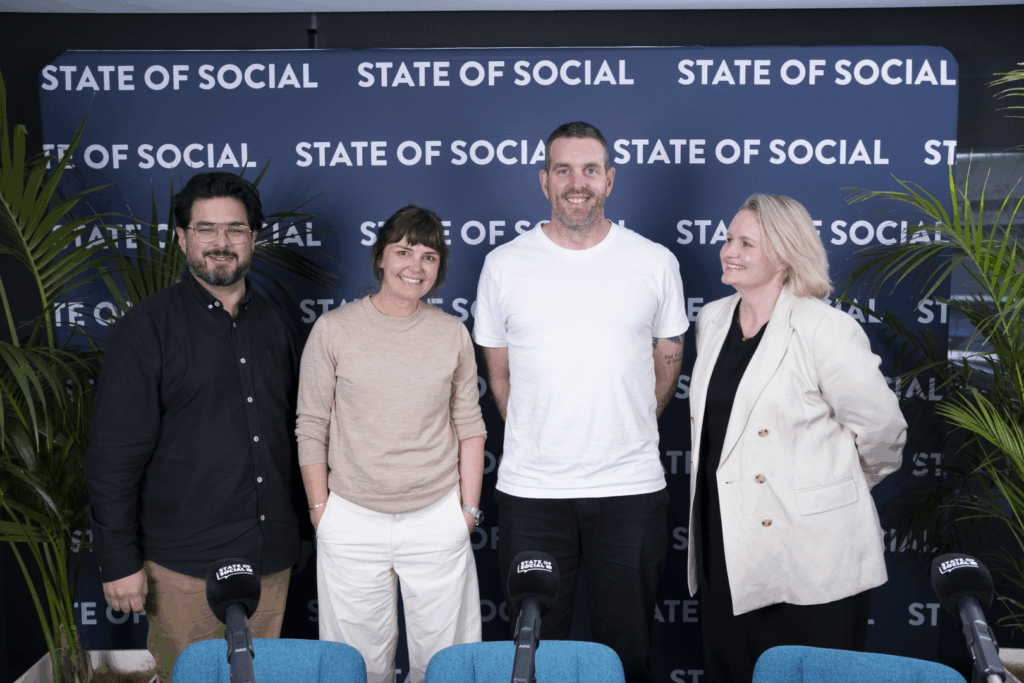
The agency model has been declared “dead” more times than we can count, but it keeps coming back in new shapes. In this episode of Hard Refresh, host Andrés López-Varela is joined by Hannah Muirhead (Founding Strategy Partner, Chapter), Missy Burrell (Director of Social, Mainstay Media), and Freddy Hollow (Director of Sales & Marketing, GolfBox) to explore what the next 25 years might hold.
From the boom in in-house teams to AI eating junior jobs, the panel debates whether agencies can still prove their value and whether the future belongs to nimble independents, fractional experts, or the holding groups .
In this episode:
// In-housing is surging
Hannah cites IAG data showing 78% of Australian marketers now have some kind of in-house function, up significantly in recent years. In-house teams excel at brand guardianship and consistency, but often lack the “out of the box” creative firepower agencies can bring.
// The skills-gap risk
Missy warns that if AI takes over too much grunt work, the next generation won’t get the “in the weeds” experience that shapes great strategists and tastemakers. Agencies have long been training grounds; without that, who makes the big calls in 2040?
// Fractional models on the rise
The panel agrees that clients don’t always need a $250k strategist on staff, but they do need access to that calibre of thinking occasionally. Agencies offering fractional or freelance-based models may be the most sustainable future.
// IP, pricing, and blockchain
Hannah floats the idea of blockchain-tagged creative assets to ensure agencies are fairly paid when their ideas scale and potentially moving advertising pricing closer to music or licensing models. The group debates whether this could reshape client-agency trust.
// Indies vs holding companies
Freddy argues indies will remain attractive because they’re nimble, even as holding groups offer scale and efficiency. But without retainer models, the challenge will be whether small agencies can create space for creativity and craft to flourish.
This episode was recorded on the traditional lands of the Whadjuk Noongar people, live at State of Social ’25.
All episodes of Hard Refresh are now live on YouTube, Spotify, Apple Podcasts and other podcast players.
Take this with you
- Hire senior strategic and creative thinking fractionally: an in-house team may only need it every three to five years, not on a full-time salary.
- Keep your in-house studio for day to day work, but bring in separate specialists for Meta and Google ads, TikTok and creative when you need them.
- If AI takes over junior tasks, still give new starters real time in the weeds, because that field time is what builds future strategists and tastemakers.
- When your idea could keep earning for years, like the meerkat for Compare the Market, negotiate royalties or a trailing fee instead of billing only by the hour.
- When agencies share a client, agree to let the brand lead the way, so decisions follow what is right for it, not anyone’s ego.
Keep reading
- State of social indexHere’s how social really works in Australia
- SOS26Nine years in, and the theme argued back
- Delegate resourcesThe reading list