Hard Refresh on advertising
Listen on
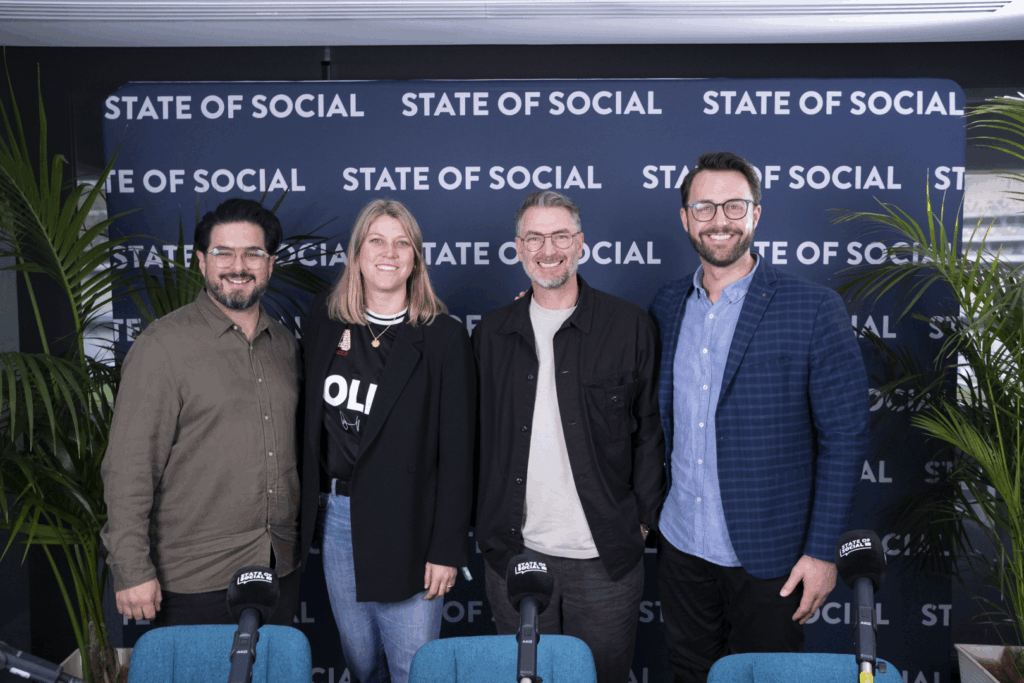
Around the table
 Amber MartinHypnosis
 Dean HuntChapter
 Mike DrysdaleFolklore
Coming to SOS27?
| Dates | 24 & 25 August 2027 |
| Venue | Optus Stadium, Perth |
| Tickets | On sale 11 January |
Listen on
Hard Refresh · episode 07
Watch 42 min

Transcript
Automatic captions, names checked:
[0:05] Hello, welcome to Hard Refresh, the official podcast of State of Social 2025. What are we doing here, you might ask? Well, we’re polishing off our standard issue State of Social Crystal Ball and gazing deep into the next 25 years of digital marketing. What are the trends, the technologies, the cultural shifts, maybe even the controversies that are going to shape this industry and in turn society at large? My name is Andrés López-Varela. You can call me ALV. Everybody does. And today we are recording on the traditional lands of the Whadjuk Noongar people live at State of Social 2025. And today we’re going to do a hard refresh on advertising. Advertising’s focus is fragmenting and maybe faster than it has in the last 25 years. By 2030, budgets will spread so
[0:50] thinly across retail media, video on demand, social, digital, and a home, all these channels and more. But audiences, are they more likely to borrow down further into their niche communities? The craft tension is real. Performance machines are optimizing, buying, yes, but big brand ads still create meaning and memory. So, can those mass moments that advertising relies on survive this tension? Can good creative travel across potentially hundreds of channels without becoming cut down mush? And what will count as proof that brand work actually works when all the old school channels and tools don’t even exist anymore? Joining me in the studio is Amber
[1:26] Martin, the founding partner at Creative Advertising Agency Hypnosis. Welcome, Amber. How are you? I’m great. Thanks for having me. Thank you for the handful of nerds you gave me just before the start. No problem. Dean Hunt, the founding creative partner at Chapter, a strategic and creative agency. Great to have you here, too, Dean. Thank you for having me. Thank you. And Mike Drysdale, creative strategist and also the chief mystery officer at Folklore, a tabletop entertainment company. Mike, welcome to the show. The least serious title on the table. Yeah. Well, I don’t know. It’s mysterious, right? I like that. I want a title like with mystery of something like that. So, um, does that mean that your official car is is the mystery
[2:02] machine? Yeah, let’s go with that. Yeah. Good. Great. Excellent. Ruby, Ruby, Ruby. All right. Are you guys ready? Let’s do it. Let’s do a hard refresh. Okay. Let’s zoom in first and look at the last two years as sort of a jumping off point for the future. I want you uh each to tell me what you think is the single shift in advertising that you would bank on being around for the next 5 to 10 years. is like what’s baked in Amber? Um I think the power of creativity. So I think you’ve talked a lot at the beginning of the intro about fragmentation and um different channels
[2:37] and split budgets and performance versus brand. And I think the one thing that is going to um uh jump the fence, leap and make all of that stuff make sense is is a good creative idea, a big a big idea, a big thought that helps to um to build a brand. Okay, great. Dean, um I’m going to go with brand platforms. I think brand platforms are back. The evidence seems to be coming in. You know, we’ve had um fragmented mediums have have been around for a while. There’s going to be more of them, but the ones we’ve been able to analyze and look at, the data has revealed that we probably need to
[3:15] shift back to respecting long-term thinking, solid brand platforms, simplicity, and the foundation of those platforms being really good human insights, storytelling. I sort of feel like we’ve come for some of the best work being done in the world at the moment feels a bit 90s to me in a good way. Yeah. So, I hope that holds together the next few years. Hopefully without parachute pants then. Uh well, maybe let’s be openminded. Yeah. Okay. Okay. Okay. Okay. Mike, what do you think is that structural change? I think the danger here is that we’re all going to say almost exactly the same thing. So, I’m going to take a different angle on it. I think the the kind of trend that I have been seeing in
[3:54] agencies that I think is going to continue is agencies telling everybody that they are out of the output game that they do not sell graphics and print ads and TVC’s and things like that and that they want to elevate to a we we we rephrase your problem. We we reframe your problem. We create in more innovative and more creative solutions by thinking at a level above. And I think that that’s an existential thing. I think that agencies are going in that direction because it is a race to the bottom. If you believe that you’re in the output business, all of those things get commodified to within an inch of their life, particularly when we’re in the world of AI where everybody says all
[4:31] those skills that you cultivated and you work so hard for for so long and a computer can do it in an instant. Now, I know that we all disagree on this table that a computer can do it in an instant, but it certainly seems like it’s heading in that direction, right? And so these agencies are saying uh we’re not in the output business anymore. We’re se-level executive strategy thinking etc. work with you on bl brand platforms that will last 20 plus years. But I think is that’s true isn’t it though like ultimately we we do agencies do need to get out of the output game because the that’s all the like that is all the autom automation all the AI stuff all of
[5:12] that can be delivered the systems and the processes all all of that can be delivered by AI so if you’re not in that room and if you’re not having those like bigger picture conversations then I I do think you have um short changed your value. So I I I agree with you, but I think it it is true if you’re not positioning yourself in that way and you’re not having those conversations. I think it’s really challenging place for a for an agency to to be. Yeah. I think it’s um it’s easier for us as well with our lofty senior titles to take that space. Yeah, I think it’s um you know I remember we looked out at the agency and saw a room
[5:52] full of 20 to 40 year olds that have a much much bigger concern moving forward and partly as leadership and senior roles we need to make sure we’re creating an environment that they can all thrive and have a career too. Yeah. Absolut absolutely. Yeah. Uh, one thing that seems to sort of, you know, um, sometimes has a solid future, sometimes it seems like it’s on the ropes, um, is, you know, the big brand ad as a moment as, um, sort of, you know, with that mythology that that moment can kind of galvanize a community around a particular idea or a particular brand as well. Uh, Dean, give us some kind of real talk in it. We’ve got all
[6:30] these verticals, we’ve got carousels, we’ve got skippable ads, we’ve got feeds within feeds. Do these same brand ads have a future or are they just kind of expensive nostalgia when there’s so many channels and there’s less kind of communal moments? Yeah. I’m going to one thing to look at it is it’s all a screen. Yeah. 99.9% of the work that we do is words and pictures within a square box when and I’m a proud simple. So whether the screen is on your phone or it’s a cinema or whether it’s at home or whatever, it’s still essentially the same thing.
[7:08] So um but but to your answer like the role of an emotive brand ad that is traditionally seen on television and we’re seeing some brands really leaning into this and common is doing it great. Be bare meetagle out of Sydney the Telster work and all the tech platforms that have gone to TV because they have all the data. M so there’s still a role for TV particularly um pre or screen pre-rolls etc and the ability to tell those stories at a premium crafted level um filmmaker level is what is going to connect emotionally. So the there’s been a huge lack of craft because of the
[7:46] ability to churn stuff cheaply and quickly and the people looking to craft again and respecting storytelling will probably work best. Yeah. Yeah. No, I was just going to say the example that you gave of um Bear Meets Eagle on Fire and the the Telstra work like that was one of them in particular with the guy sort of walking like this, you know, the the whistling like an earworm incredibly wellcraftrafted wonderful storytelling that then had an entirely separate life in social. So it was um adopted in Tik Tok the you know
[8:20] you saw athletes during games um celebrating and doing it. you saw real estate agents doing their walk through their you know of houses on Tik Tok doing the walk. So I think when you um you know when you um connect deeply with people and you express that in a really interesting creative way um that can live anywhere as long as it’s really really insightful and done well I think um I think it will cut through and that was organic right yeah I think so I don’t and then amplified yes I think they real I think they realized that they were on to something
[8:57] and went oh let’s embrace that you know we have a marathon which is you know it’s matching in a way that’s matching luggage right you got a TV ad with a guy doing this and then you got social people doing this but it was matching luggage with a different shaped bag like you can have consistent thinking but it can come alive in different mediums in really interesting way absolutely and as long as the idea is interesting it can show up and I think it’s just about how you’re using those channels um I think it’s it seems like sometimes marketers are I mean what you’ve mentioned about like that that Telster example with the walking guy um is is a
[9:34] good example uh where it happens kind of accidentally or by serendipity but sometimes it also seems like marketing teams marketers agencies are kind of hooked on that concept of sort of you know um making that happen like you know trying to create integrated uh you know advertising which maybe forces that right if you like um where it’s just one big sort of film with cut down versions vertical versions I mean, how do we get away from that in the future, Mike? Like, how do we what’s going to make an idea travel like Amber says, across all those different everything from retail media, ambient
[10:08] stuff to connected TVs to Tik Tok without feeling like scraps or crumbs or or, you know, like it doesn’t fit. I I love um what’s in the name of of Dean’s business um brand leadership. um that idea that I think what you guys are talking about having about a consistent way of thinking, a consistent idea throughout the many different iterations. I think where there is possibly a little bit of inauthenticity within the current advertising landscape is the way that we pitch ourselves as sort of I don’t know this is an old old school saying but creative masters of the universe type thing and the idea
[10:46] that we can solve any problem with our creativity and yet what we’ve been doing for 60 years is we’ve been creating print ads and TVC’s that’s where our craft has been focused that’s where people have been learning and training and training themselves to with an inch of their lives these is the conventions that are used on the platforms that are used are so incredibly and wildly different from those two particular types of content and yet the people that are leading these creative masters of the universe we can change any idea into any platform into anything I still think majority they’re they’re speaking through those prisms and I think that the key is that if you are going to do brand leadership
[11:24] and if you are going to do thought leadership and you’re going to do it on these platforms you have to have a more flexible idea about what brand is and where it can change and evolve and how drastically it can change depending on the platform and leaning in to this idea of neo genre on places like Tik Tok on places like Instagram or places like YouTube etc. and embracing and understanding the conventions of those neo genres as well as you understand print and TBC and connecting them. So about, you know, I’m kind of obsessed with loops at the moment. Yeah. And how that’s all interconnected and the idea of having agencies that do a separate role or ways
[12:04] of thinking that are separate separate mediums and when you think about how they connect together in some way then it opens up a world of opportunities. Can I I just add one on because while I forget I lose my memory quickly but um I think craft is the real real thing. So I was you know not happy jam why did not happy jam three little words connect with people on such a level simples there are certain thing and what you tend to see is they’re just really wellcraftrafted nuances within communication. Yeah, the act the writing and the actor and
[12:40] the director brought it together to create something really memorable. So if we get a bit obsessed with craft and le and less obsessed with orchestrating what we want like you focus on the work then you’re more likely to get what you want. Is there room though for advertising to do that when the marketing teams are saying we love what you’re doing but we just need it on the 827 channels though D focus is important right yeah and and simplicity and trusting the specialists in the different spaces and choosing a lane and not necessarily having to do every single one of them I know if you’ve got pressure from a client to do every single one of them then you know you
[13:18] have to have that conversation you have to navigate that situation Amber was having making great points about having hard conversations today and it’s just like convince convince them that’s the answer, you know. Yeah. Yeah. Totally. Go into a room and sit down and have a tough conversation and bring the evidence. I think there is there is plenty of evidence that suggests that like craft and emotion and storytelling and all of those things that come from a classic um advertising uh perspective actually does work and moves the needle when it comes to delivering results for clients. And ultimately what we’re in the business of is helping our clients build brands and
[13:57] and have successful measurable impact on whatever they’re trying to do. Whether it’s move more product or whether it’s you know create a really powerful internal um uh um you know culture so that their business thrives. All of this stuff is actually brand and branding. And I think it’s it’s it’s really important and I think you can um you can get caught up in the um minutiae of the outputs versus making sure that actually if you’ve if you’ve got that northstar that big creative vision or brand platform as as Dean’s calling it, that’s what um that’s what will help move you
[14:36] move you through. So I’m I’m less worried about the 584 formats. I think you can deliver those and you can do them, but you can also um have a tough conversation around well actually um are you is that performance marketing actually delivering or are you just a bit addicted to the data that you’ve got from your performance agency and you know I think you can hold both of those things are true you know the long and the short of it bar and shark it’s the it’s the and in that the long and the short not one or or the other and I I think they’re they’re um yeah doing different things but um both both
[15:15] building the brand. It’s a good you can do a lot but actually a really good starting point is outdoor and you want to make a really good content video start with an outdoor because then at least you know your idea is so simple and so clear anything that the tech can bring to it can just add to it. Sure. got the simple story. So guy doing this easy to copy um multiple scene ad with multiple proof points and a voice over. No one’s copying that on Tik Tok, right? So again, simplicity is actually the real key to releasing the potential across multiple platforms. So get your core idea thought. Um yeah,
[15:55] that’s my advice. Before you do great Tik Tok videos and content strategies and all that, distill your idea in an outdoor poster, which is still the purest form of advertising. And I’ve taken great joy in seeing the re rise of outdoor is a new trap medium like it’s been awesome. That’s educating our whole industry, I think. Yeah, I think so. I think so. So advertising um of course is you know a game partially mostly maybe you tell me of cultural relevance of being the right place at the right time um you know with the right vibes connecting in in the right way um and and here in Australia there’s kind of a clear sense of differentiation you
[16:35] know for better or for worse there’s this kind of antipodian sort of you know inward facingness it’s like oh we’re special we’re different we’re unique in some way shape or form you know um I’m interested in understanding what you think is uniquely Australian about the kind of advertising that uh that will work here in the future. You know, like our society has changed a lot over the past 5 years, you know, with with the pandemic and sort of you know, the the effects that that has had on on all aspects of our lives and continues to have. What should um uh you know, Australian advertising in particular, Mike, um think about moving forward that that’s going to work here that’s going
[17:14] to be unique and sort of encapsulate a sense of our own identity and reflect it back to us? That’s a good question. Um and it’s not one that I have a specific answer for. So if if anyone wants to jump in if it’s struck a lightning bolt in you, then feel free to. But um I think for us in Australia, I think we are uh still somewhat lucky. Uh we are we live in an incredible place and there’s incredible opportunities here. But I think we’re also facing this in incinreasing tide of inequality that will continue that has already hit the US incredibly
[17:52] hard and England and the UK incredibly hard and I think it’s I mean it is it is coming for us as well and there are people that are feeling it as well. You’re already talking about people who are feeling climate change um the effects of climate change in their everyday lives right now. Um, and I think that these tit tectonic plate shifting things that are happening in our society and that people will start to feel the pinch again and again and again and more and more and more, you’re you’re probably going to see a sentiment shift in the way that we tell stories and the way in which the emotions that we tap into and what you can promise as
[18:28] a brand as opposed to what feels um almost insulting to promise as a brand because of the realities of people’s everyday lives. Yeah, I think that I think that’s really interesting. Um I I also think it’s um it’s about uh understanding who your audience is. So, we’re talking like Australia is a pretty broad like Yeah, totally. And I think there’s loads of different um micro communities and different people um interested in different things. So, I think if you can I think there’s two two ways that you can go at it. You can go one where you go really really niche. So find those um
[19:06] audiences that are interested in very specific things that and um and find ways for those to be relevant to your product or service. So if you’re a, you know, a car manufacturer, maybe you’re focused on, you know, a particular culture of people that are into camping or whatever it may be. So I think there’s ways to find um beliefs and interests and kind of dial down into that. But I also on on the other hand with the Telster example, I think there are ways in which you can um you can talk to kind of broader insights of
[19:42] Australian culture in in a really kind of interesting way. And I think there’s a lot of marketing kind of um you know these personas and people that are kind of made up in marketing boardrooms. Yeah. actual not really that relevant and useful and sometimes the most useful thing is to actually figure out what makes people um think the same way and what brings people together and play into that. So rather than dividing them all up, it’s like, okay, well, what is unifying about this brand and this thought? Like I think a lot about the Matildas and the way that they um united
[20:22] and galvanized Australia around a a common goal, a central thought um and really inspired um you know, Australia and allowed like us to be um patriots. Patriots and and there is it has been a wild you know like a bit of a tangent theory on that because I’d love to because you’ve done sport because football isn’t the number one code in Australia which is unique globally right it was like the fact it came from female football was a better part of the story but culturally I think I think people were craving were craving
[20:59] to be patriotic to to your point like we haven’t been able to hang an Australian flag up because that has been co-opted. The flag has kind of been co-opted and feels a bit Yeah. a bit awkward or something. And so the fact that you can wear your Australia jersey with pride around the Matildas. It it doesn’t it says um it allows you to be patriotic in a way that I think was missing for a long time. I think people were just stoked about it and they were and they were hungry and but also Australians love sport you know they love an underdog that kind of so it’s a I think it was a um it’s a safe space to do national pride
[21:41] exactly absolutely I think and you guys are doing great stuff in the space particularly amongst WA audiences which largely get ignored n by big national brands but the nuances of the audiences over here are fascinating totally fascinating part of the world like if you work in New York which will be terribly exciting but we’re not going to change that but I think in Western Australia this we’re such a young emerging market to be able to talk to those people is fascinating I I found the the Bluey talk was really interesting the success of Bluey and how it’s portrayed Australians and
[22:15] Australian culture beyond the obvious and gone more niche and this exciting idea that I think agent you know the rise of independence and smaller independence It means we can have niche lanes. Yeah. When you only need six clients. Yeah. Each you can have a lot of you can get really specialized on your audience, your offering and and get better connection. Yeah. Yeah. Um so I think it sounds like obviously we’re saying you know as we move forward and you know despite the fragmentation despite the challenges that you know
[22:49] this chronic onlineness brings uh for for this discipline um that there is still you know a large opportunity to attract attention in new in different ways but also some of the some of the traditional ways that might work as well. Um, but it has to, you know, advertising has to work handin glove with culture is what I’m hearing that there’s a degree of in some way it needs to not just be like, oh, that’s culture and then let’s follow it, but it needs to be a part of it, be adjacent, be be sort of holding hands with it in in a way. Um, will advertising still have the
[23:25] power to lead culture in like 10 or 15 years though with the realities of the, you know, chronic online condition of of humans, particularly younger ones? Um, I think so. I Yeah, I I think um I think as long as um the industry um kind of gets out of its own way, I think a lot of the um the indies have done that really really well. a lot of the um the network agencies are starting to realize that they need to um you know that start to understand what’s going on in culture and be a bit more connected to it. So the talk that I did here today was
[24:06] around you know getting out of your glass towers and what I meant by that was stepping out of the boardroom and onto the ground and having real conversations with real people to understand what is what is going on in their in their lives. what’s making them tick, what are they mad about, what are they excited about, what’s driving them. Um, and so I think if agencies can um embrace uh embrace that and not be afraid to kind of let the audience in into their process as well, you know, I think we can become super protective as well of our of our work and our process. And I think um you know if you can open
[24:46] those doors a little bit at the right moments um I I think it can create something super powerful. And I do I do genuinely believe that we um have the power to influence culture and should should be aiming for that with all of the kind of work that we’re doing. I I think it’s it’s a awesome like north star. It’s like the the power of creativity to shift culture is like it’s pretty cool. Yeah. I think before we’ve been able to control what the audience we they think
[25:20] um and now we’re opening to your glass, you know, we’re opening it up and it’s a relationship. So, I think we’ve got to be open to being less manipulative and a bit more open to letting culture define us and the audience tell us what they want and us be able to adapt and change to and be more responsive to it. be responsive to it, which often means being really nimble, letting go of sets. I don’t think anyone really knows where this is going. It feels a bit like sometimes we’re um you know, we’re video shops arguing who’s got the best video collection. Someone’s building Netflix next door. And I think we should be just stepping
[25:58] outside of our video shop and going, “Okay, what’s going on out here?” Um, and I’m open and I’m nimble and I’m gonna go with it because there’s going to be there’s going to be upsides. From what I can see, every technology that’s ever been invented, there’s a huge upside. I mean, we we usually see the upside first and then the downside reveals it. You know, we invent the car, the industrial revolution. It’s fantastic. 100 years later, oh, crisis ruined the planet. So, and I think AI will AI and all the other all that’s going to happen. So, it’s just being open to taking advantage
[26:34] of the best bits and playing our role in making it good and not bad as good communicators or good human beings. Yeah. Yeah. Yeah. I’m going to be a little bit contrarian here. I don’t think advertising is leading culture at all. Um I think I think it’s responding to culture. I think it’s trying to keep up with culture. I think sometimes it’s reflecting culture. Um, I I I wonder if um Not Happy Jan was made today, if if it would even be the cultural moment that it was when it was made. Uh, especially if it was put out mainly as a TVC. It might be a cultural moment among 55 plus. Um, but what about everybody
[27:13] else? Um, I think culture, the way that it lives now is it starts in small niche pocket communities and then it explodes outwards. But it starts as a very tight, very important nucleus. Eugene, who’s doing the closing keynote for State of Social this year, had this great video that he talked about recently about one of the behavioral trends that he’s seen with millennials, is that because we’ve been kept out of the housing market, we’ve become aspirational for smaller and smaller things. And so this idea of little treat culture has become um a massive thing for millennials and Gen Z. And so we’re we’re becoming aspirational
[27:50] about buying a $30 sandwich or having a Laboo, which has become one of the biggest toy sellers in the world in a matter of moments because of something that that happened. And I think it’s actually in highly creative businesses and and entrepreneurs. And I think that these entrepreneurs that are starting these businesses that start off as micro businesses and then explode in culture or create a wave of a new thing is leading culture more than advertising is. I I think it is in the entrepreneurs. And I think that we’ve got this battle right now between advertising agencies and these people who have self-started their their own
[28:29] businesses and are potentially creating their own content or or have reached a certain market capitalization by themselves without advertising agencies. And then advertising agencies are saying, “We’ll solve all your problems cuz we’re the masters of the universe.” And they’re going, “We kind of already we’ve kind of got that covered. We’re doing that internally.” which is you know what we heard from oh somebody yesterday no I was the um from Tyler from the Empire State Building was one of the first things that happened with the Empire State Building when he came on board there was an agency of note that was taking care of their socials and he bought it in house
[29:05] and so there was something that was happening internally within and so I do think as as marketers if we have if we work hard with brand leadership to create influential brands our brands can be a part of a shift in culture. But for me personally, I don’t I don’t think advertising is leading culture right now. Fair enough. Yeah. And maybe I think I’m going to nick this off Joe Staples from Kenny who said this 10 years ago. The future of advertising is probably not advertising. But the mass of the uniper thing I think like there’s a great shift in my own age that I’m not here to provide answers. I might have a skill set and some experience that might help us guide all
[29:47] together through this new world that we’re in. So you know I’m going to join the wagon train with other smart people and let’s go on this journey. But yeah, the idea of going anyone is saying I know and I have the answer. So, it’s about picking partnerships and that’s why I think we’re better. You know, we’re agencies are hopefully getting better that you don’t have to appeal to all clients. Your best likely way of succeeding is to be really aligned. Yeah, very it’s going to get a bit scary, right? So, you want to be with people that really are on board with you. Can I make one final point on it is just to say that I
[30:25] think I think the way forward is to really kind of bookend um ALV’s sort of questions here and what we’ve been talking about is the idea of we’re seeing fragmentation across the board into many many many many micro niches and even with culture it’s like there is no such thing as a monoculture any right is fragmentation I think the agency’s job in 2025 and beyond is to unify is to find where what transcends and through great communication and through ideas that have the potential to transcend to totally but to to I agree with that but to your earlier point around like a I
[31:02] would argue that a entrepreneur that has built their own business and um that’s doing amazing things that’s got to a certain size venture c whatever I would say that what they have been doing is probably advertising like I think c like content creation and whether they’ve done it internally or they’ve used an like a classic ad agency. What they’re doing is building a brand. They’re building a story. They’re building narrative. They’re building a reason for people to give a about their product or service. And that ultimately is what advertising is designed to do. So whether they’re using an agency or not, I think that um the there is a a
[31:41] through line even though they’re maybe going about it in a slightly different way. And I think that’s okay. It’s still the power of building a brand. I I love that and I love this thing about letting the brand lead the way. I mean, I have this kind of thing is that the brand often doesn’t get a voice in the boardroom, right? So, I I like to imagine that the brand’s there in the boardroom. Yeah. And the brand’s more important than the CEO. You think legacy bands and brands, Steve Jobs is gone, but the brand still exists. Like, if you if you’re building a brand to last beyond yourself, you’re thinking long term. But if you if you give the brand a
[32:18] voice and and where I’m getting at is I think we love defining it. Advertising agency. Brand is business essentially. And I think everyone’s saying more business is run by CMOs because the separation of the two is kind of crazy. Weird. Your brand is your business. Your business is your brand. You can’t really name one that that isn’t the case. So why separate the whole thinking? Yeah. This has been great. I love this. But uh before we wrap it up, I want to do uh we’ve got just enough time to do the refresh round. So these questions are for your spiciest hot takes. No holds
[32:52] barred. Okay. Not that it hasn’t been spicy so far. Um think what the first the answer to this first question is going to be based on this crowd. In 2050, will brands as we know them now still exist or have we kind of hit refresh and come up with a new definition of that? Uh I think brands will exist. I think the um the way that I would define a brand is what someone says about you when you’re not in the room. It’s what it’s what they it’s what they remember. Um it’s how they talk about you. And so I think how brands show up might be
[33:25] different. How they reflect how they exist in the world might be different, but I think that the um the core of it will be the same. That’s good. I love that definition actually. That’s really good. Um all right. It’s not mine. I pinched it. I’m sure. Thanks to whoever thanks to whoever whoever said that. Um, credit. All right. What’s one marketing buzz word you’d refresh straight into the garbage? I wanted to answer that last question. Oh, sorry. Or do we get one in? Yeah. I mean, you know, yeah, you can you can dip in and out if you like. Can I dip on the brand? Yeah, dip in. Dip in. Yeah, because I think, you know, everything is
[34:00] brand essentially in nature. creatures brand themselves to let other creatures know who they are and what they do. Redback spiger great brand asset, right? Um, so branding in a form has been around since the beginning of time before we started talking about it, writing books about it. It’s almost like advertising is taken the concept of branding and say we own it, but it’s way bigger than that. So of course it’ll be around. It’ll just be what forms it in. And maybe it will become less. And maybe we need this as an industry to own it less and let it be its thing. Let it breathe in the real world. Yeah. Yeah. All right. It’s got a buzz word. No, that’s Thank you. You know,
[34:39] a buzz word in the buzz word. Yeah. We got one. Uh oh. No, I don’t know. There’s so many. All of them. Let’s try all of them. Anything with an acronym. Can you say can you say anything in in a metaphor in an anecdote that you can say without having to say the buzz word even authenticity you know even um you know uh agility adapt um proliferate we’re going to get we’re going to get sick of of leadership and uh like um brand storytelling you know like I I talk about storytelling all the time I’m sick of storytelling too like let’s let’s tell a story instead of talking about
[35:18] the importance of story telling instead of telling a story about a story, just tell tell a story. Maybe just more simple like I think um lots of clever people work in this industry, but the real skill is simplicity and it’s really really hard to do. A lot of you know I think there’s too many clever people in advertising doing a lot of or some mild labbotoies here and there. Yes. Okay. So So Dean’s pushing for more dumb people in advertising. I I think I think I have. Am I going to regret that? Maybe. Well, then maybe the next question is going to be interesting then. If AI got a chance to refresh your job description, what would it throw out? What would it say? You don’t need to do this anymore.
[35:58] Oh, that’s a hard one. Everything. You don’t need to work anymore. I’ll do it for you. CEO can sack you right now. Is it Is it what it would automatically choose or what I would want it to get rid of? What do you think it would choose and go, “Oh, you don’t need this anymore.” Um, oh, I don’t know. It it probably just helped me with all my finances. It probably helped. So many people have said that. So many people have said the invoicing and the admin. Yeah. It’s not coming for that. Let me tell you. Yeah. Formatting presentations. Formatting. Yeah. Although I’ve tried it and it’s it’s it’s doing a job at that.
[36:32] So far it’s it’s it’ll get better, I think. I hope so. I hope so. But invoicing. Fix my invoicing please. Yeah, you heard it here first. If you could refresh the internet for the better, which one channel or platform would you get rid of? Oh, Discord. No, I don’t know how that’s been to the Discord people. No, but that’s interesting. Why? Oh, I just think it’s it can be pretty like spicy in Discord. Sure. I mean, Facebook can be pretty spicy, right? That’s true. That’s true. Those Facebook neighborhood groups can be brutal. Yeah, that’s true. I maybe it’s maybe
[37:10] it’s not getting rid of anything. Maybe it’s making people feel more accountable to what they’re saying online. Oh, yes, please. You know, if you if you um if you wouldn’t say it to a person face to face, why would you say why would you say it behind the keyboard? Yeah. Yeah, I like that. That’s much better. Maybe that’s a great answer. Probably not the platform. It’s the rules of engagement and anonymous profiles. You don’t self in pubs because you might get hit in the face because it’s rude and I was I was going to put a spin on it as well. I just going to throw this one out there because it is spicy. I I’ll delete
[37:48] broadcast news. Yeah. Um broadcast news specifically. News overall. Um I I I’ve I’ve spent uh yeah I’ve spent more time uh with my parents recently and and I I see the way in which um every single day religiously about three different versions of the news is on in on the TV and I can’t be around it. It’s so depressing and and also presented as objective what is clearly subjective. Yeah. Um, so I think it’ll be an interesting experiment to see what happened if you just left us for 10 years with no formal um media owned by
[38:26] billionaires. I asked you for spicy. That was spicy. That was spicy. All right, last one. When uh Gen Alpha comes in and refreshes marketing and looks back at us, what are they going to roast us for the most? What’s the one thing they like, can’t believe you did that. Oh, that’s so hard. I don’t see many of them coming into it. I think they’ll be heading off to whatever that new world that we need to get out into. I mean, you know, generally I’m probably got another 10 years max in this industry. So, I think I’ll just make it and crawl onto the beach of retirement to be fairly comfortable. But
[39:05] my, you know, my ch for me when I grow up, the idea of being in advertising was like being in Hollywood or something. The fact that I would be on television. Yeah. where to my children the fact that I’m in advertising is a great embarrassment I think. Yeah. Right. It’ be interesting to see whether they come in. They won’t be coming into the industry as we know it anyway. They’ll probably just create I hope they don’t come in and change advertising. I hope they’re just creating something new. Yeah. Yeah. That’s interesting. I should stop myself. Um no, don’t go
[39:38] on. I I think it’s I I think um probably spending the best years of our lives and our creativity in helping build up big corporations. Maybe I think the future is um probably going to be filled with a lot more micro brands, a lot more local brands, a lot more sort of kind of going back way way back and just sort of more trade, more localized. Yeah, I agree with that. that Yeah. Yeah. Yeah. I I think we’d all like that. You know, I think you should have a cap on. If you make 10 mil, you get a badge. Maybe the world stops for a minute and then gives you a congratulations, then you’re out. We don’t need
[40:14] multi-billionaires. You won capitalism. Congratulations. And and I think, you know, advertise traditional advertising people, they’re really good at solving problems. Like genuinely, if you can get good creatives, good strategist, good thinkers in rooms, they can solve a lot of problems. And I hope they get to solve problems beyond just writing TV commercials because I think their brains are more valuable than we even know they are. Yeah, it’s good. That’s great. Thank you. That was fantastic. I think this is a great this was a great chat and a fun chat. Thank you so much. I think advertising is going to be okay, guys. I think it’s going to make it.
[40:49] Amber Martin, Dean Hunt, Mike Drysdale, thank you so much for joining me on the show and I hope you enjoy the rest of State of Social power. Loved it. If you like this refreshing conversation, you’re going to love the rest of Hard Refresh. All episodes are now live on all your favorite podcast players, where you can join me and the smart minds of the State of Social 2025 crew as we dive deep into all the big topics and questions about what’s next in digital marketing. And remember what your mom said, sharing is caring. So if you like what you hear or see, then let someone else know and give us a rating so more people can discover the show. Hard Refresh is a co-production of State of Social and Original Audio. The show is produced by me, Andrés López-Varela, and Aaron Matthews for Original Audio.
[41:34] Big thanks to Cal McClain for production support and to Meg Coffey, our executive producer. I’m ALV. Thanks for tuning in and join me next time when we hit refresh on something
Advertising is fragmenting faster than ever, but does that mean the big brand ad is dead? In this episode of Hard Refresh, host Andrés López-Varela is joined by Amber Martin (Founding Partner, Hypnosis), Dean Hunt (Founding Creative Partner, Chapter), and Mike Drysdale (Creative Strategist, Folklore) to map the future of advertising.
They debate whether creativity and craft can survive in a world of 584 formats, how agencies redefine their value beyond “outputs,” and if advertising can still lead culture, or if entrepreneurs and communities are now setting the pace .
In this episode:
// Creativity as the constant
Amber insists that amid budget splits and fragmented channels, big creative ideas remain the force that makes sense of it all and the glue holding brand building together.
// The return of brand platforms
Dean argues that we’ve come full circle: long-term brand thinking and human insight are back, and the best new work often feels “a bit nineties, in a good way”.
// Agencies out of the output game
Mike warns that commoditised outputs and AI are forcing agencies to reposition as problem-solvers, not producers. Amber backs this up, saying agencies that don’t elevate will be shortchanging their value.
// Big brand ads still matter – if crafted well
The Telstra “whistling” campaign and Bear Meets Eagle examples show that storytelling and craft can ripple across TikTok and TV alike when the idea resonates.
// Australian advertising’s edge
From the Matildas’ galvanising patriotism to Bluey’s cultural export, the panel explores what’s uniquely Australian about advertising that connects deeply with audiences.
// Who leads culture now?
Mike challenges the table: advertising isn’t leading culture anymore, entrepreneurs and communities are. The others argue agencies still have a role if they get out of their glass towers and reconnect with people.
This episode was recorded on the traditional lands of the Whadjuk Noongar people, live at State of Social ’25.
All episodes of Hard Refresh are now live on YouTube, Spotify, Apple Podcasts and other podcast players.
Take this with you
- Before making TikTok videos or content strategies, distil your idea into an outdoor poster: if it works there, every other channel can build on it.
- Give your brand ad one simple action people can copy, like the whistling walk: nobody recreates a multi-scene ad with a voiceover on TikTok.
- Treat channels like matching luggage in different shaped bags: keep one consistent thought, but let it take a different form in each medium.
- Drop made-up boardroom personas and look for what unites people, the way the Matildas let Australians feel patriotic, then build your brand thought on that.
- Step out of the boardroom and ask real people what they are mad about, excited about and driven by, then let them into your process.
Keep reading
- State of social indexHere’s how social really works in Australia
- SOS26Nine years in, and the theme argued back
- Delegate resourcesThe reading list