Hard Refresh on data
Listen on
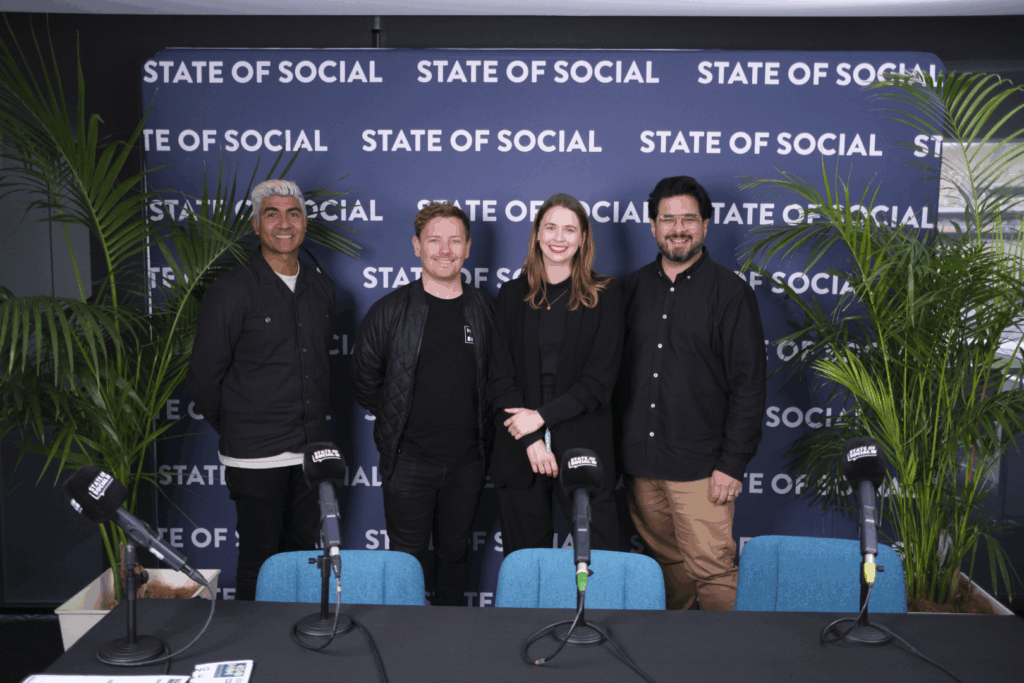
Around the table
- Andrew DouglasHunt Brew
 Heather LansdowneAustralian Bureau of Statistics
- Rene LeMerleBonfire
Coming to SOS27?
| Dates | 24 & 25 August 2027 |
| Venue | Optus Stadium, Perth |
| Tickets | On sale 11 January |
Listen on
Hard Refresh · episode 05
Watch 42 min

Transcript
Automatic captions, names checked:
[0:05] Hello, welcome to Hard Refresh, the official podcast from State of Social 2025. What are we doing here, you might ask? Well, we’re polishing off our standard issue State of Social Crystal Ball to discover what’s in store for the next 25 years of digital marketing. We’re diving deep into the trends, technologies, cultural shifts, and maybe even the controversies that will shape this industry and in turn shape society in large. My name is Andrés López-Varela. You can call me ALV. All my mates do. And today we’re recording on the traditional lands of the Whadjuk Noongar people live at State of Social 2025.
[0:41] Coming up in this episode, we do a hard refresh on data. Data has always been marketing’s fuel, but the mix is shifting fast. The death of thirdparty cookies didn’t end up happening, forcing teams to get serious about things like consent for collecting data and running experiments. The opportunities for marketers who really understand data will expand as this becomes more and more part of an effective brand storytelling. In the next 5 years, the center of gravity is likely to move further towards big brands that can afford to sink big money into even bigger data plays. And beyond that, how are we going to be sure if the data we
[1:19] collect about our audiences is showing us a picture of real people or just AI avatars? So, let’s get nerdy and talk all things data with our panel, including Andrew Douglas, marketing manager at Hunt And Brew. How are you, Andy? Good. Thanks for having me, ALV. Welcome. Welcome. Heather Lansdowne, the social media manager at the Australian Bureau of Statistics, aka the ABS. I mean, Heather, if anyone knows data, it’s you, right? Yes. I hope so. Yeah, you’re in the right spot. That’s good. And we also have Rene LeMerle, general manager of growth at Performance Agency Bonfire. Ren, how are you? Good, thanks. Andrés, thank you everyone for joining me. It’s very exciting in this in this very warm, well-lit room at St. Social. You guys enjoying the event so far?
[1:57] It’s been great. Yeah. Very insightful. Excellent. Learn a lot about Blueie. Yes. Blue and the Empire State Building. Yeah. And the Empire State personality. That’s it. Yeah. Now it’s got a personality. And is a Swifty. It’s a Swifty as well. Yeah. Yeah. Doesn’t like emojis. That was new. That was interesting. Yeah. And that’s for all of you. Keep an eye out on our other episodes because we’ll be speaking to um Kate O’Connor who led the Bluey brand of commercial activations and Tyler O’Day who’s the social media director at the Empire State Building. More of that in your feed. Okay, everyone ready? Time to do a hard refresh. Let’s do it. Okay, let’s get the awkward bit out of
[2:35] the way first, right? Everyone says they’re data driven, right? But it’s true that lots of marketers probably only have a shallow understanding of what data can do for them. You know, how to read it, how to interpret it, how to use it. Um, there’s an ocean of data at our fingertips and it can it can easily lead to the wrong decisions, you know, if we don’t know how to use it correctly. Um, Ren, I mean, you see how dozens and dozens of brands work with data every day. What’s going on here? Where’s the the gap between what we say we know and and you know maybe what we actually do know and understand. There’s a big gap to cover.
[3:13] I mean there’s probably a few points on that. Marketers have been swearing by the value of data since I mean I’ve been around for a bit longer than the rest of my contemporaries on this uh platform. Um and we’ve been talking about data as big data for three decades, right? and it was going to be the secret source that was going to unlock all of this great potential and corporations were spending heaps and heaps of money on it and no one ever made sense of it, right? Cuz the data was so big it’s like what are we going to do with it? Um, and I think that challenge still exists and the biggest problem that we’ve got often as marketers is there’s so much data out there from a marketing point of view, people don’t know what to
[3:49] focus on, right? And so the the the gap or the opportunity for a lot of marketers is actually working out what metrics matter for what they’re trying to achieve. And I feel like we get so data driven that we obsess on data for the sake of being obsessed about data and it actually doesn’t necessarily deliver better outcomes or better campaigns or any of that sort of stuff. So I think if we can simplify it and actually get to the root of what’s important for our respective organizations, that’s kind of the key. Yeah, I agree. What do you think, Heather? Yeah, I agree. I think finding what’s important to you. And it’s interesting
[4:28] hearing from the Empire State Building um this morning talking about, oh, some people just view followers and likes and impressions as vanity metrics, but for them that’s really important. And I think that’s something that’s really key to think about because you kind of get this aggregated advice that’s meant to go out to all marketers, but I think it’s also important to think about what’s important to you. You know, is it conversions or is it just brand awareness or, you know, like at the ABS getting people to fill in a survey and be aware of what the ABS does and the data that we have and how that kind of shapes the future of Australia. So, yeah, it’s fair. That’s good. It’s good.
[5:03] And well, I mean, you and your team have turned otherwise, I guess, you know, perhaps some people might present them as random or or unusual dry stats into like really must share content time and time again. Um, so it’s clear you know your way around a dashboard and and uh and a pivot table and and the right metrics as Ren says. What do you think is the missing piece or like the missing pieces when it comes to understanding how to use data not just to measure but to tell stories and to kind of you know engage people in in a brand in in a more meaningful way. Yeah. So it’s interesting coming from
[5:40] the ABS and I guess talking about data in a little bit of a different way to some of the other guys on the panel. I think um you know data doesn’t just inform our strategies, it actually is the content of what we’re also putting out there. Um so we obviously love to use interesting data visualizations in our social media content. So we’ve done a lot of um training and uh experimenting on what works and what doesn’t. And some of the things that we found especially on social media for a very general audience is that the simplest is the better. You know, keep it simple stupid. Yeah. Um, sometimes we would have a graph comparing like 10 or 20 different things, but if you look at the graph comparing just two things, that one will generally do better. Um,
[6:19] and we also wanted to really focus on kind of putting things in context. So, you can say, oh, this many people visited the Great Barrier Reef this year. Yeah. But that’s not that interesting on its own. It becomes interesting when you kind of add context to the story. So, you know, that might be compared to last year, has it dropped or has it increased or compared to other tourist attractions around the world? And that’s when it kind of helps to like create that story for people. So just really humanizing that data I think has been the key to our success. So so the context is really important I guess you know like actually saying why that data matters and perhaps similar to what you’re saying like we should choose metrics and understand the context of
[6:56] why they matter to us and why they matter to the activity we’re doing. But likewise as well, it seems like you’re saying if you’re communicating data in stories, people need to understand why it matters to them in order to actually not be like, you know, glazing over at the at the side of of, you know, infographics and bar charts. Is that fair? Yeah, absolutely. And that’s why we try to kind of tap into um any kind of pop culture moments or trending things that might be coming up to get people interested in something that they might already be interested in like Star Wars or Lord of the Rings or something. And then sneak a little bit of data in. I call it like sneak data in the data.
[7:31] Peter. Yeah. Like a spoonful of medicine, you know, spoonful of sugar helps the medicine go down. Now I think about it. Yeah. Yeah. Spoonful of Star Wars helps the data go down. That’s really interest. Sorry. Yeah, just I was just going to say because I think that’s a really key part with data and maybe even go back to the gap piece is a lot of people just see data as data points and they’re very good at this is what the data says but don’t actually know what the data is really telling us, right? And that’s the story and the insight in it and anybody can read data, right? You go to your 5,000 dashboards, you go into your Google Analytics, whatever it is, and it
[8:08] says, “Okay, this is, you know, 21% clickthrough rate.” But looking for what the actual story in that data is is the insight that actually makes magic happen. Whether that’s, you know, trying to convince people that going to the Great Barrier Reef is a good thing to do and why are people suddenly doing it now more than they ever did. That’s why I think people engage with it, right? Because this is storytelling. Data is boring. Sorry for everybody. For everybody, right? It’s just the numbers. It’s kind of really kind of binary. Yeah. But if you can tell a story with it, that’s when people come on a journey with you. Yes, I think that’s important. Yes. Andy, do you find from like a performance
[8:44] marketing background that a lot of people talk about being data driven and then their actual decisions are completely different from that? And do you have like cuz I I have a gut feeling on it, but like coming from an agency background now to a client side role, there’s a lot of gut and intuition that goes into decision- making that people try and say I’m a data driven marketer and it’s actually nonsense. Do you see that a lot? You get frustrated by see it a bit, but I mean A part of that is because people don’t know what to do with the data. Yeah. Right. And so and that’s kind of understandable. Okay. I saw this and I saw that, but what does that actually mean? What is the insight?
[9:19] I’ll just go and do something else. Right. But I also the old school marketer in me says not everything is visible through the data which is kind of counter to this. Just because you can measure it doesn’t mean it’s worthwhile. Well, yes, definitely. But also, you know, if we get in this whole like performance versus brand conversation, if everything gets measured to the nth degree, I think there’s some nuanced performance that gets lost by being so focused on the data point, right? And the data point, especially in this day and age, is very much about what’s in the next week, the next month, the next
[9:57] three months, right? Um, and that’s not to say, if I can use one of our own references, a billboard doesn’t deliver a great outcome over a great period of time. When we put that billboard out, there was no data, whether qualitative or quantitative, immediately that said it worked, but we had to trust a gut gut instinct that it being there and the laws of branding over many years tell us that it’s something worth doing. And that was the data point was just an insight from the past. So I don’t know if that answers your question, but I think yeah, I think it’s the more and more I get
[10:35] into my career, the more I see people are trying to make sure that their theories or what they’re doing is backed up like whatever data points we can pull out to really justify it particularly to the seauite and the CFO. Uh I don’t think she’ll listen to this one. I love my CFO to pieces. She doesn’t understand marketing. Hi Andy CFO. How are you? Hi Finance. um former CFO. Yeah, sorry. um I love her to pieces and she she comes at it from a very financial analytical perspective and I’m trying to take her on this journey now about saying it’s not about just because I put a billboard out there doesn’t mean I can measure that right this second but there
[11:10] are ways we have our brand trackers set up we can prove awareness over time we can do all this stuff but it’s more about that mystical weirdness that kind of exists in advertising where just because like this this might not nudge you now but it could nudge you in the future and I think we’re going down that short- termism and the uh you know the performance path too much because there’s so much you can measure down that end that you forget all the magical stuff that happens that’s driven by real creativity. So let me ask you then because I mean I imagine you know you’re you’re you know Hunt And Brew you guys are a challenger brand you’re sort of I guess
[11:45] experimenting probably in a lot of different ways across the business. How do you use data to kind of uh give you confidence in what you’re testing and you know that conversation that you’re having with the CFO? I think it’s very valid. You know what you said R like the gut feeling is very important and actually perhaps what makes data most useful is when it’s in the hands of someone whose gut is very experienced to sort of understand that A plus B doesn’t always equal C but that it doesn’t mean it’s not useful. So how do you use data to sort of you know give you confidence? Yeah, heaps. I mean, for us, I think people forget when they see an FMCG brand on a shelf, uh, that we we have customers and consumers. Our consumers are somebody who’s going to buy that off
[12:23] the shelf, and they have hopefully seen some sort of brand awareness along the way or just want to try the product. Fantastic. Our customers are people like Worth, Coohl’s. We have to sell it into retailers before we even have a shot of getting it onto the shelf. uh when you’re a challenger brand, you’ve got a higher step up to get into because small brands get and big brands roll in it. Uh and that’s been a massive uh learning curve as we launched in the UK. So we’ve had to, you know, really convince because we’re we’re launching at high price points as well. We’ve had to convince retailers that uh customers are there as well and consumers are there. So we’re utilizing data in terms of getting on shelf. We’re also utilizing
[12:59] it from like a product development perspective. So we see the trends like protein trends aren’t going anywhere. I saw I saw a high protein pasta the other day. I think that’s that’s gone too far down. Um, but we use data in that world and then we try and use data from a market research perspective just to we go from broad market research from uh like global platforms like Mintel which gives us really interesting insights to our own brand tracking insights to okay now what are we going away and execute. So, we have all these data points throughout the stages, but to come back to Ren’s point, the data is great, but it doesn’t tell the story. And that’s where I think
[13:35] we should hopefully get to as we start using AI to unlock more and more potential out of data is to actually what is the story that stitches these points together and make it human, make it feel right. Yeah. Excellent. I mean, I’m also opposed to high protein pasta. Okay, cool. I would prefer I have tried it. I mean, if there was if there was a past that was higher in carbs, that’s the one that I would I would I would go the opposite way, right? Um, all right. That’s a good sense of sort of a snapshot of of kind of where we’re at now. I want to get into reading those tea leaves. Um, I want to start with this sort of kind of fizzling out of Google’s, you know, mission to end third
[14:09] party cookies, right? Yeah. That was a lovely seven years. So surprising. It was sort of like I mean, well, it was just it was a big agenda item. It was all like, you know, this is going to change everything blah blah blah. you know, we’re definitely making steps and so there are brands that made some pretty significant adjustments because of that along with significant investments as well. I guess they kind of gave up the ghost. The industry has sort of I guess moved on, but it has changed the nature and it it will continue to impact the nature of how we collect and use data um in the work that we do. Ren, what do you think
[14:45] are some of the changes from that debacle that are structural changes to the way that we manage data and use data uh that having kind of gone, you know, 80% of the way to to being ready for that transition? What are what are the structural changes that you think will remain for the coming, you know, 5 10 whatever plus years in the way that we manage data? I think the greatest change which I think will be sustainable because that whole area is going to remain quite gray for a period of time as privacy is protected by the consumer. Ironically they want personalized ads but they don’t want to tell you who they are. It’s kind of tricky. Welcome to our life. Um
[15:25] is we got first party data and I think organizations and brands have done a really poor job. sweeping statement I know of leveraging the greatest data asset they’ve got and that’s their existing customers, right? You’re not going to know anyone better than your own customers. Well, theoretically, you shouldn’t know anyone better. Um, and I think that’s a great outcome of what was a bit of a privacy debacle. Yeah. Um, and we’re always going to be at the mercy of whatever those platforms choose to do and how they choose to do it. But if we take this great asset that we’ve got, which is our customer base, and we actually invest the time and energy into gathering the right data, making sure
[16:06] we’ve got the right consent and we’re using the right platforms to keep it all clean and all that sort of stuff. That’s that’s kind of that’s a really good foundation for good marketing moving forwards. Um, and that’s not even I mean marketing to existing customers, trying to find new customers, like we’ve we’ve started this new journey on something that we’ve always had. Um, if you go back to the good old days back when I was a kid, um, which wasn’t that long ago, um, you know, we we had database marketing in a traditional sense. Banks actually had old school databases. Um, and there was
[16:45] full teams. That’s what they did. and they kind of tried to mine the data of their customers and they had all of these letter programs that go out for your renewals or upgrades. You know, you’re almost my age, Andrés. Absolutely. Yeah. Yeah. Um early 30s. Yeah. The gray fake. Um that’s they knew then what we’ve probably forgotten about over time because we got so obsessed with platform insight and all that sort of stuff. And I feel like we’ve come almost full circle. was like, “Oh, guess what? Here’s this thing. It’s our customer
[17:18] base.” And they tell us what they like and what they don’t like. And they’re there and they already bought into our brand. So, let’s unlock this potential. So, sorry that was a really long-winded way of saying I think that’s probably one of it’s a structural change. Yeah. Yeah. Yeah. Excellent. Excellent. I mean, Heather ABS talk about first party data, right? Like you collect like, you know, all the data is, you know, like collected um like originally. So it’s it’s basically the most reliable source I guess and I know that a lot of marketers use the data your organization has to make a lot of their decisions as
[17:54] well. How do you use that then to Ren’s point if you’ve got that information about your audience which is your audience I guess you know the Australian population at large um how do you use that information in a meaningful way in a responsible way as well to I guess you know shift behaviors make changes create something you know some different kind of um movement I guess in Australian society yeah it’s a very interesting question I think um We so at the ABS obviously um you’re talking about privacy like privacy is like number one for the ABS. Um we do the census every 5 years and
[18:32] every single person in the country has to you know give um write some details about themselves in the census um so that we get a full snapshot of the whole country um and the ABS is very serious about um privacy and you know IT security and all the names and addresses are taken off and deidentified so that you then kind of just have this aggregate picture of Australia but you can also kind of um zoom in on particular postcodes and you know areas and things like that and find out all kinds of information that’s valuable, you know, to those communities that, you know, if you’re like, oh, where do we we need to set up a school in a local area or something like that, you know, we need that data kind of at that granular
[19:10] level to know where the kids live versus where older people live and we might need to build a hospital there or a care facility or something like that. Um, but in terms of like, you know, our own social media presence and marketing, I feel like I’ve done this before. or you know, I looked at like the demographics of Australia, you know, the age breakdown. And I’m like, wait a minute, why? Our social media following doesn’t match up with the age breakdown of, you know, Australia has a whole, so we need to get more younger people. There’s all this young cohort that isn’t following us yet. So, you know, we branched more into like short form video to kind of, you know, kind of address that audience. So, that’s an example, I guess, of how we’ve
[19:45] used that um that aggregate data about the whole of Australia um into our own strategy for marketing. And do you and then you know like making those decisions about new formats and new channels I think is is probably like in some ways like data 101 for marketers right like know where your audience is know what kind of stuff they’re consuming so you actually speak to them in meaningful ways. Um have you ever made a decision based on data that surprised you about your audience? I think um I yeah we have made decisions I guess based on as I said before kind
[20:20] you know kind of industry averages um and things that influencers or you might learn at a conference oh this is you know video performs better than still for example and a few years ago we were hearing this all the time video always performs better and we would get um lots of subject matter areas at ABS oh we want to promote this particular survey can we make a video um but we had you know tested out various videos versus like still content and the still pieces would always perform better. Um so at that time we were going okay this might be the industry average that’s based on you know um data from
[20:56] general general data but if we you know as you were speaking before about really knowing your own consumer and it’s like it doesn’t really matter what you know what’s going on out there it matters what who your consumer is and what the average is for them. Um, so that kind of changed our strategy and we were able to have that data to then, you know, go back to people within the business and say, “Oh, actually like this won’t perform as well as this and the video is going to take a lot more resources to make as well.” As I said, that’s now shifted now and changed because we’ve gone to short form video and that’s obviously really exploded and that’s gone really well for us and we’ve kind of doubled down on that and put that across all of our channels. So, is that ABS on Tik Tok? Not yet.
[21:36] You heard it first. That’s it. Is the ABS starting to have conversations about using AI? Yeah, so the ABS um does use AI in various ways. Um one example is like in the classification. So we have like I’m going to get the number wrong, hundreds, thousands of um different occupation classifications. And it’s interesting they just added sort of like a social media influencer type. I find very um I’m very happy about that. Yeah. Not somewhere to fit now. Exactly. You’re not just public.
[22:14] Um and they they use AI to kind of say, can you you know, can you describe all of these thousands of different um occupations and then we can go through and check them. But I think, you know, it can be really great for things like that. I like to use it to generate puns and stuff like that. Yeah. Yeah. Yeah. Yeah. I mean, that’s mine is primarily a pun generation. main I was thinking about it for audience segmentation like if we as a marketer could use ABS data and I don’t know put an LLM on top of it so we could actually understand what is the potential audience sizes now from the past and potentially into the
[22:49] future that’s interesting and the shift yeah that is really curious because the challenge with most data is it’s anecdotal right which is great because it’s the greatest thing we’ve had to date and we go the past has told us this thing now AI allows us to look at inference and probabilistic trends and data because there’s there’s a point for you where you go okay historically our audience has been this demographic and they digest charts in a particular sort of way and they like them on I don’t know YouTube or something but there’s an emerging audience that you won’t have anecdotal data for that are potentially on Tik Tok or some other sort of short
[23:27] form video and if you use purely data you potentially miss the boat and that’s where these innovations are kind of allowing us to kind of see what’s around the corner and lean into testing stuff which if you were purely data driven based on what you said before Andrés you wouldn’t do it you go there’s no data to support it right so yeah um okay I want to keep projecting forward right I’m going to keep reading the t going deeper rustling between them um and I want to get your perspective on this to start with oh no okay first cab off the ranks first rank yeah well I mean you know like we said and like Ren has very
[24:04] articulately mentioned mentioned there’s a greater emphasis on getting um first party data and getting obviously explicit permission for that as well and using it in a way that’s responsible. Um that’s a big onus though on brands, you know, to do that. It’s really hard. Yeah, it’s hard. It’s friction. It’s sort of it’s really expensive. How does that change the reality then for brands, you know, like yours that aren’t behemoths and that can’t just throw like a bunch of money at the problem? Does that but you still need that data to function and succeed and learn and you know run marketing in your business. Yeah. And it’s it’s not something that like so when back in 2016 I was in
[24:42] London working on the global account for Ford and there was a massive project going on by the data company the data team within Ford because I think they had 85 different silos of your data. So did you buy a new car? Were you leasing your car was separate and so unifying all of that was a two-year project and that’s in 2016. And I don’t think it’s sped up very much. I’ve sat in a lot of presentations from really high-end tech companies, you know, the Adobe’s, the Salesforces of the world, and they sell you the dream. Like, they are incredible at sales, they’re really bad at executing cuz then they hand you off to a third party agency, and then the bills
[25:16] start flowing in, and every time I have a conversation with somebody about should we utilize this high end of town tool, I’m like, you can do so, but just 10x the budget that you think that they’re actually spending cuz they’re going to hand you off to somebody. So I think actually getting on top of your data is a really really big challenge for brands and why so many people are still not doing it. Uh, and then at the same time, okay, cool. You’re on top of it. Now, how can you make it as readily accessible as possible to the place where you need it the most? Like, I’d love to get to a point with our, say, our sales team, our data data nirvana where they’re walking into a customer and they know, uh, what’s this customer stopped ordering? What are they missing
[25:54] ordering? Where are the gaps in this little, you know, hang on, you were ordering Huntton Brews a little while ago, but now that’s hard. Have you guys, what’s happened to your shelf space? Um, the only brands I’ve seen really get that hard into it in FMCG world is probably Unilver. In in Europe, they have these I’d love to I’d love to know the cost of it. It’s an AI driven like cornetto machine. So like it understands how much stock is in the freezer, when to can reorder ice cream for customers, but it’s also in I think it’s in a test showroom where it’s like actually looking at who’s the kind of person going for that ice cream. I’m like that’s okay. Now, now we’re
[26:30] crossing a line into creepiness, but like, you know, and a fridge that stocks itself, cool. As an FMCG brand, love that. But I think getting to that point without significant investment and being a challenger brand as well, trying to take that argument and say there is value in this if we were to invest in it. Yeah. Uh, and I think something I’ve learned quite a lot coming from an agency background, so now a client background is how many different things there are that need budget within a business to continue whatever you’re doing. So the story I use at the moment is like we could have invested more in marketing last year but our our master brands dairy bought a new cheese machine.
[27:06] So we invested we invested in making more cheese like okay that but like as I think when I sat on the agency side you kind of forget that blinders you’re like well everybody surely cares about brand awareness. It’s the number one thing you know brand awareness then cheese. Yeah. So I think the tools are there. I think you can get access to them if you’ve got a heap of capital and if you do crack on you’re going to have fun. But I think a lot of brands are really struggling to get on top of all of that because there is such a steep curve when for the last 25 years we just haven’t touched it and it’s kind of been okay and we’re still here now. So we’re at kind of like a hockey stick moment if you like that.
[27:41] Yeah. And the way that we’re trying to approach it now is just finding little use cases like you know if we want to unleash say AI into our recipe development I think there’s a massive opportunity there because it takes a long time to understand recipes could we condense an 18month timeline down to one month I think little use case in there to start building those AI or new technology investments and start to prove that ROI back to the board before you walk in. And I have had this pitch before from one of the big red tech companies who said, “We can 10x your profit.” And we were just like, “Mate, you don’t even know how much like you
[28:16] there’s not enough customers in Western Australia to do that.” So like, and we just bought a Yeah. Yeah. This slide one and we were like, “We just bought a cheese machine as well.” Yeah, we bought a cheese machine, guys. Just just on that, it’s it’s a really good point. Just because you’ve got the budget to do that doesn’t mean it’s necessarily the best use of that budget as well. And I think one of the risks that we make as marketers is trying to chase the perfect view of a customer because obviously then what we’re going to do is we’re going to personalize our marketing if to do that at any sort of
[28:50] remote scale even with AI. You would have to question whether there’s any ROI benefit in that. But we are I mean we’ve got massive gaps just in getting the basics right. But to actually be chasing it to that degree is probably not going to be very useful. You lose scale in your marketing and that’s that’s actually marketing. Marketing is about scale. Marketing is about one to many. Yeah. That personalized that’s the job of sales. So, you know, I I I I this is this is a high horse that I like to get. It’s about finding the balance in the middle. Yeah. Yeah. One to many scatter gun. Yeah. Exactly. Exactly. No, no, no. Yeah. Yeah. But one to one is is not is
[29:24] not the role of marketing to be fair in my opinion. I start I started in the personalization world and then like over the last 15 odd years you’ve come full circle back to like all right sophisticated mass marketing let’s go to everybody who should be in market and target all of them because and it’s just been this wild curve because I think personalization led us down this rabbit hole and now we’re just we’re just counting the last click and we forget about all the magical creative things that makes you go oh why do I want an Aston Martin it’s not because I’ve seen an Aston Martin print ad there’s a whole bunch of other stuff behind that I haven’t been what it certainly wouldn’t be the Formula 1 team’s performance that would be Yeah, definitely not. Um, all right. I want to, um, round the
[29:58] corner and I want to think very far ahead now. I want to just for fun, right? Imagine we’re living in the year 2045, okay? And it’s pretty much impossible to tell if someone’s identity is real or not online, especially because so much of our lives online, you know, mediated by AI. Um, so we’re inferring things about who our audiences are at that point or what we think they want, right, Heather? at the national body, right? And I know that you’re not a statistician, right? I know you’re you’re not a statistician, right? Exactly. Yeah. Exactly. You’ve got your fingers in the first part. That’s it. Yeah. But like is it even
[30:34] like imagine at that point the data is being collected by the ABS and there is I guess less confidence it’s actually being collected about real people or you know those are actually there’s more inference than anything. Is it even responsible at that point to use data in in marketing, communications and storytelling? That’s a big question. Um, yeah, that’s that’s a pretty big one. Uh, I don’t know how the ABS would ever um begin to check, as you say, these things when it’s people are able to fill in surveys and um you don’t know if it’s a real person
[31:10] anymore. So, but I trust in the ABS’s all the smart people that I want to I want to leave that in in their capable hands. But I guess from your point of view, if there was that concern, Yeah. would would you go, “Oh, I don’t know if we should use this data in our in our storytelling. Does it change the way you think about as in if you don’t know if the data is of high quality?” If you don’t know if the data is about like actual accurate, if the data is not of high quality, then that sounds horrific to as a data purist. Data quality is, you know,
[31:47] the basis of everything. Yeah. The basis of everything at the ABS. So, we don’t want to be uh crap in crap out. We don’t want to have fake as data. So, that’s going to be a really interesting challenge for people to figure out. We’ll have to get people to start filling it in paper. Yeah. and back to hand for handwritten folds. Could you imagine? Yeah, it’s just gone digital, but I was going to say, yeah, a massive investment there. It’s a lot of money to print all those paper forms, too. Yes, absolutely. The environment might have something to say about that. Oh, yeah. Yeah. What What do What do um Ren and Andy, what do you guys think about about that kind of
[32:22] By 2045, haven’t we all been hacked to pieces? Like, surely all of our data is everywhere. I think I think I’m up to three this year from major companies. That’s aboutet. Yeah, I just Yeah, I Yeah, that was whatever. Like at this point, as long as you don’t have my credit card information, I’m like, crack on at this point. Well, not crack. Don’t Where’s the camera? No. Stop. This is the D. Stop hacking us. Stop hacking us. But surely by by that point, like if we’re going to go really far out to 2045, are we would the government ever consider moving all of our driver’s licenses to
[32:56] digital? They’re probably going to do that. Why are they not already? Exactly. Why are they not? And then would you not if you were a bad person, would you not try and hack that? Cuz then I’ve got your photo, your address, I can probably do some like pretty evil stuff with that. So I think if we’re going all the way out to 2045, I think we’ve probably come even further full circle. But I to answer your question, I think you’re now that we’ve got these tools, we’re always going to have the ability to create and do a lot of really interesting stuff with it. But I would never go down the angle of hardcore personalization
[33:30] anymore because I think it’s a waste of time. I think I’d rather use those angles to try and find the stories that unify all of us. Like as humans, like we all laugh at stuff. We all are fearful of stuff. And you can use what the data is telling you to build these beautiful stories that rather than being a onetoone story has the power to unite or bring us all together over something that’s like, you know, commonly funny. Create a mass memory rather. Exactly. But I think I think by 2045 we’ve all all of our data is just compromised. Yeah, we definitely don’t know who we are. Sorry. Sorry to you and the team at the future. Just on that because I was read something the other day that AI and data
[34:07] are kind of it sets the stage. But creativity is the story, right? It’s the play, it’s the theater and that’s the key part to it is making sure that we retain some sort of um respect and care for just keeping creativity top of mind because it’s the lever. That’s the last lever that we’ll actually have. Yeah, that will be able to have some sort of sweeping impact and change and convert people. Have you seen that? I’ve forgotten his name now. I think it’s Adam something. He’s a economist or a marketer who’s been studying the impact of like what can brands do to drive greater profitability from their advertising over the last 20 years and he goes back and revisit it every 5 years. The number one thing is being a
[34:44] big brand. If you are a big brand and you run advertising then you are your profitability from it like you can see half a golden arch and you know it’s McDonald’s, right? The second biggest thing which is more in the power of everybody else to be able to contribute is creativity. So like your brand, your logo, all these other building blocks, it’s actually what’s more creative. And we can all be creative. We we can’t all be Coca-Cola, but we can all be creative. So it’s incredibly important to use that data to set the stage to tell a human story. Yeah. Nice. Yeah, you said it better than the person that I read. I don’t you probably read the same article and got chat GPT to summarize it.
[35:18] Just sorry, just and also just talking about that future. I think the other thing is the innovation is going to happen on all fronts, right? So, yeah, I it’s a it’s a given that we’re going to have a future that far. I’m going to be retired, so this will not be not your problem. Yeah, hopefully. Y my problem. No, I won’t be in a yacht dingy in Swan River. But anyway, the story. Um, but the life we’re going to live is going to be humans and AI working almost. And there’s this, you know, whether it’s a singularity view on the world. I think I was talking to Microsoft earlier. We’re going to get to this point where we don’t talk about
[35:55] AI. It doesn’t have a life of its own. It’s just so immersed in what we do that it’s a given. Almost almost like digital, but not quite. We still cling to that a little bit. We’re all digital marketers here. Differentiation. Um, but I think the technology will also help us discern AI and not AI. I mean, we’ve already got AI telling us that half the content that we’re reading is AI, right? And so and there will always be someone trying to hack it. So whether we go back to the good old days where thieves were people that rocked up to your house or thieves are now people sending AI, there’s always going to be
[36:29] that great tussle between good and bad. But I’ve got hopefully some confidence that the technology will innovate in a way that we can actually get discernable feedback from the voices that we want to hear and maybe we actually want to do some surveying of AI because they play a role, right? That’s interesting. Yeah. There’s companies doing it. Yeah. Have you seen Have you heard of Evenza out of this isn’t a plug? I don’t work with them. They’re two guys who ran the B2B institute at LinkedIn have created an AI platform that allows you to talk in real time to AI customers. So say you’re a big tech company and you go, I need to reach a CTO. It’s really hard to reach a CTO with a survey. So
[37:08] they use this platform to AI generate all of the different customer profiles and they tell you who you target, how you segment. It’s cool, but like that that’s the innovation that we’re getting to. There’s also the thing called hive mind where if you’re doing a research piece, right, and you need different personalities to help you brainstorm, you can just plug them in through AI and like give you a CFO’s perspective or I wonder if AI like remember when iPhones came out and like we were all like playing with we were playing with like lightsabers and blowing out birthday candles. I wonder if that’s the AI that we’re playing with now where it’s just like this is like chat GBT is a toy
[37:45] whereas in 10 years time like you know how do we go from your iPhone powers a lightsaber to Uber? Yeah. But also I mean let’s keep the lightsaber if you don’t mind. That would be great. Yeah. Is Jedi still big in the ads? Jedi still a big religion? Jedi. Yeah. That was big for a while. Yeah. Everybody took Jedi. Yeah. Um, it was kind of popular and then it like died down a bit. And I think that, you know, someone needs to kind of maybe AI can do a bit of analysis about like when different movies came out when it was popular. The Star Wars trilogies and all that destroy went over to um Britain as well. They
[38:19] started Oh, did they? Yeah. Yeah. My grand loves a meme. All right. Before we wrap it up, we have just enough time for the refresh round. These questions are wide open for all of you. your hottest hot takes. Don’t hold back. All right, first one. In 2050, will brands still exist or will we have hit refresh on the whole idea? They’ll exist. Yeah, definitely. There’ll just be one mega mega brand. One mega brand. I think humans cling to brands too much for identity not to exist. Yeah. Yeah. Good one. Good one. What’s one marketing buzz word you read
[38:54] fresh straight into the garbage? Oh, engagement. Really? What does it mean? It means something different to every person. Engagement like get more engagement like do you mean likes? We can we can optimize for likes. Yeah. Or do you mean engagement is is you want somebody to think about it. How do we measure that? I just sorry engagement. No, I think I think it’s great. I think we just got to plug into the engagement that matters. Going back to my absolute first point. Yeah. Fair. Speaking of AI, if it got a chance to refresh your job description, what would it throw out? I don’t want to take that one.
[39:27] I wish it would throw out management. No manager or anything to be honest. That’s unfortunate for a general manager or something, right? What would it throw out of our job description? Yeah. What would it say? H you don’t need to do this anymore. I wish it would get rid of all the boring administrative stuff and I could just do the fun stuff. Do the fun stuff instead of it doing the fun stuff for me. Yeah. Yeah. Yeah. Well, hopefully it will. I worry about the juniors though. I hope we still have space for juniors to come through. Yeah. Like you give them the boring work that you can’t be bothered doing and then you show them the little fun stuff. Or even better, they start and they’re working on interesting stuff from the get- go.
[40:03] Stop it. The old guy on the panel. Big ideas. Expand into more and more interesting stuff. Yeah. Well, if you could refresh the internet for the better, which one channel or platform would you get rid of? Oh, wow. I mean, one channel. X X. Twitter. There’s a lot of not a lot of love for that platform. whatever the hell it’s called. I bet you and I ask I ask that question of everyone, I’ll get a very similar response to that. And speaking of the kids, of the youth, the youth, when when uh when Gen Alpha refreshes marketing and looks back at us, what’s the one thing they’re going to roast us
[40:39] for the most? Um, my son’s Gen Alpha. He’s going to say my dad’s hair. Your dad’s hair. Got nothing to do with data or AI. Um, what are they going to roast us for? Don’t all look at me. This is an open question. I mean, I’m on TikTok. They’re always roasting us. Millennial Pause. Yeah. Oh, the Millenn Yeah. We I had to explain to a millennial what the Millennial Pause was the other day. I was like, I sent them the ABC explainer article, which you know, it’s bad if ABC has to do an explainer article on something. You’re like, this was written on. Well,
[41:13] that was uh that was a great uh very wide ranging chat. Thank you so much. It’s clear that we’re like at a tipping point, I guess, with with a lot of stuff uh and and how we use data, understand data in the future. Um, thank you so much to you, Andrew Douglas, Heather Lansdowne, Rene LeMerle for joining me today and shedding some light on this topic. Get out there, and enjoy the rest of State of Social. Thanks for having us. Thanks, guys. If you like this refreshing conversation, then you’re going to love the rest of Hard Refresh. Join me and the smart minds of the State of Social 2025 crew as we get into all the big topics so you know where we’re headed in the next 25 years of digital marketing.
[41:47] All episodes are now live wherever you get your podcast. And remember what your parents taught you. Sharing is caring. So make sure you tell a friend or two about us and give us a five-star review so people can discover the show. Hard Refresh is a co-production of State of Social and Original Audio. The show is produced by me, Andrés López-Varela and Aaron Matthews from Original Audio. A special shout out to Cal McClain for production support and to our executive producer Meg Coffey. I’m ALV. Thanks for tuning in. Join me for the next episode when we hit refresh all over again.
Data has always been the fuel of marketing, but the mix is shifting fast. In this episode of Hard Refresh, host Andrés López-Varela is joined by Andrew Douglas (Hunt And Brew), Heather Lansdowne (Australian Bureau of Statistics), and Rene LeMerle (Bonfire) to explore how the role of data is evolving.
From the collapse of Google’s cookie plan to the rise of first-party data, the panel digs into how brands can tell stories through numbers, when gut instinct still trumps dashboards, and whether AI is making it harder (or easier) to know who our audiences really are.
In this episode:
// Metrics overload VS meaningful insight
Marketers are drowning in dashboards, but often can’t tell what matters. The group argues that clarity comes from asking the right questions, not obsessing over every vanity metric.
// Data as storytelling fuel
Heather shares how the Australian Bureau of Statistics turns dry statistics into engaging content, from context-rich graphs to pop-culture tie-ins. Numbers alone bore people, but data in narrative form can spark curiosity and trust.
// Gut instinct isn’t dead
Both Rene and Andrew stress that even in a hyper-measurable world, not every impact shows up in the numbers. Billboards, brand awareness, and creativity often work on timescales data can’t capture.
// First-party data is back in fashion
With cookies fading, brands are rediscovering the goldmine of their own customer bases. The panel warns that mining this resource well means investing in consent, context, and meaningful use.
// The 2045 thought experiment
If AI avatars flood the internet, how can marketers trust their audience data? The panel considers a future where “real” consumers and synthetic personas blur, raising existential questions about responsibility and ethics.
This episode was recorded on the traditional lands of the Whadjuk Noongar people, live at State of Social ’25.
All episodes of Hard Refresh are now live on YouTube, Spotify, Apple Podcasts and other podcast players.
Take this with you
- When charting data for social, compare two things rather than ten or twenty: the simpler graph generally performs better with a general audience.
- Never post a statistic on its own: add context, such as last year’s figure or a comparison with other attractions, so the number tells a story.
- Ride a pop culture moment people already care about, like Star Wars, and sneak a little data in alongside it.
- Test industry averages, such as video always beating stills, against your own audience before you follow them: your own results are the ones that count.
- Before buying an enterprise marketing tool, multiply the budget you expect by ten: the vendor often hands you to a third-party agency and the bills follow.
Keep reading
- State of social indexHere’s how social really works in Australia
- SOS26Nine years in, and the theme argued back
- Delegate resourcesThe reading list