Hard Refresh on social media
Listen on
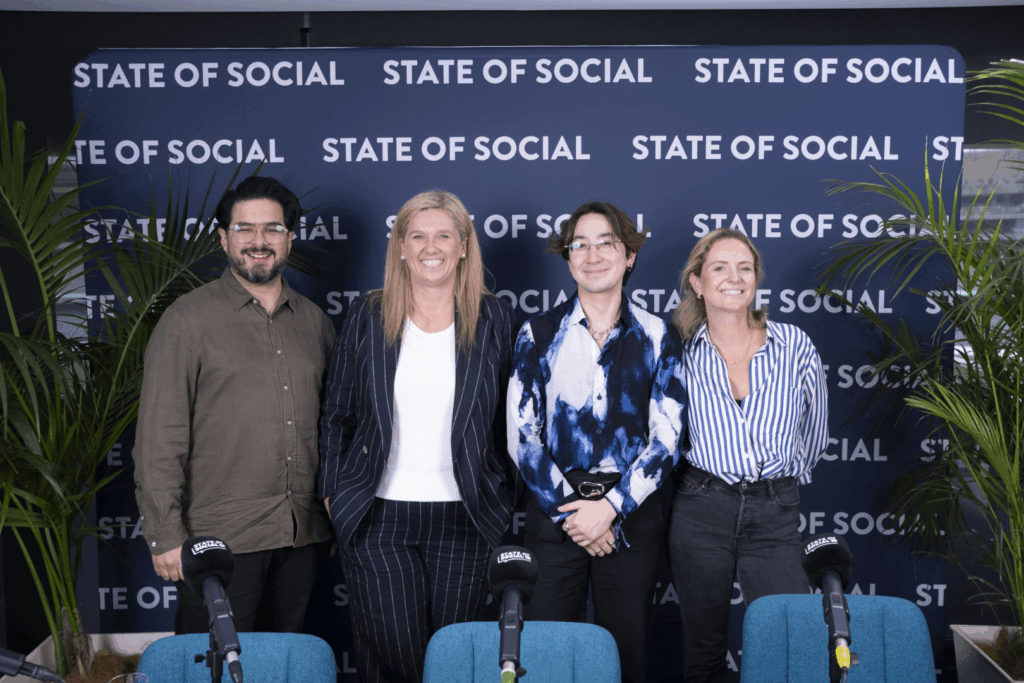
Around the table
 Eugene Healeybrand strategist
 Meg CoffeyState of Social
 Steph EdwardsWiredCo
Coming to SOS27?
| Dates | 24 & 25 August 2027 |
| Venue | Optus Stadium, Perth |
| Tickets | On sale 11 January |
Listen on
Hard Refresh · episode 03
Watch 38 min

Transcript
Automatic captions, names checked:
[0:05] Hello and welcome to Hard Refresh, the official podcast of State of Social 2025. And what are we doing here, you might ask? Well, we’re polishing off our standard issue State of Social Crystal Ball to gaze into the next 25 years of digital marketing. What are the trends, the technologies, the cultural shifts, maybe even the controversies that are going to shape this industry and society at large? My name is Andrés López-Varela. You can call me ALV. all my mates do. And today we’re recording live on the traditional lands of the Whadjuk Noongar people at State of Social 2025. Coming up in this episode, we do a hard refresh on social media. Social media has been marketing’s engine for 25
[0:44] years, not to mention big tech’s cash cow, but it’s now facing perhaps its biggest crisis. Platforms like Facebook and Tik Tok are flooded with AI generated slop. Regulators are demanding transparency or they’re implementing bans. and users are drifting to niche networks as they tire of the mega feeds. Social commerce is exploding in some markets while it’s stalling in others while trust continues to eb and flow. So let’s see what’s next for social media. Is mainstream social over? What role will AI play in shaping our feeds? And what happens when avatars and bots start marketing directly to each other? Thank you for having me. Thanks for joining us. Meg Coffey, the founder and the big cheese of State of Social and a social media expert. Meg, thank you for being here. It’s obviously a very busy day for you, but couldn’t keep you away from the from the
[1:28] microphone. No, it’s the social media episode. I had to be here for this. That’s it. Absolutely. Thank you. And Steph Edwards, the head of social content and creative at digital and creative marketing agency, WiredCo. How are you, Steph? Good. Excited to be here. Thank you. I just realized I’ve got two North American accents right next to each other. I’m just going to have to sign post very carefully for our listeners. So, um, that’ll be a treat, but hopefully everyone enjoys that. You all right? Okay. Is everyone ready? Yeah. Yeah. Time to do a hard refresh. So, we’ve all been around long enough to watch platforms come and go, rise and fall. Uh, let’s pull one out for MySpace and Vine and Be Real. RP. Yeah, RP service. And then there are platforms that refuse to die, Twitter.
[2:06] Um, but Steph, looking at the last couple of years, what’s the one change in social media that you believe is like not a fad, but truly structural that’s going to be baked into the landscape for the next 5, 10, 20 years to come? Yeah. Well, I think video is obviously huge and I think we’re going to move away from statics and it’s going to be video video with people in the video. We’re seeing the rise of employee generated content with more creators coming out. There’s thousands and thousands of creators uh founderled content with people first and foremost. So, um video with with people as the
[2:41] stars. I heard of a um a store in the States called Garage and they’re actually using their employees as influencers and they’re paying them as influencers. So, Definitely seeing people as at the front and center of of content. That’s really interesting. I like that. What about you, Meg? Basically, what Seth said, I mean, I think that video is here to stay. I think there is a place for for stills and and static, but I do think that it is it is the people and it’s getting back to from my point of view, we’ve gone so far away from the people that we’re actually realizing that we need to go back to them, that it’s the people that can tell our stories. And so it is the employer generated content, the founder content. It is putting the real
[3:18] people behind the brands as opposed to that air quote because you can’t see my hands on a podcast historical brand marketing. Yeah. Yeah. Yeah. I think the most significant change that’s happened in the past three years uh probably with the advent of Tik Tok which kind of changed everything with the I call it like the for you pageification of the internet where everything became discovery based algorithms rather than follower based algorithms uh is this the removal of social from the social media proposition. I think like all platforms are kind of converging into I guess I
[3:54] call it just like an attention singularity now. um which are platforms for the digital consumption of content. They’re entertain they’re entertainment platforms and in fact like Tik Tok themselves would not call themselves social media. They’ll call themselves entertainment. Um and that’s YouTube as well. They’re not exactly and I think you know as we see the decline of traditional broadcast networks because they are in structural decline and um fleeing with them probably more importantly is like ad spend. I saw like a I saw a um data point from state uh from Sprouto last week saying that 80% of um advertisers in America are thinking about shifting
[4:30] their money out of traditional to social. Like 40% of them were saying like that money is going to come actually out of TV specifically. Yeah. Um but yet increasingly what is they’re just becoming the new TV channels that just so happened to have a chat function, but they’re not social by design. They’re optimized for dwell time um rather than optimized for social engagement. And so it seems like obviously video is naturally a structural change that we all understand and appreciate is is something that’s going to be like the basis of the internet moving forward. Uh you know with as Meg says still and other formats. Um, is there a sense though perhaps that as younger generations come
[5:07] online and they begin to, you know, become more active consumers, maybe hopefully more critical consumers, that the nature of what’s included in video shifts away from anything we know now. Can you answer that again? Thank you. That’s fair. That’s fair. That’s fair. That’s fair. So, we know that like Gen Alpha, right? You know, they’re they’re they’re first generation born entirely in the 21st century, no concept of what it’s like to have any life without the internet or or a device in their hand. And what video means to them, uh is very different to
[5:44] what those of us who are in market have been in marketing for, you know, 10, 15, 20 years know. Um can we imagine different types of video that become the norm for that generation on the internet? Well, I guess they’re just so used to video. They grew up with YouTube. YouTube is the highest streaming, the most viewed platform in the world. And they’re addicted to the tablets. You’re feeding your kids the iPads at dinners when you’re when they’re two to three years old. So, I think they’re using video more than ever. So, um and and they’re live streaming their lives naturally. It becomes in my what I
[6:23] can see. I don’t have children but they are filming everything is natural whereas maybe my generation or us we we’re not as comfortable on video where it’s not you wouldn’t share those things it’s you know a little bit sideways to your question but I think in the future it’s it’s 15 minutes of privacy not 15 minutes of of it’s second nature to them to always be recording something whether it’s Snapchat whether it’s a Tik Tok or Instagram live or or just being in front of the camera your parents are taking content of you it’s just totally different in our generation yeah so it’s So the video moves from being more kind of I don’t know deliberative or performative to being
[6:58] kind of incidental and almost like a a record of your of your life I guess. Yeah. I mean communication’s always changing. I think like it’s easy to forget like the printing press and like reading is still like a in the scheme of human history is a relatively new phenomenon. And like even like Plato used to talk about how he used to he said like books effectively are like an unserious form of communication. He used to effectively say like the only real form of communication influence can be delivered in person worked out between people. Um like so like we’ve
[7:32] had that conversation of like old man shouts at cloud for a really long time. I think it’s better, it’s easier to think about it as like video and the and the way that that is as kind of like a format like that’s just increasingly becoming the native form of communication for a generation that’s raised on And I don’t like I’m always careful about using like generational classifications but and then we have to go into like McLuhan and everything that he would say about like how the medium shapes the message. But I think like I even myself I I’m a video focused creator as well. And I think there are a lot of advantages to the amount of information that you can
[8:08] convey with video in a short amount of time. the amount of and and I al I also used to be a lecturer at Melbourne Uni like what you can convey through video in terms of density of information and how quickly you can get an audience to internalize a message with visual cues and things as well is much faster than um what I would have experienced if I was having to deliver something in a lecture theory or getting someone to read a reading um and without being like but is that cuz we’re tapping into all the senses so it’s the human nature of it because you are you’re getting the sight you’re getting I was about to say the you know the smell but you’re getting more of the senses storytelling the emotions. Yeah. So the human the body can absorb
[8:44] it better and so video is better because it can just tell all of those stories. Yeah. And I do like I always it feels like there’s a a contingent that really again like I have an issue with this contingent of people that seem to believe that like the written word like it’s only true knowledge if it comes from a book or an academic paper which is perhaps there you know perhaps yes there’s more nuance but I think what a lot of people always fail to recognize is like that thing that you call essential nuance is the thing that makes it completely impenetrable to like 99% of the population. And I like I try to take the opportunity to use new media platforms like Tik Tok to educate groups of people that are like hungry to learn about things
[9:23] but have never quite had the level of knowledge and context and in some instances privilege as well to be able to actually access those bits of information. infold up to more advanced forms of media once they have that like that background and that context foundation if you like and that’s why I think like video is not the be all and end all but like the like it’s here um and I think like learning to leverage the advantages of um yeah like I said like the density of information that you can convey like to make learning better and more interesting like that’s that’s the thing that I’m probably more
[10:03] interested in. Makes sense. Thank you. Um I want to start looking forward now into the future, gazing into the the crystal ball. Um I’ve said it like a hundred times in the recording of these episodes. Um one of the other big changes we’re seeing emerge is social shopping. Uh it’s so big in Asia. It’s like $900 billion in in um in commerce. There are some developments here in Australia as well. you know, like Instagram is emerging as the preferred channel here in Australia for social shoppers. Um, but it’s moving slowly. It’s moving slowly here in Australia. It’s moving slowly in the US and Europe. And it seems like there’s a definite, um, uh,
[10:40] you know, uh, twospeed adoption of that, you know, and I think I’m interested to explore this topic as, you know, because naturally we spend a lot of time in these places. Naturally, they’re going to turn into shop fronts, I guess, in some way, shape, or form. Um, what do you think this is about, Meg? Is it a cultural mismatch or do you think social commerce does have a future you know in the next 5 10 years as part of uh you know the mix of social media and western markets too? I definitely think it has a place. It it seems like it’s just the natural progression of the internet. Yeah.
[11:11] Or just the natural progression of consumerism in that regard and that you know before you would go to the shop to buy the things and then you could order it online and now you don’t even need to order it online i.e. via their website. It’s from their Instagram account. So it’s just sort of the natural incrementality. Yeah. Of just e-commerce and and globalization, I guess. So So you think it’s definitely coming more broadly even though it’s sort of like exploded in Asia. Yeah. And different cultural cultures will adapt to things differently and and based on I think this might this is a bit broad, but Australia has an excellent payment system. We can
[11:46] transfer money to each other really easily and buy things really easily. In the US, you can’t. I can’t just pay like I can’t just transfer you money. So commerce in different places is going to be different based on how your banking systems are and your ability to spend money I think. And so for us maybe maybe it hasn’t hit as hard just yet because we have really easy payment systems. Tik Tok has been telling us for months years even that Tik Tok shop’s coming but every time we ask them they don’t have an answer. Oh next month in a couple months it’s been in the US for years now. So I I don’t know. I wonder what the
[12:21] holdup is considering how popular it is, how how effective it is, users are spending. Do you think it’s a cultural mismatch? I I I don’t know what’s happening there. I mean, they have Venmo in the States. It’s super easy to to send someone money quickly. Users are spending all their time on on social platforms, so why can’t they purchase something on it? It seems to be the right next step. I don’t know why it’s so behind here. Do anyone think it’s it’s it’s not coming here at all? I I think eventually, you know, I mean, as we as we stand here, we as we sit here, there’s a there’s a keynote happening right now about the future of social commerce. I agree. I think it’s like the natural
[12:58] next step. Why? Like why it’s slow to adopt. Um cuz we live in an island at the bottom of the world. Um we’re like I’m this is one of the things I’m really passionate about as well. Like we’re we’re 105th for economic diversity and we make most of our money. We’re in WA as well. Make all our money by digging things out of the ground. like um that economic conservativism breeds a certain level of conserv that that sorry economic the monolithic economy that we have breeds a certain level of um complacency comp complacency and yeah exactly and we’re an asset based economy as well like that slows everything down and we’re also a relatively small market um
[13:35] it’s yeah we have good we have really good infrastructure which I think is the um is the kind of basis of like why it will take off but I think if we just look at like what it’s it’s happening and I I think um in especially like Asian diasporic uh diaspora across Australia like it’s starting to happen more and more um we look at like Leubu that like built a brand that’s worth more than Hasbro and Mattel combined um off almost exclusively social commerce like people try to talk about it like it’s um because some celebrities were seen wearing it and there are some cultural things and yeah we’re talking about little treat culture and the phenomenon of charmification and um in times of economic struggle but like that was
[14:12] effectively built off a like uh Asian social commerce and extraordinary social commerce capabilities. Yeah. Yeah. And I think also that it Tik Tok shopping or Instagram the e-commerce it democratizes a lot of it. So you don’t have to have the storefront. You you you like all you need is a Stripe account or all you need is like you can literally just sell right through that platform. So if it’s just me in my little shop, I don’t need Yeah. But it would make it a lot easier for all these creators that have started their own brands. So so many Australian creators coming out with fashion brands and whatnot, beauty brands, how much easier it would be for them to sell it
[14:48] directly on the platform that they have all these followers and these fans. Less friction. Totally easy. Um it seems to be the the inevitable next step. Okay. So we we’re seeing the emergence of AI influences across social media. We’re seeing um you know synthetic talent or AI avatars. Creepy. I mean fascinating if you ask me. Creepy. 8t tall. Three knees. Three knees. Three knees. Jesus. Um, yeah. So, like I said, fascinating but creepy as well, right? Um, and that’s on top of the explosion in AIdriven profiles and, um, you know, it’s growing faster than what the platforms can admit or handle really. So, Eugene, let’s
[15:26] imagine that in like 5 or 10 years, there’s an equal amount of AI users to human users across social media. What are the odds that we’re just selling stuff to AI? or perhaps more hilariously, what are the odds that AI influencers are amassing AI audiences to create AI customers? Um, I personally don’t believe the hype around AI influences at all. Um, I think it’s a toy. I think um right now we have this gold rush of like this probably like the most extraordinary productivity tool and you know we speaking about it yesterday of like vis
[16:00] like this thing that is going to like supercharge this visual economy and there’s so much private equity money swimming around in this gold rush um and most of it’s garbage um there’s there’s a couple of use cases where it’s absolutely not like I do think it’s going to reorganize the entire knowledge economy and that it’s collapsing the value of technical knowledge um but I just don’t think that that’s how influence functions. And I think the idea that AI influences are going to be popular in any way. Um uh is a private is a Silicon Valley dream um that believes that more tech is always the solution to everything. Um and speaks to
[16:36] kind of like a fundamental mismatch or like a them just not understanding influence more broadly. Exactly. It’s the opposite of what influence is like the only the the thing is I like the content. You’re right. The content doesn’t matter. that can be scaled. But the one thing it’s for the same reason that nobody believes a the general public doesn’t believe AI art is art. Nobody believes AI art is art because there’s no trace of the ghost in it. And I think there no soul. Yeah. And that’s the same with AI influence. Yes. There that’s not to say that there aren’t AI influencers with 7 million followers and things like that.
[17:11] And but they’re exceptions to the rule and they’re not they’re novelty toys. I think like at the end of the day what people want when it comes to influence es at the smaller level they want these parasocial relationships and things like that and the larger level then they their broadcast channels where they’re people that they really look up to but no one’s ever going to look up to a bot I’m sorry like I just what kind of influence do they have what opinions do they have if they are exactly AI is a composite of opinions it doesn’t have a soul so how do you relate how do you relate to it how do you find the human in it how do you how do you relate to it you because it’s it’s not real.
[17:46] Despite that though, let’s say that there are AI influencers that do have large followings whether we like it or not and brands say, “Hey, I want to reach that community because for some reason they believe and trust and like that influencer. Should we be embracing that stuff? Should we as brands, as marketers, should we draw a line and go enough is enough? We’re not dealing with AI influencers. This is a principle stand.” or do we go well maybe it’s another channel? I mean I guess it depends on the brand and who they want to work with. So some have may have seven million followers but are they true valuable followers
[18:23] that are going to listen to this AI influencer and buy something because this influencer’s talking about it or mentioning it? They’re probably not valuable followers. Um it might be more of a vanity metric of their followers. Yeah. I just think the answer to that question is like what is the okay let’s say that this exists like what is the source of their influence in the first place why do people follow them like what are they an authority on like it’s obviously not like like it’s obvious not lifestyle or whatever but then you know again I just I tend to think of like influencers as like
[19:00] that well they’re they’re independent media companies and they’re brands so like what is this person’s brand if we if we take if we take your assumption for granted that this person does have real influence Then yes, it’s not their influence that they’re an AI influencer and so people follow them and like them because they’re an AI influencer, not because they’re being influenced to buy that pen or that shirt or that take that trip. I think it’s that they’ll follow I think that they’ll follow if they if they do follow this AI influencer, they follow it for the same reason they follow every brand because a brand is also not a person. A brand is just like it’s an entity. It’s a bucket for a group of associations. And if you identify with those associations, then you will remember that brand for the right
[19:38] reasons. when that memory interacts when you’re in market for whatever that brand sells. So, it’s just that if you if you strip out the AI influencer, it’s just what’s their brand and me as me as a brand that’s trying to sell something. How do I get them to effectively communicate the thing about my brand and my product? Yeah. Okay, fair enough. I want to talk I want to sort of project forward now, like quite far forward to like let’s say it’s 2040, right? And mainstream social media is sorry overwhelmed by AI accounts, AI users and AI um influencers and they’re creating each other you know
[20:15] um does that mean or not exclusively because of that but in that time given the direction of our society and our preferences our digital habits is mainstream social media a place for humans in 20 years time or is mainstream and social media waiting to be supplanted by niche communities and smaller, you know, interestbased uh networks. What do you think, Meg? I think it already has been. I think the niche community is already popping up and existing and the when you look at some of the gaming platforms and the lazy gaming and the communities that they have around that, I think we um we very much have already splintered from
[20:53] the mainstream social. I mean, I look at myself in and Twitter and when Twitter became not Twitter anymore and how it dispersed everybody and we’ve regrouped, but in smaller communities, on smaller platforms, not everybody in the exact same place, but that’s the nature of it. And so, I think I think that yeah, the niche communities, they’re already here. Mainstream social is it’s Is it on life support? When’s the last time you checked your Facebook feed? I go through it and there’s not a single thing of someone that I’m following. It’s all suggestions. It’s not actually anything that I’m currently following or my friends or my parents posting about their
[21:28] friends or that that generation. Is is mainstream social waiting for the boomers to pass away and then is it dead? I think I still think that we’re looking for that human connection. Like I still want to see what my friends are up to. I still want to see that valuable insight and opinions from creators. I still want to see real people. So I hope not. I hope in 15 years we still have some sort of human humanity on the platforms. What do you think, Eugene? Um I would just kind of go back to my first point that um it’s not so much about whether something is dying but whether our old definitions of it no longer work. So um mainstream
[22:08] social and if you want to talk about like maybe we should name names. If we want to talk about Instagram, Facebook, Tik Tok, Snapchat etc. No, I think the p I think the public social networks are effectively becoming entertainment platforms that have some social component to them but are entertainment by design with a social bolt-on. And I think that social and this future state you’re talking about um this the human social component will be reduced basically effectively to zero. They’ll just be pure social uh pure entertainment platforms. Then we have platforms like Snapchat that I think will continue to exist but they’re closed social networks.
[22:43] Snapchat, um, Blue Sky, um, Discord, Telegram, etc. I think they’re all they’ve all experienced record growth, and I think they’re all going to do, um, incredibly well as closed communities that are distinctly uh, and purposefully gatekept to maximize social connection and cohesion within the groups themselves. Like I don’t Yeah, that I just think it’s where is the social part of the social media proposition moving and where is the entertainment part of that proposition moving? Do you guys think that that entertainment proposition is really
[23:19] is it driven by commercial reasons? Is it driven because that’s where the monetization is? I I think regardless we always want to be entertained in some way instead of watching shows that some people might just go right to Tik Tok for that entertainment. So maybe we’re moving away from how we consume entertainment onto our phones versus sitting in a theater or sitting at home on your TV. But I think we’re always going to want to be entertained on on some sort of platform. Meg. Yeah, I think entertainment the way we consume entertainment has changed throughout the all of history because of the way that entertainment can be presented to us. This is just the
[23:52] latest. Yeah. I think I mean is it true that that that the value in this entertainment aspect that Eugene said it’s been dialed up is because that’s where that’s where the monetization opportunity well it is and that’s where they can make it and it’s just changing it’s exactly I’m just I was coming back I was trying to process what you were saying about how they have they’ve changed you’ve got the entertainment and then you’ve got the social and the human and that is it’s the niche communities it’s bringing it back and they are we can’t talk about mainstream social the way we’ve talked about it because it’s it’s different it’s shifting and those businesses Facebook and and they’re shifting because they have to make money and they found the money in the entertainment and they can they can
[24:27] commoditize that and they can monetize that and they have all of our data now so they don’t need to make more money. Yeah. The product is right. So I think it’s it’s just it’s this it’s this shift and there will always be a place for entertainment and social is the new channel. You know I look at it is it’s just simply the new whereas we used to send press release this is just a new channel for us to get our story out. social. Um, it used to be TV or print. That’s where entertainment is. It’s a new channel for us and and the platforms are changing because they had to change. Look, we’ve sort of touched on it. We’ve kind of avoided the elephant in the room until now, but I’m going to let it I’m going to let it join the chat. I want to
[25:05] talk about AI slop really openly. Um, this weird cheap hyperviral content that’s everywhere. I saw a video of cats as mermaids last week and I was like mesmerized. like I was like, “Oh, obviously this is fake.” Obviously, but it took my brain a second to realize what was so wrong about it. And it was the fact that the cats were missing their back legs. Scroll stopping. Thumbs stopper. Definitely a thumbs stopper. You know, um I mean, tell me like obviously that there is, you know, a degree of um you know, like post-apocalyptic ending vibes around this, but also someone has created this.
[25:43] I well most likely someone has created the cat mermaid video. Is this just a legitimate new form of creative expression or artistic expression or is it just the first you know like horsemen of the apocalypse? Eugene, um, thinking about something that I read from the trend forecaster Shan Monahan where he was, um, referring to a moment uh, where there was a video, I think it was Jennifer Aniston um, and she was papped and she had a bunch of oil spilled on her like like black oil or
[26:16] something. Yeah. Okay. So, and there was an argument going on in the comment section about whether it was real or fake. And I think there was the what was really interesting he talked about that this video or image has circulated many times in the past but the conversation was completely different because the argument about what was real or fake was actually an argument about what kind of fake we’re willing to accept. So we’re willing to accept as a piece of entertainment Jennifer Aniston the actor has this on her for a movie. So that’s an that’s artifice but but there’s a but there’s a reality about that. But if it was if that image never existed in the
[26:53] first place, if it was actually AI generated content, then all of a sudden like people’s guards go up. There’s a there’s a sense of again to that idea of what’s the fakeness that we’re willing to accept. And I think that’s the real challenge for these let’s call them entertainment platforms is that the user is only willing to accept a certain level of fakeness in their entertainment. And perhaps that will change in future, but I don’t really think it is. is I think it goes back to the idea of why AI art isn’t art. Why we don’t believe in AI influences is because like we want there to be some trace of the ghost in all of the in all of the entertainment or education or anything that we consume.
[27:29] We’ve always had the we’ve always had an AI of like you know special effects. We’ve always had something that helped us. Yeah. Yeah. But you’re right. It’s that it’s that how much are you willing to take and then sometimes the movies just become comical cuz the special effects are just so bad. Right. I think it’s Yeah. Yeah, to your point, it’s like you’re willing to take it, but then you just you realize you go that’s not real and I’m not interested in that anymore. And it’s this it’s this feeling I think there’s a kind of there’s a couple things that I’ve been thinking about. It’s this feeling of when we consume that content, we feel that we’re being tricked and that scaffolds into a deeper feeling that we’re being programmed.
[28:04] Like it scaffolds into the dead internet theory that nothing is real, that no one here is real. And I think that like that uneasiness is living somewhere in um users like bileduct or something somewhere like it certainly is animated like a lot of those online conspiracies Q on and everything. Exactly. And I think that the thing is the it’s the moment it’s the moment where it becomes so prolific that people can’t discern what’s real anymore that that’s when they’re at real risk of shutting off cuz again to go back to the idea of what kind of entertainment am I comfortable being tricked by? If they believe that they’re being tricked by the kind of entertainment that they don’t want to be
[28:40] tricked by, then that’s then they’re suddenly going to stop saying, “I’m, you know what, I just don’t think this is entertaining. I don’t want to be here anymore.” That’s what I would be really concerned about. Is there a kind of AI slop that you think could be useful, you know, let’s say in the work that you do with brands that you would say maybe slop is too unkind a term, but you would go, “Hey, you know, I think you should create this kind of AI content.” Totally. It’s creating amazing creative efficiencies we can do at a home with AI with midjourney putting it to chat making different versions of creative. We worked um with Tik Tok Symphony the other day and it is amazing the they can animate anything. You have a simple static they can animate it but they make
[29:19] sure that every time you use Tik Tok Symphony it says AI generated at the bottom. So maybe in the future there’s a disclaimer on all content that’s AI. Is is is that necessary? Maybe it’s interesting that Tik Tok Symphony is doing it specifically. I don’t see any other platform doing that. So maybe that is they didn’t put they didn’t put warnings out when they photoshop things in the beginning and then they started to say this cover’s been photoshopped. Yeah, maybe it will. This is acknowledging it. Brands using AI models. I know Mango did that. There was some controversy around that, but then they they acknowledged it. They kind of
[29:53] this is the way of the future. Um so well, guess just put an ad in Vogue. There was a fake model and that’s the model that was 8 feet tall because if you go and you look at the ad the proportions don’t work but it was a guest ad and they loved it and and it got everybody talking about the brand. So as a marketer as an advertiser you’d be happy job done right. So I agree with you the efficiencies and the crazy it is there is so much that it can do but you still need that yeah some of it is a little creepy those these little babies are talking I don’t know if you’ve seen this on your algorithm it’s really creepy. They’re saying really funny things, but there’s a little baby at the hospital waiting to get to
[30:30] their parents to bring them home. Yeah. And they’re saying really random rogue stuff, and it’s just like, is this what it’s come to? Yeah. I mean, most of the slop I get is cats. So, cats doing cats doing cats mermaids. I saw one of cats like holding babies, you know, like giving a bottle and stuff. And I was like, again, it’s just like I I know this is fake, but also like my brain is trying to process the baby hold the thing. Yeah. Cats and dogs diving. Yes. But like that was awesome to watch like piouettes and little things and you’re just like I know that’s not real but I want to consume this.
[31:04] But like you said Eugene maybe we’re okay like we’re okay with that level of fakeness. Yeah. I Yeah. Again it’s a it’s a pure projection. I just think that right now it’s a novelty and so there are like bits and pieces of it that we’re willing, you know, we’re willing to consume because it’s oh that’s interesting. How do they do that? But once it moves into the realm of and again it’s game theory, right? like when there’s one or two videos out there, but when it’s fine, but what happens when it becomes your entire feed? And that’s I think it’s, you know, once this becomes the norm, the standard, when lots of different people are trying to do it, when it becomes the only thing that you can see because it’s
[31:38] so easy to produce at such significant volumes. Um, yet that then do people still want to turn it like and I look I suppose it’s an optimistic view. I think not. Yeah. This is an optimistic view of human attention. I would say I like that. We need more of that, right? Yeah. Yeah. Yeah. Sometimes a trend forecast is for something that you want to see. Yeah. Yeah. All right. Before before we wrap it up, we have just enough time for little rapid fire refresh round. So these questions are wide open, your spiciest, hottest takes, no holds. Okay. In 2050, will the concept of brands still exist
[32:13] as they do now or will we have hit refresh on that way of thinking about brands? I think businesses will still exist. It’ll just be the definition of the brand. It’ll be I mean brand brands will always exist though as long as we have we’re buying stuff. Yeah. Capital capitalism will always have that. But I just think you know it’s how how it’s sold or how it’s displayed the story that how it’s told. Uh that’s that’s that what is what will change and it’ll just be a new channel that we have to to tell that story. Great. New channels to market on, new channels to to push creative out on, different ways to advertise. Yeah, I
[32:51] guess it’ll be a totally different ballgame in 25 years. Scary. All right. What’s one marketing buzz word you’d refresh straight into the garbage? Authenticity. It’s been a big big uh word. I think you’re the 10th person to say that. Eugene. I’m about to say it on stage. Authentic. What is it? Yeah, it’s it’s actually it’s not it’s not even that it’s meaningless. I think it’s actually uh impossible on public social which is explicitly about performance. Those things don’t they can’t sit next to each other. It’s like a vegan steak. That should not exist.
[33:25] Doesn’t exist. If AI if AI got a chance to refresh your job description, what would it throw out? What would what would it say, oh, you don’t need to do this anymore? Oh, I thought you were going to say what would it throw out like what would it describe your job as not say? Yeah. What would be like, oh, don’t worry. You don’t need to do this anymore. Research. research the like yeah the backend guts and grizzly bits I would say maybe that’s I was going to say framework until you say frame you know what frameworks is frameworks is better I think how the yeah exactly no I would still need to because yeah the value the value comes
[33:59] through actually the research and the the process your eye and the questions that I ask but yeah how the research becomes organized I think exactly or or I’ve got all these bits can you like I think I know it can you help me Yeah. Organize frame it. Yeah. Yeah. Or or direct report. That might be what might get removed as well. Yes. Maybe. Maybe. Maybe. Yeah. Yeah. Yeah. A lot of people said um the that it would say you don’t need to use zero anymore. I’ll do it for I was going to say admin and tracking hours. Maybe like that. Yes, please. All right. If you could refresh the internet for the better, which one channel or platform, social or
[34:33] entertainment, would you get rid of? Facebook. Yeah. Just Facebook. You said one. I know, but somebody took that very smartly. They said meta as a keep Instagram. That was I was like, well, I don’t have a problem with Instagram. I I do I think that Facebook I mean, oh, you could I could make a case for everyone. You know what I mean? Twitter is my favorite. And so I but I could very easily make a case that that Twitter needs Well, the other thing that they call it needs to go away, but I think it’s more Facebook these days for me at least. It’s fair. Yeah, agreed. Keep Instagram for sure. Okay. Keep Snapchat. I also love Snapchat.
[35:13] All right, last one. When Gen Alpha refreshes marketing in 20 years time and looks back at us, what’s the one thing they’re going to roast us for the most? The way that um the chaotic, unhinged, messy presentation of brands that were worth uh had billions of dollars in market capitalization. brands pretending to be like a chronically online teenager. I think and like DMing you and calling you bestie and things like like that that the false relatability. I think the the artifice of that I think is what’s going to be roasted. Yeah. Yeah. Wow. Ouch. And I think and today out of old days, I know this is a podcast so who knows when they’ll listen to it, but the amount of
[35:51] brands that jumped on the Taylor Swift engagement today. Oh, yep. Yep. like everything everything we’re recording this on the 27th of August 12 hours after Taylor and Travis got engaged and it’s the only thing in my the only and not every single brand needs to be there and so I definitely think that yeah in the future they’ll look back and they’ll be like why why did you guys just force your force your brand into a conversation that you’re not relevant in. Yeah. Yeah, that’s probably fair. And Travis and Terry wish you all the best. Uh this is we really plumbed the depths of the internet. I think for better or for worse, this is a fantastic and
[36:26] fascinating conversation. Eugene Healey, Meg Coffey, Steph Edwards, thank you so much for joining me. Hope you enjoy the rest of the event. Thank you. So fun. Thank you. If you like this refreshing conversation, you’re going to love the rest of Hard Refresh. Join me and the Smart Minds of the State of Social 2025 crew as we deep dive into all the topics and big questions to understand what’s coming up in the next 25 years of digital marketing. All episodes are now live in your feed. And remember what your mom and dad said, sharing is caring. So tell a friend if you like what you hear or see. And remember to give us a review so more people can discover the show. Hard
[37:03] Refresh is a co-production of State of Social and Original Audio. The show is produced by me, Andrés López-Varela, and Aaron Matthews from Original Audio. Shout out to Cal McClain for production support and to Meg Coffey, our executive producer. I’m ALV. Thanks for tuning in. Join me next time when we hit hard refresh all over again.
Social media has been the beating heart of digital marketing for two decades, but is it already past its peak? In this episode of Hard Refresh, host Andrés López-Varela is joined by Eugene Healey (brand strategist, educator, and creator), Meg Coffey (Founder, State of Social), and Steph Edwards (Head of Social Content & Creative, WiredCo) to debate what the next 25 years hold.
From video-first platforms and social commerce to the rise of AI “slop” and the decline of mainstream feeds, the panel explores whether we’re heading toward smaller niche communities, entertainment-driven platforms, or something stranger still.
In this episode of Hard Refresh:
// Video has become the structural backbone of social
With TikTok and YouTube leading the shift, the panel argues that video isn’t just dominant, it’s now the native language of a generation raised on tablets and live-streaming their lives.
// Social commerce is booming in Asia but lagging elsewhere
The guests unpack why TikTok Shop and Instagram Shopping thrive in some markets but crawl in others, pointing to cultural differences, banking infrastructure, and Australia’s slower adoption curve.
// AI influencers and synthetic content divide opinion
Are they toys, novelties, or the next big channel? While some argue they’ll never replace human connection, others note their potential to function like brands in their own right.
// Mainstream feeds are hollowing out
Facebook and Instagram are increasingly entertainment-first, while smaller platforms like Discord, BlueSky, and Snapchat are quietly becoming the real hubs of social connection.
// AI “slop” and the trust crisis
From cat-mermaid videos to uncanny synthetic babies, the episode tackles the flood of low-grade AI content, asking what level of “fakeness” audiences will tolerate before tuning out altogether.
This episode was recorded on the traditional lands of the Whadjuk Noongar people, live at State of Social ’25.
All episodes of Hard Refresh are now live on YouTube, Spotify, Apple Podcasts and other podcast players.
Take this with you
- Put people at the centre of video: back founder-led content and consider paying employees as influencers, as the US retailer Garage does.
- Skip the storefront for a small or creator-led brand: sell straight through the social platform where the fans already are.
- Before paying an AI influencer, ask what they are an authority on and whether those millions of followers would ever buy.
- Use AI to animate statics and make creative versions, and label it as AI generated, the way TikTok Symphony stamps every output.
- Sit out a trending moment your brand has no reason to be in, like the brands piling onto the Taylor Swift engagement.
Keep reading
- State of social indexHere’s how social really works in Australia
- SOS26Nine years in, and the theme argued back
- Delegate resourcesThe reading list