Hard Refresh on branded content
Listen on
Around the table
 Amaury TreguerBread Agency
- Kate O’Connorformerly BBC Studios
 Keshnee KempAugust One
Coming to SOS27?
| Dates | 24 & 25 August 2027 |
| Venue | Optus Stadium, Perth |
| Tickets | On sale 11 January |
Listen on
Hard Refresh · episode 02
Watch 28 min

Transcript
Automatic captions, names checked:
[0:05] Hello, welcome to Hard Refresh, the original podcast from State of Social 2025. What are we doing here, you might ask? Well, we are polishing off our standard issue State of Social Crystal Ball and peering into the next 25 years of digital marketing, trying to understand the technologies, the trends, the cultural shifts, and maybe even the controversies that are going to shape this industry and society at large. My name is Andrés López-Varela. You can call me ALV. Everybody does. And today we’re recording on the traditional lands of the Whadjuk Noongar people live at State of Social 2025. And in this episode we’re going to do a hard refresh on branded content. Brands are no longer just advertisers. They’re publishers, podcasters, filmmakers, even news breakers. And they have been for a while. But as newsrooms shrink, branded content has stepped in to fill the void.
[0:54] But is that a public service or is that an issue? As the influence of branded content grows, will audiences care about who’s behind the story, or will quality trump the origin of that content? We’re going to dig into how credibility survives in a branded world, whether branded content undermines journalism, and if we’re heading toward a future where brands run their own entertainment platforms, completely blurring the lines between commerce and culture. All right, and taking their positions in the hot seats for today’s chat, uh, Amaury Treguer, co-founder of Bread Agency, a specialist social media agency. Ammo, how are you? Yeah, very good. How are you? Good, thank you. Kate O’Connor, a consultant who used to run Bluey at BBC Studios. How are you, Kate? I’m great, thank you. Thanks for being here, too. And Keshnee Kemp, the founder of August One, a data-driven social media marketing firm and also the former head of content at Woolworth. Welcome. How are you?
[1:42] Good. Thanks for having me. Yeah, I’m so happy to have you. Have you guys been enjoying State of Social? It’s incredible. It’s been such a great couple of days. Fantastic event. The weather’s even sorted itself out for us now. And very well organized. Yeah, really well. Yes. No, it’s great. It’s great. I love it. I’m so happy to be able to talk to to you guys and to all the speakers. It’s fantastic. So, all right, let’s dive into it. Everyone ready? Sure.
[2:02] Time to do a hard refresh. All right, I want to start by just acknowledging that we’re um all on a branded podcast right now. Uh talking about the future of branded content, so the irony of that is not lost on me. Um it’s a little bit um inceptiony, but hey, this is nothing new, right? like podcasts, documentary style videos, feature articles, magazine, like brands have been publishing content at scale for uh more than two decades now. Um, and everyone’s used to it. In fact, we’re probably maybe consuming more branded content than we are, you know, editorial content by this point. Um, Kesh, do you think audiences care about where they’re getting their content from or from a media publisher or a brand anymore? Are they just chasing what’s best aligned to their interests or are they just seeing what’s kind of coming into their feed?
[2:48] Yeah, I don’t think they care as long as it makes sense in context of their experience and it makes sense for the brand. So if the brand shows up authentically if it makes sense for them to be playing in that space and I think it makes sense for them you know. Uh so no I don’t think they would differentiate between oh no this brand is creating something within my platform that is engaging me I won’t engage because it’s a brand absolutely not. If good content is good content and do you think that if they had a choice between branded and like you know editorial content would they choose branded over editorial? I think if it’s authentic, if it’s correct, if it’s engaging, I don’t think they give a [ __ ] to be honest. Um I think they just like content for the for being great content. Um, you know, I’ve worked in a brand that has a
[3:30] lot of branded content and never once has there been a question about, oh no, it comes from this brand and therefore I wouldn’t engage with something that naturally I want to engage with. So, um, good content is good content. Yeah. What do you think, Emma? Yeah, I feel the exact same, you know, like when you’ve got like, you know, a lineup of speakers like we we we are. No, I’m joking, but like, you know, who cares like you who is backing this up? I think if you if the content is right, if like you know whoever is you know participating in that content and it could be you know like in the in this example of a podcast you know like three of us we all have very different I mean four of us I guess uh all have very different kind of you know backgrounds I think we as long as what we say is interesting um I think that’s probably
[4:10] the hook is trying to find something interesting what we what we’ve been do up to and um but yeah it doesn’t matter you know if it’s branded or not I don’t think so case blueey obviously Uh look, I have a slightly different view. I think because um I think it does matter editorial versus branded content. I think that is something that to me coming from the BBC which is you know um at its heart a um a media and all the national broadcasts in the UK. I think um I I love branded content. I I think there’s a huge place for it, but I also think it’s different to editorial content. And I think there are some people like Hannah Ferguson from Cheek Media who are doing a really good job of bringing those things together in a very very credible way. Uh but I don’t think they necessarily
[4:59] belong together and I think that it is is good that people are are able to recognize the difference between them. And so do you think do you think Kate that we should be making a clearer difference then uh especially when branded content is placed in traditional media channels? Well, I I think people are just getting better at figuring out which is which. Well, I hope they are. I don’t know. Um but you know, I think everyone you speak to, even like really young people, 13, 14, 15 year olds, are pretty savvy at figuring out what’s what. Um, and they know when something is positioning itself as editorial, but
[5:39] it is actually branded content. And they’re getting better at figuring that out. I think there’s a big difference too between advertorial and branded content. So, you might have a sponsorship payment through an advvertorial piece of content, which is written around a sponsorship’s need and services. Very different from having recipes from a from a magazine of a brand or having, you know, a guide or a point of view from an expert from a brand. Like I think there’s there’s quite a few different levels of branded content. True branded content is an advvertorial content shouldn’t be, but that’s probably the blurring of the lines. You know, it’s editorial editorial from a
[6:14] brand or advertorial an advvertorial people know it’s an avat, you know, an avitorial when they’re reading it because it sounds like it’s telling you to buy the product or service. So even though the brand is the in the background of branded content should be good branded content, right? not always should be then it should be perceived and you know consumed as editorial. I mean recipes are a great example right of when branded content is done right because it’s so credible. It’s what your brand is known for if that’s what you’re in the space of. Recipes are exactly the kind of branded content that does blur the line in a really good way. Um yeah so I would echo what Kesha has said. Yeah, fair enough. I guess that leads me into a related topic quite well actually like traditional media is shrinking. the commercial models um they used last century have you know not translated as well to the digital age as maybe you know we would have hoped obviously you know particularly of newspapers um and
[7:08] all that’s kind of contributing to the proliferation I guess of branded content there there are these spaces that are opening up that maybe used to be filled by media publishers and editorial content and you know people are still demanding the content in some ways and so brands are stepping in but ammo do you think brands are genuinely filling a cultural gap here or are they just doing what they do best pursuing a commercial opportunity. It’s interesting because I think like we all need like all brands are becoming publishers in their own rights. So we all you know social channels obviously kind of you very much like kind of you know you need to fuel the beast. So um they’re obviously creating a shitloads of content. Uh and therefore it’s like yes of course it it’s branded content. Sometimes they need to also kind of reach uh uh you know also different audiences like you know in the power of influencers and UGC is also for that.
[7:56] It’s like third party endorsements, but realistically um I do feel like you that’s the space that we in now. We need to kind of you fuel the beast and kind of produce so much content. So it’s all branded content at the moment. It’s it’s on your socials basically. Um so it doesn’t really matter as as long as you disclose that it’s you know branded but I think people are not stupid as you were saying before like people will discern if it’s like you know it’s been branded or not. Um but yeah I don’t think it matters to be honest. Cashing. Yeah, look, I I think that it’s a it’s an interesting topic because even, you know, actual traditional media um platforms have a commercial bottom line also, of course, and so technically, you know, you’re driving traffic in to be able to drive um you know, have ads and drive revenue. So, there’s commercial incentive regardless of who is the publisher. Obviously, some, you know, very different to
[8:45] others. Um but I think yeah I think it’s natural for them to play in that space not only from a awareness point of view to be able to drive awareness of the brand but also to be shown on you know SEO platforms as well like Instagram is a new SEO feeder for example content has to be relevant if you want to show up in search so it would be crazy for a brand not to be playing in this space if they can you know and so I wonder then you know as you said media publishers have commercial models trying to create audiences to drive ad revenue uh or subscription revenue I guess um increasingly can brands adopt this model can brands adopt that that model particularly around subscription where if their content is good enough they can demand a price a regular price $9.99 a month what do you think Kate
[9:34] um why not I mean why not that everybody is trying lots of things at the moment to see what sticks for them um and I mean from my side looking at it from a um you know Bluey was obviously is an entertainment brand. We have a lot of fans um and so the content was always really generated for fans. It wasn’t generated to um try and make money out of a subscription. And it is about, you know, really bringing the fans a place that they can connect and um social has been amazing for that and and Louis social team is really good at at kind of connecting people. Um but sure, why not?
[10:17] I mean, why brands can do anything these days? I think if you’ve got the audience and the value, it’s all about that kind of, you know, that um value exchange like you know, if you give me a very good reasons to follow and kind of pay for that subscription because you give me exclusive access that you might not see, you know, those broadcast channels are very good examples of you or like kind of yeah the the the membership act um you know you know that even influencers are asking for you know like hey you want to see more of my content you’re obviously very interested in what I do hey pay you know $9.99 or whatever and and I give you exclusive access that no one else will see. If you if you really kind of you have that kudos or you like probably blue ad or um then of course
[10:59] people will pay for it regardless if it’s branded or not or if it’s an influencer or not. I think it’s so critical to really see that value exchange. If you do if you don’t provide value then no people will stop subscribing. Yeah. They vote with their money, don’t they? Yeah. Exactly. And honestly, I see this with subs with um how do you call this? um um or like u gosh uh like platform like streaming platforms I see the same you know I’ve kind of subscribed to Disney Plus but then my my daughter was not watching it so I was like I don’t find any value I stop on that one you know I’ve got a few and you know some you find the value some you don’t and then you stop doing it’s exactly the same I would say yeah yeah I mean you see it with Substack you know
[11:37] Substack is starting to become a very much um a subscription model where people are creating their own content and um and charging for it and yeah, I think it’s it’s great. Yeah, I’ve even seen some brands on there doing doing you know like behind the scenes looks uh and you know then having an extra tier paid a paid tier which works well I think definitely. Yeah. Um so and you know I guess it’s true that branded content is is better than content publishers. Sometimes it can be, you know, if if it’s well resourced and Kesh, as you said, if it’s good understanding of the audience and and the quality is there, you know, there’s no reason why th that content can’t be on the same level or or, you know, be better than than media or editorial content.
[12:20] Does that mean that if that continues, let’s say if we project forward to five years time or 10 years time when there’s a lot of consolidation in in traditional media um this small less and less smaller media brands that marketing and brands with their content will finally have you know um supplanted traditional media as the mainstream media khn maybe like it’s hard to say right I think that the most important thing is you know this value exchange that we’ve already referenced but I think building communities is the way forward. So building communities through whichever platform if you can continue to build and expand the community then you will have a future in that space and I think it really makes a difference which who starts that if if you if it’s you know a brand or a media platform if you give up on the community you give up on
[13:08] longevity of being in that space. Um and so yeah I can’t I couldn’t say one would beat the other. It’s just the best you know way to harness and engage and continue to entertain that community most effectively. Yeah, the only thing I would say is like brands are so reliant on social platforms to build those communities. The problem is like platforms are ch I mean those social platforms are changing the algorithm without you knowing and without you even kind of you know uh uh be able to plan and that’s I think the one of the biggest concern is that you when you build those communities is where do you build those because you know social following is you know is a thing it’s great you know it’s probably where you know the audience is but it’s how you drag them back to something that you own and something that is probably a bit more uh where you’ve got access to the first party data and where you can kind of you know really nurture that those communities so it needs to be almost sit outside your social channels
[13:56] uh and in kind of your I guess brand owned environments which is always hard but at least you’ve got the loyals you’ve got the people are really into it that will kind of follow and subscribe and kind of you um and yeah there are some you know very good examples especially in sports where uh of brands kind of you know building those subcommunities where you know and then they kind of also organize those in real life moments because I think that’s the other thing as well is those communities online at some stage they also need to kind of meet you like you need to find those key moments where you can also engage them like kind of not just online but really offline because I think that’s what people are craving for to be honest and that’s what brands are also looking at doing is like you know not only influencers but doing kind of those community based trips and there are so many especially in the beauty space yes um I think that’s what I’m excited about is like you know like hey you know build
[14:44] that community not necessarily relying only on social and then how do you nurture those communities? Thanks to good content, thanks to exclusive access um thanks to kind of Yeah. just like, you know, um interesting trips. Yeah. Or in real life events. Yeah. Yeah. So, I’m conscious that, you know, in the next couple of decades, the internet is only going to get more and more, I guess, um fragmented, you know. Um it’s going to get messier for marketers in particular. Um I hope it gets nicer. That’s my that’s my hope. I don’t know if that’s a that’s a a hope in vain, you know. Um, but then it sort of becomes uh apparent to me that trust becomes harder to build for brands at scale, you know, because in the past they could do it with a brand ad on a Sunday night TV show or they could sort of do it with um, you know, the right
[15:33] kind of advertising in the right sort of places. Now that content and increasing as content becomes more and more of the mix, um it becomes harder to I guess put that in the right places to build that trust and that relevance ongoing. Um but it does seem to me that it could also be a really useful business asset beyond just a piece of marketing that it could actually help to build that trust, you know, regain trust and create awareness of when something is, you know, something’s going wrong. you know, could almost act as a line of defense, if you like, for for businesses and brands. Could content be used in a way that is a little bit more focused on the broader interests of a business rather than just for marketing?
[16:16] I mean, I think it would be very worrying if people were considering trust as something that was used just for marketing. Um, to me, trust is really at the heart of what you should be doing for your brand in general. It is about leading with brand values and trying to be very authentic and um you know build a brand that actually means something and I think if you were to consider that part of your marketing arsenal um rather than a foundation of your brand um you probably wouldn’t be able to really garner the right trust because people see through that I think but often it’s marketing that when trust is broken market the marketing is is the ones they turn to to go what can you do to fix this and so it’s too late by then.
[17:03] Yes. Yes. Yes. Yes. Yes. Let’s say it’s definitely too late. But then um I I guess what I’m what I’m asking is can branded content play the role in that more fractured digital environment that traditional advertising used to play when you wanted to say sorry or rebuild trust as a brand. Absolutely. Absolutely. Like it you know it’s it’s really simple now to have the right you know have a person from a business speaking on a phone and speaking direct to customers when something goes wrong. like that takes 20 seconds to do and actually it’s the preferred method of engagement for audiences on those platforms. So 100% it shouldn’t be used um content should be used as just ads. It should be probably predominantly like 8020 you know 80 content value out 20 is ads if you want to actual you know performance and
[17:48] growth on social. So yeah, absolutely. I would say and I think in times of chaos when something goes wrong with your company, um that is the right way to be trying to get trust back because most CEOs don’t do that. They have big teams of people that tell them, you know, that are maybe risk adverse or a little bit um conservative in how they have gone about it in the past, particularly if they’re a legacy brand. But what you would see if you looked at a lot of um case studies on how brands apologize is the quicker that they do it and the more genuine they are in doing it um usually the the most senior person that can possibly do it. Doing it fast and genuinely makes a really big difference in how how consumers respond to it. We
[18:32] all remember that time when KFC ran out of chicken and then and then put that bucket with FC K, you know, like [ __ ] we we Yeah, we [ __ ] up this time. Sorry, I don’t know if we can swear. We can cool. Um, but yeah, I think I mean exactly what you say. I think it’s also thinking long term because I think when you build the trust is like if you kind of change strategy too often and too quickly you like it’s like where you kind of probably losing that authenticity and the trust. I think it’s like you know what probably happen is like when you change kind of guards you know like when there’s a new marketing director in place or a new CEO say oh we want to kind of you know change everything right away relaunch reaunch exactly and I think that’s where you kind of probably losing that authenticity and the trust that kind of the brands have got and so I think that’s really kind of treating this uh uh very carefully because you don’t want to change the entire brand
[19:24] strategy because of personal um it’s really about like kind of yeah making sure that you know whatever the assets are working or whatever strategy is working like how do you kind carry this forward even if you you’re new to the job. So, it’s really about like kind of the brand um yeah just yeah the brand assets and kind of you know what the brand stands for to be honest. I want us to cast our minds much further into the future. you know, we’ve got flying cars and everything and imagine it’s like 2045, right? Um, and there’s a there’s a handful of global brands that are, you know, mega brands if you like. Uh, and they are running their own branded entertainment platforms, ecosystems, right? Like Apple and Amazon are already on this path, right? Where
[20:04] they own the the distribution platform and they own the content and, you know, but actually brands. So, you know, Red Bull’s another great example of this, right? What’s the next frontier in branded content then? When those brands own both the medium and the content and it’s content that’s sort of broadly about their brand, is that just more streaming platforms? Is it, you know, is it virtual worlds? Is it um longer form content? Are they adopting old media formats in order to kind of fill out that landscape? What could you imagine that world um dystopian or otherwise being like? Yeah, I mean like obviously Red Bull is a great example. I think we did chat a few days ago about Red Bull and Red Bull TV and what they do. Again, it’s really
[20:52] about like kind of the platform that you’ve got, but also kind of you the um the the place that you play in culture and kind of you how um keen the audience is to hear from you. Uh, one thing as well I would say is like, you know, advertisements, you know, and it’s not new, you know, like I used to have a TV production business back home in Paris 20 years ago and I was pitching to McDonald’s, having kind of branded content at McDonald’s and kind of miniseries that were backed up by McDonald’s and kind of in their restaurants and it was purely kind of branded content and that’s exactly what you do. It’s like again if the story telling is good and if people kind of you know like you know like the different characters that are in those miniseries then people will consume that content regardless and so that could be also on the website that could be also on a you know like a YouTube because hopefully people would have moved on
[21:39] potentially not moved on because I really like YouTube but like almost having their own YouTube channel their own thing their own platforms their own destinations and again because they will own the data they will own that third party data I think that’s kind of um so it’s really about like Yeah, the entertainment kind of you um um yeah part of the of the yeah you just need to create good content to be honest. It sounds like what you’re saying that that if they’re in those ecosystem they have those platforms they are maybe reverting to you know more tried and tested formats. Yeah I would say so. Yeah. What do what do you think Khn? Oh, look, it’s hard to predict a 2045 because absolutely.
[22:17] I wish I had that magic ball. But I would say that but also if you make this prediction, nobody’s gonna hold you to it because so far in the future. Uh, look, I think it’ll be we’ll go experiential for a little while. I think you, you know, we’ll all have be able to access goggles and things within a couple of seconds. And um, you know, those experiences that we used to do in PE, you know, in physical presence, which, you know, are a bit of a trend now, we’ll probably do those digit digitally. So, you’re still connecting, but you’re an experience that isn’t actually taking you too far away from your screen. I think that’s next. Um, simplification of shopping and general experiences is is going to change significantly. We’re a little behind here. We don’t have some of the easy ways of shopping yet. We will have them, you know, Tik Tok except when that when that comes, but simplification, non-friction experiences for for customers and
[23:02] audiences will be the next thing. So the brands that adapt quickly into experiential and simplification of getting from A to B will be the mo I think the most the biggest winners um right away. Then I’m interested to see what comes next after that you know. Do you think any differently K? No, I agree entirely. I I kind of just think then the next generation will go back to having market stalls because you know that’s how it all works and printing magazines. Yeah. Cool. That’s kind of wholesome though. That’s kind of a wholesome idea. I think that the one thing that that I’ve noticed in these conversations is that we feel like as an industry it feels like we are moving slightly sort of you know bringing nostalgia back in a practical way not just for sort of like
[23:44] an emotional value but actually because of its practical capabilities for telling stories for communicating with audiences for building communities as you’ve all said that those actually have you know a lot of value I guess um in the digital in digital environments Anyway, yeah, I I was really surprised by to hear that from everyone, to be honest. Uh, but again, I think it’s really wholesome. So, that’s kind of nice. Um, all right. Before we wrap it up, we’ve got just enough time for this rapid fire refresh round. These questions are for like spicy takes and whatever comes into your mind first, right? Like I said, careful what you wish for in 20 years time. It doesn’t matter what doesn’t nobody’s going to fact check you, right? Um, all right. Let’s start with this one. In 2050 will brands as we know it now will they still exist or
[24:29] will we have re hit refresh on that idea? A brand will certainly exist. I think you will probably reduce the number of brands in market for each category but yeah definitely the strongest will be um yeah we’ll still be holding true and we’ll still be there. Yeah. Yeah. A lot of consolidation. Yeah. Yeah. All right. What’s one marketing buzzword you’d refresh straight into the garbage? I feel like you’ve got a good one. Okay. Probably I guess people talk a lot about authenticity, but you have to live it. Yes. So if you’re not living it, everyone talks about it, but you know, you got to back it up by living it as well.
[25:04] Yes. Yes. You’d be surprised how many people I’ve been saying I should keep a tally board on the wall or turn into turn into a drinking game cuz I know everyone everyone everyone this podcast will be drunk by now. Yeah. All right. If AI got a chance to look at and refresh your job description, what would it throw out and say, “Oh, you don’t need to do this anymore.” All the boring [ __ ] Yeah, that would be great. And then leave the, you know, the brain work and space for actual creativity of lived experience, you know, like being able to take an emotion that can only be felt now by lived experience and human experience and then taking the automation part out of the role. That would be my dream.
[25:42] Yeah, that’s great. people said also like, you know, they wanted to do their their their accounting and their zero, you know, that would be great. Um, all right. If you could refresh the internet for the better and get rid of one channel or platform, which one would it be? Probably say meta. Meta. Yeah. Yeah. Okay. I mean, again, I work in social media, which is weird for me to say this, but I just feel like, you know, um, yeah, there’s too many manipulations going on, but Yeah. Yeah. Fair enough. I think meta has a lot of atonement to do.
[26:10] Yes. Yes. Yes. Maybe the only way for it to turn is to go offline for a while. You know, do a hard refresh. Do a hard refresh on meta. Yeah. Exactly. Yeah. Yeah. Yeah. Yeah. I’m not sure I get many guests for that episode to be honest. Um All right. And thinking thinking ahead, when uh when Generation Alpha refreshes marketing and looks back at us, what is the one thing they’ll roast us for the most? It’s a great generation. I think it’s a really interesting generation. Yeah. Um they probably mortified by the things that we would have posted on social, maybe.
[26:40] Yeah. Yeah, on behalf of on behalf of our brands, I’m already mortified looking back at what I posted on social 10 years ago. I agree with them. But when you look at like you look at the new I mean like kind of the younger generation and what they post on like kind of Snapchat or snap each other, I’m like, “Oh my god, like this is even worse than what we were even posting publicly on our Facebook, you know. I know it’s Yeah, I think it’s like Yeah, definitely. Yeah. Our meals. Yeah. Our lunches, our sandwiches, our match, our lunch, whatever. Uh that’s been a great conversation. I’ve really appreciated those insights and that gazing into the crystal ball. Thank you so much for joining me. Thank you K Connor Keshny Kemp. Enjoy the rest of Save Social and thank you very much. Thank you so much for having us.
[27:23] If you like this refreshing conversation, you’re going to love the rest of Hard Refresh. Join me and the smart minds of the State of Social 2025 crew as we deep dive on all the stuff that’s coming up in the next 25 years of digital marketing. All episodes are now live anywhere you get your podcasts. And remember, sharing is caring. So tell a friend if you like what you hear. And also remember to rate and review us so more people can discover the show. Hard refresh is a co-production of State of Social and Original Audio produced by me, Andrés López-Varela, and Aaron Matthews for Original Audio. Big shout out to Cal McClain for production support and to our executive producer, Meg Coffey. I’m ALV. Join me next time when we’ll hit hard refresh on something else.
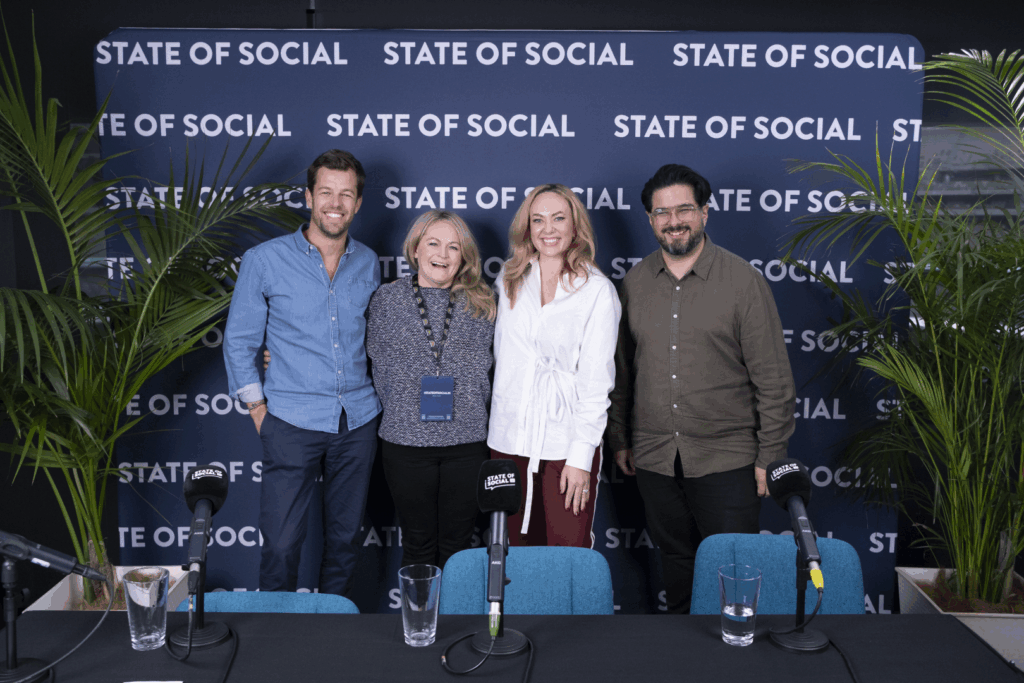
Branded content has long since blurred the line between marketing and media, but where is it heading next? In this episode of Hard Refresh, host Andrés López-Varela is joined by Amaury Treguer (Bread Agency), Kate O’Connor (Consultant, formerly BBC Studios/Bluey), and Keshnee Kemp (Founder, August One; former Head of Content, Woolworths) to debate whether audiences really care who’s behind the stories they consume.
Together they tackle whether branded content undermines journalism, the rise of brands as entertainment platforms, and if subscription models could transform content from marketing into a business in its own right.
In this episode of Hard Refresh:
// Do audiences care who’s behind the content?
The panel explores whether people still differentiate between editorial and branded, or if good content is simply good content, regardless of the logo in the end frame.
// Blurring lines between advertorial and editorial
From recipes to expert guides, the guests discuss how brands can deliver credible, value-adding material without sliding into salesy advertorials that audiences immediately reject.
// The cultural gap left by shrinking media
As traditional publishers struggle, brands are stepping into the void; are they offering a public service, or just chasing commercial opportunities?
// The subscription frontier
Could brands build paid content models like media companies and Substack writers, delivering exclusive experiences that audiences are willing to pay for? The conversation dives into what makes a true value exchange.
// Trust, crisis, and the long game
From KFC’s infamous “FCK” bucket apology to CEOs fronting up directly on social, the panel examines whether branded content can rebuild trust when things go wrong, and why authenticity has to be more than a campaign.
This episode was recorded on the traditional lands of the Whadjuk Noongar people, live at State of Social ’25.
All episodes of Hard Refresh are now live on YouTube, Spotify, Apple Podcasts and other podcast players.
Take this with you
- Make branded content in the space the brand is already known for, the way a food brand’s recipes are trusted like editorial.
- Run social on about 80% value content and 20% ads if the goal is real performance and growth.
- When something goes wrong, have the most senior person possible film a fast, genuine apology straight to customers from their phone.
- Pull your social community into a space you own, with first party data, then meet them offline at events or community trips.
- When a new marketing director or CEO arrives, carry forward the brand assets and strategy that work rather than relaunching everything.
Keep reading
- State of social indexHere’s how social really works in Australia
- SOS26Nine years in, and the theme argued back
- Delegate resourcesThe reading list