Mental health and social media
Listen on
Around the table
 Larah KennedyQuiip
 Julian PaceHappiness Co
 Tess PalmyreBrandable
Coming to SOS27?
| Dates | 24 & 25 August 2027 |
| Venue | Optus Stadium, Perth |
| Tickets | On sale 11 January |
Listen on
The Alchemists · episode 06
Transcript
Automatic captions, names checked:
[0:01] we’re pumping out all these messages into the world you know if we’re just a Content machine and we’re making decisions really fast where um we’re part of the problem and maybe we’re a huge part of the problem I would say like um yeah that that’s a that’s a huge issue hello and welcome back to the Alchemists a limited series podcast you’ll quickly come to know as your spirit animal for State of Social 2024 my name is Andrés López-Varela but you can call me a uh and in case you’re wondering you may already know my spirit animal is the cat uh and um in fact it’s Pusheen the
[0:39] cat uh on the internet so feel free to slide into my DMs and tell me all about your Love/Hate for Pusheen uh and today we are recording on the traditional lands of the wju N people live at State of Social 2024 and I’m very happy that we’ve been able to um put together this conversation in this particular group of Alchemists um from across the industry to um through the scenery and talk about mental health and social media so you know a nice light and Breezy topic for today’s chat uh before we dive in I want to remind you that the whole uh series of the Alchemists is now available on anywhere you get your podcasts really uh so make sure you subscribe and so you
[1:16] can see all the episodes in your feed and with that it’s time to make the magic happen it’s my absolute pleasure to welcome our Alchemist to the show today including Tess Palmyre the co-founder of inclusive Communications agency brandable Tess welcome Ka lovely to be here so happy to have you also today joining us is Julian Pace the CEO and founder of the Mental Health social Enterprise Happiness Co Julian welcome cheers thanks for having me good to have you here and finally but last but not least should we say Larah Kennedy the general manager at Quiip and online community building and social media management company Larah hello hello so
[1:52] happy to have you all here Alchemist welcome to the show um I want to start I guess by acknowledging that mental health is obviously a very broad topic there a broad spect of issues and context and and nuances that obviously we’re not going to be able to cover in sort of a half an hour podcast um especially as it relates to social media uh so with that in mind I want to throw it over to to you guys right away um and I guess you know instead of talking at a very Broad and high level ask you each personally based on your experiences what you think the biggest Mental Health Challenge created by social media is and
[2:27] why starting with you Larah I’m just just one just one yeah one the biggest I guess you know the nastiest the messiest I personally would think that social media is supposed to connect us I think the Internet connects us y but I don’t necessarily think social media as a whole connects us I think you know messenger certain tools within the social media kind of ecosystem do I actually think social media is kind of starting to divide us more and more which I think is partly the root CA cause of a lot of the mental health problems you know where where social media ultimately is product and you know
[3:08] you know it’s a business and and we as users are the product and so we are kind of being manipulated by the algorithms and the and the billionaire owners yeah yeah to potentially a cause that’s not really actually aligned with the cause of why we use social media so I do think that that is kind of the root cause of of creating sort of divisiveness online which I think is leading to isolation which is really not the was not purp not my yeah not the internet purpose yeah what do you think uh Julian oh yeah I think social media can be a really Hollow Place you know I think about substance yeah you know it’s
[3:48] an attention business we know that but you know you would both agree that I think self attention gets lost yeah not not self praise and I’m awesome but self attension being how do I feel what I think about what are my behaviors why am I being like this why am I triggered what are my glimmers so I think a lot of people are lost in life life can be really difficult trying to know who you are I reckon so I think it’s beyond social media I think social media is a vehicle that leads to disconnect and isolation but I I think about the people who even use it and what’s your intention for being there it can help you escape the real questions of life
[4:25] like why do I feel this way and sometimes it’s easy to judge another and social media and it is to reflect on your own choices sometimes it’s easier to tear down someone on social media and call yourself out your own BS so I think for me social media is a great way to escape the reality of the way that we feel and it gives us a reason to justify and oh everyone’s on social media everyone’s on a phone so I think to me it’s like anything in life it’s what’s your intention I think social media can be a really great place what do you think about that test does that sort of resonate yeah that’s an interesting question I for me it’s the echo chamber that that you know the algorith algorithms create for you you just get
[5:03] more and more of the content that um then uh you doubling down the same stuff yeah it locks in everything that you already believe in and you hear the same voices the problem with that is is it actually leads to real world discrimination so you know we’re we’re already living in these systems um that have biased uh bias built into them and then when that plays out on social media at that kind of mass scale and we’ve got this sense of bravado CU we’re just keyboard Warriors um it just it’s it’s ugly um I don’t know if you saw Josh Taylor’s uh session yesterday and he um
[5:39] his experiment um was mind-blowing he showed these screenshots of Tik Tok um the the kinds of content that he was getting as a as default content and he set it to being a 24-year-old male from Melbourne okay and the content he was being served was just atrocious like really far r um and I spoke to him afterwards and he said that’s not even the worst stuff like I had to cut out all the explicit stuff and that was actually tame in comparison so yeah I think it because it has real world implications it’s
[6:16] actually feeding into the things that we believe in and our attitudes and beliefs and we’re just in a bubble um hearing exactly the same things that we already believe in y and then we’re losing that kind of balanced um argument as well and not being um yeah a bit more balanced in our views um that and then questioning what what is really true and you know who’s got time to fact check these days and all that kind of thing if we stop trying to fact check every single bit of inaccurate information we saw online we would we would not sleep I guess really
[6:50] that what you think about like that that bias it’s like what you think about you become so you should be very careful what you choose to think about but you think about what you see in front of you so if you’re seeing these things like you just said it’s a controlling narrative often it just supports that narrative and then you see more of it so that’s injust if that’s racism y AB whatever maybe I was only seeing it the other day with my nine-year-old son he was on on Tik not Tik Tok sorry he was on YouTube I think it’s about where you think it’s safe or not safe yeah he was watching something on YouTube but I got a quick glimpse of this um young um person talking about his mom was like
[7:25] yelling at him trying to go to the PlayStation was like a video he’s like Mom don’t yeah I’ll come in there and I’ll like I’ll hit you kind of thing it was said in more Jia words than that but that’s what the that’s what the that’s what the language was yes and I was I mean a nine-year-old can’t pass that they’re just like they can’t pass the meaning of that if you start joking around if you start joking around DV online and our young boys start seeing that then the time they’re at 14 15 16 young men well I’m just being so climatized to being disrespectful around violence cuz I saw when I was nine same with racism it doesn’t matter what if you normalize anything and you just put it in front of people and you make it
[8:01] funny you take all the power away exactly right and that is Tik Tok right like that’s all Tik Tok well not all Tik Tok is but definitely certain pockets of Tik Tok are just yeah racism misogyny you know even those comedic kind of like dare I say inspired by The Inspired unemployed is that yeah yeah where it’s that kind of like tray humor blowy humor and there’s loads of young kids doing that now where they you know like role play being their mom and got like a tea towel over their head and it’s just like all kind of steeped in lowlevel misogyny or racism or violence have you guys ever seen that um it’s called the Pyramid of
[8:42] white supremacy just to make the listeners really like uncomfortable yes please abely but if you if you Google this it shows you and it’s just it’s in relation to racism and it starts with the really um what we would see as like harmless stuff you know the little jokes and the the the little the Casual stuff that happens in the office and you know we’re just making a joke like we didn’t we didn’t mean any harm and someone’s being a bit sensitive and that’s what we tell ourselves and it applies to everything right ableism whatever the list all the isms um but as you go up this pyramid it shows you how one level connects to the
[9:20] next to the next and it’s starting from really what we would think of as harmless implicit stuff right up to overt um things that happening in society yeah and um I think it was evolve um who created a version based on first nation’s history and the way we treat First Nations people so it really relates to who we are in Australia um and yeah you can see the links between level and from a mental health perspective no one wants to be alone their thoughts is toxic as our thoughts can be we we want to be validated in for our worst thoughts yeah the brain
[9:58] responds to it so you get don’t serotone when you validate your worst thoughts alone the good on so if you see other people online being racist well it’s not just me it’s not just me um I’m not the only person who um is having dark thoughts and then you just justify and becomes normal well I’m not the only one so I’m not the only one then it can’t be wrong it can’t be wrong safety numbers and and I think about that with um you know my daughter she’s four but I remember the journey when you’re talking about racism per se when she was first at kindi she would play with the Asian children the Indian children the Aboriginal children and there would be no divide you just see them playing yeah
[10:33] racism I believe a lot is a learned behavior at some point by something or someone and social media doesn’t matter if it’s racism or disconnect we learn a lot from there because we actually take it as fact yeah it’s actually not fact but as Brooklyn will get older my daughter she will start to understand that pyramid that you said yeah totally about race and things and this is going really off topic now but just I really yeah I’ve got to add something to thate um but I think one of the problems is we think of racism as like uh referring to individuals right so you think of people as being racist or not racist when
[11:10] actually racism is a system that we live in systemic racism structure so we’re not born with it we learn like you say we learn it we learn the conventions of it yeah cuz we’re in it you know of course you’re going to be um influenced by those systems and guess what people of color also have internalized racism and we can do it to people of color so you it’s the system that you true almost you know you say it in the comments all the time to call someone a racist is almost like one of the worst things Sparks such a visceral reaction in someone you know some if if if you’re in a social media post and somebody sort of
[11:46] like are you calling me racist and it just evolves into this mess we are all a little bit racist do you know what I mean I think we live in it how can we not be influenced by it totally and until we actually oh sorry I just going to say until we can actually I guess sit with the discomfort of that and then actively try to change it or make an effort to kind of be different I just think we’re going to keep yeah running into these these issues I agree it leads me to to um an interesting point that I wanted to talk to you guys about like we’ve been saying there obviously different experiences for different groups and social media depending on you know your life and your circumstances but also depending on the platform as
[12:25] well and just a lot of you know context and Nuance you know how you interact with Tik Tok or Instagram or Reddit or you know you’re on a Discord chat or something like that it’s you know then your age your cultural heritage your sexuality your religion your social value po whatever it is you know um you know whether you like cats or dogs really really does does get pretty low um but I think yeah I know there’s a lot yeah let’s not get into that yet um I think regardless of your identity though perhaps the most significant thing that I think impacts how you make sense of what you see in your feed is how quote unquote literate you are with social media to your point jul we we take it as fact it’s not fact someone just dumping
[13:04] some stuff on a on a reel you know um test how important do you think it is that we as an industry lift the standards of social media literacy that we contribute to lifting that in society at large so people know how these platforms work people understand you know those systems that are in place um like how much of a role do we have as an industry to do that is it the the platform’s role is the wrong priority for us what do you think oh that’s a great question I think as marketers and I bang on about this all the time at every talk that I do but we’ve got power and we’ve got privilege because of the
[13:42] role that because of the jobs that we do we get to communicate uh on behalf of Brands and to people um and I think you know it’s easy to go oh well it’s the platform’s jobs to to educate people about their their platform or it’s the government’s job to have the right legislation to deal with the platforms easy for us to back out of that but we can actually make a difference we can actually be the ones educating and informing our audiences to be more critical and to be more informed really I think we’ve got a responsibility to our audience to make sure that they’re
[14:20] equipped to know how the platforms work um the of nobody else is doing I mean there’s some really shitty FAQs on on the social Med sites as well this is you can press a little button and when you get an ad this is how we will serve this ad but nobody’s doing it like we’re the ones who are pumping money into these platforms and channels right so it makes sense that we would that we should hypothetically you know be involved in that what do you think Larah yeah I think that so I’m going to take us on slight tangent if you don’t mind no I love it I think just you know building of what Tess said I think we do have power and I
[14:58] think we have a role to play of ensuring that we are representing that sort of wider audience and I think one of the ways that we do that is through you know really good moderation and and really good management of social media CH channels so that you know things like microaggressions which would sort of fit at that you know the bottom of that white supremacy pyramid which are the you know the little things that people say in the comments that kind like yeah they use a particular Emoji in a particular way yeah like if we just continue as as
[15:36] Brands to kind of allow those microaggressions you know and and I’m not even talking about the the full fullblown aggress but even just the microaggressions what we’re saying to the people who see those who follow our brands on social media is like it’s basically like this is not a safe space for you you know like you’re not really accepted here yeah so well an an analogy that just poped into my head is you know if you’ve got a bricks and mortar space as a brand you would make sure that space is safe for your customers to walk into you know if there was some sort of Hazard there you’d deal with it right
[16:12] you’d want to create an environment that’s safe you wouldn’t yeah exactly you didn’t build that space you know a building company did it I guess um just like we don’t build the platforms but we’re on it we occupy a space on that on on that platform so why wouldn’t we create a safe space for our community there yeah exactly and you know we can’t control like we’re never going to be able to control what the the metas and the twitters and and all of those things decide to do and what what goes into their algorithms and you know but we can
[16:48] control our brand spaces so and can control I think the power of being kind loving and decent so I think sometimes we can blame things y to justify our inaction so I never forgot this once someone said that bad things happen cuz nice people let it that has we are nice people and we try to be nice that’s not rocking the boat that’s being people pleasing that’s not wanting to have conflict but good people stand for what is Right regardless of outcome and I think that’s the difference between a nice person and a good one and I think we know we know good people on social media because nice people on social media but good people say hey that’s not cool we don’t talk to each other like
[17:27] that that’s not even funny yeah to to have self advocacy stand up for what you believe in and to me that’s where I think sometimes responsibility gets a bit lost in it’s not what you do about it’s not what you do that matters it’s who you are when you’re doing it yeah so if you think about that when you are on social media as a an influencer or a person or a brand or someone who has privilege you have to take that same mindset which is it’s not what you do it’s who is your content inspiring people to be a better version of themselves or not or self reflective or not yeah like if it’s allowing them to buy into racism or disconnect or um you
[18:04] know sexualization and what sexualism and DV whatever it is is your content that you’re putting out there allowing people to be become a better version of themselves or not and I think that’s the responsibility part because you might be putting out this content you’re getting all these likes and it’s likeit I’m I’m so popular yeah but it’s not what you do you can be really good at what you do as a marketer and really bad at who you are yeah you can make good ass money being a real bad person and and I think that is yeah but it’s so hard to self-reflect that you need good people around you people calling out on your BS the content that we put out we are
[18:41] responsible for like the words that come out of our mouth you are responsible for the words and the things that you do and they have consequences and I just think often we may not think about we just throw it on the air online we throw it on Tik Tok and it’s like no harm done yeah and we don’t actually think about the consequence that actually causes people I think if we if we were think about our friends and family we would yeah that thing you said about niceness is a great point so I think we need to know the difference between Civility and politeness CU civility is not necessarily polite uh but it’s calling something out and and coming from a place of like really grounded um values
[19:21] and sometimes that’s really uncomfortable to do that um but politeness is sometimes just saying nice things on the surface but we’re not necessarily addressing what we need to and I think that’s that rumbling that discomfort yeah exactly and cuz it comes from that need to want to be liked and loved it doesn’t matter your gender your profile your race your belief we that that is fundamentally true at everyone’s core that’s right yeah and that’s where it comes from even to stand up for Injustice or to for racism or anything it’s like I to stand up for this people are not going to like me yeah because that’s the like I want to stand up for racism I want to stand up for gender
[19:58] bias but do I get shamed because of that yeah what’s the cost going to be to me ex because people like what does this mean to me even to want to be good I I want to take um I just want to S step slightly uh I want to talk a little bit about about us in our industry and the the impact that this continuous exposure to social media might have for those of us that work in the industry L I know that you and and you know organization you work at you’re at at the cace of of this For Better or For Worse um the the you know that that digital 2024 report we are social does every year with meltwater shows the Australian I’m
[20:35] reading from the pages so I don’t scr up the stat shows that the Australian population at large uses social media for an hour and 51 minutes each day on average I think people were lying to that uh survey when they when they were taken uh I would expect that anyone working marketing is using social media for like three four five times that amount of time every day so maybe upwards of 6 hours a day right that certainly must mean that all the risk s that come with social media are really significantly heightened for those of us that work in the industry is that the price of admission is that the secondhand smoke of working in a bar Larah no I don’t think so I don’t think it should be anyway I mean yes it is
[21:13] should it be no is probably are we accepting it is that is that like table Stakes do we tolerate that and go this is an inherent risk you know because if you’re a Trader and you’re walking around on a on a on you know on a roof you’re all harnessed and everything still inherently risky what are we doing like is this what are we doing yeah well I mean I I feel really passionate about this so sorry just get get on my little soite box for a minute I do think we have an industry issue I think partly uh we you know social media is kind of organically growing and hasn’t necessarily been valued by organizations
[21:48] to the extent that it should have you know we just put a junior on and they can manage the channels and be online 24/7 and you know it’s this kind of it’s you know it’s a little bit wild what we expect of social media managers and there are so many stats out of some of you know some of those industry reports that are showing social media managers are you know chronically online and they don’t get a break and it does result in Burnout and so I do think that as an industry we need to start having really you know firm boundaries around what is an appropriate work time I think the right to disconnect floors are going to
[22:23] be really interesting for our industry you know but yeah I I I don’t think that it is reasonable I don’t think it’s a reasonable acceptance to expect your social media manager to be checking the channels all day and then also checking at night you need safety nets so you either need teams of moderators you need to restructure the way that your social media managers are working uh you need to Outsource to you know external moderators and so many bigger companies
[22:59] actually are starting to do this now you know where they’re having quite sophisticated social media teams so it’s not like it can’t be done we just are choosing to exploit the labor of yeah yeah of generally speaking younger people who don’t have the leverage in the workplace yeah they aren’t self advoc advocating I don’t know how to self Advocate and that’s hard because how to you you you teach people how to treat you yes and if you don’t know the power of your words and and if I’m going to get shamed or judged or performance managed out for sticking up for myself and you know like that law that’s just
[23:36] change like emailing your employees after a certain period of time resp that’s so good cuz some sometimes that’s like you we need to just self-correct some things here as the government or people power that we don’t want people because then people I never asked you to email me at 11:00 at night but it’s Perce pressure yeah I never actually asked you to go on social media cuz that’s what the leaders in manag to do we actually never told told our staff to go on social media at 10:30 at night it’s like that’s not my fault I’ll tell you what those right to disconnect laws that have just been um you know just past Parliament Australia will make a lot of contracts that I signed in my um career noan voy when it says you may be
[24:15] reasonably expected to work hours outside of your contracted hours without additional remuneration gone we we’ll we’ll invalidate tens of thousands of contracts and particularly I think in the agency in the Consulting world will make those businesses if the law is enforced properly will make those businesses very unprofitable very quickly and if you want and if you want that pay for it yeah exactly but these businesses can’t afford it they pay someone 60 hours a week if that’s what exactly yeah but these business are paying 37.5 hours but they expect they the business model is built to say we’re only going to pay for those 7.5 but we know we’re going to get at least 54 or
[24:51] whatever like that’s how a lot of agencies and consultancies sadly in this industry work it’s the only one they can make tiny margins of four and 5% on their work but we’re getting I mean to be very harsh though I think if you can’t afford it don’t be in that space yes yes you know if you can’t afford to pay your people fairly and then sort of support them to disconnect by either paying additional staff or external support don’t be don’t play in that space like that’s the you either you either pay pay the cost of playing or you pay the cost of not of of not having
[25:32] that exposure yeah yeah you pay one one way or another really y yeah yeah that’s a good point um of course we’re not the only ones that are In Harm’s Way because of social media um I think marketers can also be part of the broader problem um for like Tik Tok and Instagram in particular where we just focus relentlessly on creating and Publishing a lot of content and a lot of it is just shitty content um designed to fill gaps and everything uh obviously there been a lot of conversation here at the conference about um you know quality of content and you know quantity and there’s always that internal discussion right um how much of this problem should
[26:09] we take responsibility for in terms of the drive or the innate kind of you know the internalized drive to just publish so much content how much blame do we bear how much blame do the platforms bear how much blame do the audiences bear Tess what do you think uh look I you know I I’m I’m a big advocate for quality over quantity um you the the platforms might disagree with you yeah well that’s good thank God for that that makes sense the sugar the sugar companies disagreeing
[26:44] with the sugar studies also means I I do less work sort of but I’ve got to make sure it’s quality content um we you know getting back to bias systems you know we’re we’re pumping out all these messages into the world world you know if we’re just a Content machine and we’re making decisions really fast where um we’re part of the problem and maybe we’re a huge part of the problem I would say like um yeah that that’s a that’s a huge issue um apparently the average uh adult makes more than 35,000 decisions every day and you know marketers that’s why I’m so tired at the
[27:24] end of the day exactly but we do it in this way we use a thing called istics which is mental shortcuts um which is just riddled with biases right um so if we’re having to churn out all this content all the time then absolutely it’s going to be biased content cuz we’re not allowing time and we’re not allowing allowing people to um review that content properly or maybe putting it in front of the right people yeah so I think it absolutely is on us um where we’re communicators we can’t just say oh this you know got to keep churning the contact content out and that’s not on us it’s just what the expectation is yeah
[28:02] yeah I want to play Devil with Advocate um which might lose me some friends but that’s that’s okay you got to be brave s we’ll talk later yeah thank you but then if we don’t do it someone else is going to fill the void the platforms are are clearly voracious for the content our brains are wired in a way that like wants those hits yeah if we’re not if if we make a principal decision to be like you know what if we like sign I think I mentioned this is another one of the episodes if we sign a Kyoto Protocol of you know of agreeing that we’re all going to publish 50% less content then you just going to have other people
[28:37] other brands other creators go there’s so much more space for my stuff now and they’re going to fill the void isn’t that right Laura I mean yes and no okay I think yes something’s going to fill the void but is it going to be quality and therefore is it going to actually have the same impact with your audience and so I guess what I mean by that what I actually think is starting to make a lot of noise now is kind of AI generated images you know some of it’s really bogus you know like we had the like the prawn Jesus the pope and the and the puffer jacket yeah yeah yeah and some of it’s actually quite believable you know some of it looks
[29:15] really legit and and and it on some of it we even have like Bots talking to each other in the comments yes and so I do think that might fill the void like if the platforms are so vicious for content I do think they’re in a bit of like codependent relationship with some of these like BS you know the BS are creating content kind of like creating you know it’s an unver virtuous circle yeah yeah so but I think we will continue to evolve and and hopefully get better at spotting that and therefore potentially the quality content is going to stand out in in the sort of like I hate to say like you know quality
[29:55] content is King it sounds very but that content is going to actually help shift the needle of what we want our customers to do if we want them to feel something do something engage with something think that’s going to work more effectively than just trying to push out lots of content that doesn’t move the needle at all yeah but things are bad things that are bad for us at times we have a really good way of making sure we feel okay about it yeah so gray a drinking for instance it’s a certified program about people how they have rules around alcohol so if you have rules around alcohol you’re a gr air
[30:31] drinker so what would be a rule around alcohol that would be common to you um I’m not I’m only drink yeah only drink socially perfect Ru what’s the rule for you uh I only drink maybe one one drink a week cool R what’s the rule for you drinking um only 15 beers a not only yeah no no no only beers in the afternoon yeah so imagine how many rules you’ve heard about drinking only drink Thursday on Sunday only drink on Fridays only binge drink on Fridays only have one glass of wine on the month there is that many rules around drinking to justify how bad it is for us yeah I think social media become the same
[31:07] anything there’s rules I’ve got to get three bits of content up a day to stay relevant yeah rules become really dangerous and it rules a great way of justifying things that are bad for us I only drink from Wednesday onwards that’s great I only I only post at this time because that’s what the industry tells me I should do and then it becomes okay well it’s a rule so it’s okay cuz everyone’s rules everyone’s yeah I only use five hashtags I don’t use six that’s what I mean and rules become they guide us so drinking is so bad for us but it’s a rule social media can be really bad for us and then we’re like well the rules say this and we love rules we’ve been asking for permission our whole lives can I go to the toilet can I hang out with my friends can I have ice
[31:43] scream like rules and permission are everything we’re built on it’s a social contract as well right yeah so oh well three posts a day and I should be on for 10 hours that’s the rules of social media and that’s the rules I ABY by wonder what happens if collectively marketers just decide to go against the grain yeah like like I said we sign a Kyoto Protocol of like of of publishing 50% less content yeah yeah absolutely worked in acting that big what was that last year the big strun the the writer stun and the ACT you that’s how change happens we we are not riding anymore and where these Netflix and stands and foxtales and all that make all their
[32:19] money to produce content it’s like you know what enough enough and then something does something changes the pendulum at some point but you got to have a lot of good people will to sacrifice income yeah cuz they would have I’m not going to get paid for a while but you know what what is true and good what is true and good it’s a hard we have to have enough people who can self Advocate to be able to do that you know like if you’re a junior and you go to your boss and kind of go I know we’ve got these rules around posting you know six times a week and but I went to this conference and we’re all signing this agreement that we’re going to post 50% less look for a new job yeah and your
[32:58] boss just goes no we post six times a week you know you’re posting six times a week and if you link that to mental health hey I actually don’t think it’s healthy for our company or our team or actually probably even healthy for me yeah straight away they have a judgment that you’re mental health an issue yeah and performance out I was just saying that I don’t think it’s good for a mental health I was even saying that I was depressed I’m just saying that if we don’t look at this it could become a problem but so you flag that this person potentially has mental health problems and L to social media and social media content maker and you punish him Y without it like that subconscious bias
[33:33] again this person maybe is not the right person for us cuz I don’t buy by the rules which is six posts a week yeah time it’s an accepted rule just accept it what’s the big deal yeah yeah yeah so um I mean obviously the role social media plays in our lives has changed and you know I think the pandemic changed our relationship with social media For Better or For Worse in some ways um especially those of us that are in this industry so in Reckoning with that impact in Reckoning with the mental health consequences what does responsible social media marketing look like for people who work in marketing what do the
[34:11] responsible practices look like moving forward yeah I’m a really big top two I’m a big advocate for good digital hygiene that I think that we carry from our sort of work life into our personal life um so so things like not having having your notifications turned on using even like limits for your apps just putting little kind of points of friction in between you and social media don’t look at your phone a certain amount of time before bed you know just kind of really good digital hygiene I
[34:46] think is a really simple thing that all of us in the industry can do to look after our mental health yeah just to put you know put a few more boundaries yeah in place around our usage what do you think Tess I really like the tip to keep all notifications off that’s genius cuz you you can choose to go in when you need to um but that you know there constant distractions of notifications going off on multiple platforms is huge just ripping our focus and and our mindfulness away from everything that we’re doing in the real world exactly
[35:23] but I think we also need to shift the um accountability to leadership you know like as individuals and marketers we can put some of these things in place that helps us to have the boundaries and be able to switch off when we need to um but leadership really need to step up and have the right policies in place so people can switch off and they’ve got Choice when it comes to how they they monitor and manage social media so I think it’s about shifting um yeah Shifting the accountability back to where it should be where it should yes anything else Julian yeah I think it’s about caring about what you create
[36:02] but not carrying the responsibility of being online all the time so for in in our work you know I know we’re we’re a marketer but we’re alter mental health and happiness provider so we get people who reach out and really dark places yeah and it could seem immediate for us to respond but we’re not we’re not a Lifeline so knowing exactly who you are and why you exist so we’ve had our teams talk about this before but jewes that this person’s in really dark place and it’s like 11:00 at night I’m like parameters and boundaries guys yeah why that is so sad and so heartbreaking that someone be in that much distress if you
[36:38] care so much about that which you should but then you carry it into your sleep and you’re restless and it’s 11:30 at your night and you’re with your families and you’re with your kids we aren’t the lifeline lifeline’s there so it’s knowing I think it’s really important for marketers and companies to know their role Y and and that’s how you build parameters happiness goes another 247 mental health support line we do a great amount of work in mental health but with boundaries yeah so I think your boundaries are critical and also re-educating people what their boundaries are like we’re here to help we care about you we want you to be happy whatever content you create but this is the the parameters of how we do it and I think that’s from a a marketer
[37:17] or a business perspective I think from an individual perspective using social media the responsibility that we have to take is making sure that we never forget the power of curiosity over judgment it is a superpower so when you see these things on social media are you curious enough to know if that’s true or not like is it true the question narrative that’s curiosity because judgment’s just like that’s true social media set so I think if you’re a user on social media get more Curious get some more information sources to feed your insights and if you’re a user create healthy boundaries yeah and care deeply
[37:53] about the people that you serve and what you stand for and know what you stand for but do not carry the burden of the instant validation and gratification that social media comes with I remember um one of my staff said I’m going to go on holiday and I said awesome she’s like I feel really bad though because I got so much work and I said what type of work do you got on and she’s like just all the people who reach out I said I promise you there’ll be unhappy people tomorrow that’s the truth and that’s that that will be and I’m not saying that’s a good thing either I’m not saying that I want unhappy people tomorrow but there will be so go take a holiday fill up your bucket do you really good and when you come back I promise you there’ll be another hundred
[38:29] people who aren’t happy you can help y yeah that’s very good advice yeah with the online community I just want to sort of really validate that but when we build safe spaces that people feel comfortable in they feel like they belong they disclose stuff yeah and so it’s kind of like well we’re doing a really good job and then so good at our job that somebody feels comfortable that they sharing that they’re in a dark place and so then yeah we really need to understand okay what is our duty of care here and where does that end and I so agree with you it is it is you know
[39:04] understanding that you just refer you acknowledge you refer you you know meet them with empathy without judgment and that’s it that is all you can do you’re not a support service um we’ve got just enough time before we wrap up uh to ask you to play fast and loose with your opinions uh there are some questions that are meant to make you feel a little uneasy but remember the whole point is you can play it fast and loose you’re the Alchemists you know you guys create Magic every day right so I’m gonna ask each of you a random question um I’m randomly choose you and then everyone else can agree disagree be shocked be appalled whatever it might be okay as an alchemist yeah your uh
[39:42] teachings are a generous gift to the world except when you get something wrong in your career what’s the biggest thing you’ve been wrong about I’ve been been wrong about a lot of things uh so I think for me getting it wrong is just part of the journey but how brave are you to try and get it right so to self-correct to self correct yeah I’m just a big advocate for that yeah like I’ll probably make a bunch of more mistakes Yeah by accident and some on purpose yeah some you do willingly some you self- sabotaging yeah like we’re complex people yeah and I would never preach to people that making the perfect choice all the time even because we’re
[40:17] Perfectly Imperfect so I would say I make mistakes daily I do my I remember I just made one yesterday y with my team and it’s about not worrying too much about what you get wrong just try and work on how quickly you can try and make it right good great thank you all right Tess okay do this as an alchemist you create a new substance that can shape online culture it’s a magical substance what one thing would you hope to change online for the better with this substance I would love to go back to the days where your news feed was actually just really um like just a flow of all the stuff that people are posting and
[40:57] there was no algorithm just chronological yeah just chronological and threads is a little bit like that still and I really love that because it’s a a better reflection of society like the real world more honest yeah so I think get rid of the algorithms and I know we’re just going to be swamped with shitty content that are you allowed to swear on this yeah yeah yeah definitely um yeah great I feel better now um but yeah I I really like that because yeah you you are introduced to random people and random content and life is really random
[41:32] yeah let’s just keep it that way I like that that’s a really good choice I think that’s a great way to use that it’s very good Larah before we go as an alchemist you understand the important relationship between humanity and the natural world the delicate balance who runs the natural world is it cats or dogs oh wow cats run it but dogs bring the party you know what I mean yeah okay okay that’s all right I’ll give that to you I’ll give that to you that’s a very been very divisive question can I say it’s been a very divisive question but I think we don’t shy away from the hard questions here and you guys didn’t shy away from the answers too so I’m this has been such a
[42:11] um an informative and like uh cup filling chat so I really appreciate uh the time and insights you’ve all been so generous so thank you so much for um for joining us with very special topic uh Larah Julian Tess thank you for joining us on the show thanks thanks having us there is plenty more to wrap your ears around on the Alchemists including heaps of in-depth chats with this year’s State of Social speakers so make sure you follow the show wherever you get your podcasts and if you like what you heard give us a five star review and tell a mate or two or three tell your mom the Alchemists is a co-production of
[42:49] State of Social and Creative Fix the show is produced by me Andrés López-Varela and Aaron Matthews from Creative Fix with additional production support by Cal McClain Meg Coffey is our executive producer on behalf of all the Alchemists I’m a I’ll catch you next time
Social media has the power to change the way we see the world. The way we see each other. The way we see ourselves. So, with more and more evidence pointing to the harm social media causes, what can we do to protect our mental health?
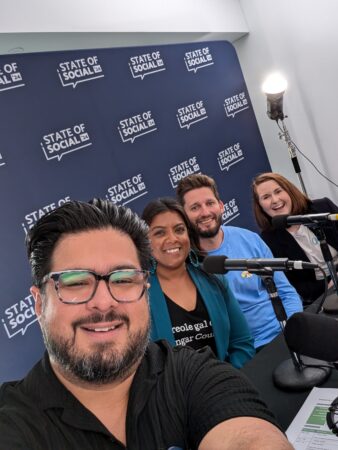
In episode 6 of The Alchemists, host Andrés López-Varela will dig into this thorny issue with our expert panel:
- GM at online community and social media management company Quiip, Larah Kennedy
- CEO and founder of the mental health social enterprise Happiness Co, Julian Pace
- the co-founder of inclusive communications agency Brandable, Tess Palmyre.
How is social media affecting our mental wellbeing, and what should we, as marketers, do to improve things? Discover what our panel thinks about a host of critical issues:
- What is the biggest mental health challenge created by social media, and why?
- How important is it that we, as an industry, lift the standards of social media literacy?
- What should best practice in social media marketing look like in 2024 and beyond?
- How do we look after ourselves and our mental wellbeing, given the importance of social media in marketing and our heightened exposure to it?
- And much, much more…
Take this with you
- Moderate the microaggressions in your comments, down to a pointed emoji, the way you would clear a hazard from your shop floor.
- Stop expecting one social media manager to check channels all day and night: build a safety net of moderator teams or external moderators.
- Turn off social notifications, set app limits and stay off your phone before bed, then go into the channels only when you choose.
- Decide where your community’s duty of care ends: acknowledge, meet people with empathy, refer them on, and accept you are not the lifeline.
- Slow your content churn enough to have each piece reviewed by the right people, because fast decisions run on shortcuts riddled with bias.
Keep reading
- SOS26Nine years in, and the theme argued back
- Delegate resourcesThe reading list
- Delegate resourcesWhat to pack for State of Social