The power of the big platforms
Listen on
Around the table
 Michael CorcoranFrankly
 Lia HabermanICYMI
 Jeremy BurgeEmojipedia
Coming to SOS27?
| Dates | 24 & 25 August 2027 |
| Venue | Optus Stadium, Perth |
| Tickets | On sale 11 January |
Listen on
The Alchemists · episode 05
Transcript
Automatic captions, names checked:
[0:01] your livelihood then it should come with a warning or some sort of Regulation uh whether you know however great or small and I’m sure that’s going to trigger some people who don’t like regulation like any kind of Regulation but like if other companies have to attach a warning label then social media probably should too hello and welcome back to the Alchemists a limited series podcast you’ll quickly come to know as the Dumbledore or the gandala State of Social 2024 my name is Andrés López-Varela but you can call me ALV some people get it wrong they call me AVL that’s fine too any of those three letters in combination is perfectly fine
[0:37] uh today we are recording on the traditional lands of the wadjuk Nar people live at State of Social 2024 and I’m delighted to have um what is possibly uh the most dynamic group of um of of Alchemists here today um based on our conversation so far we put together uh a really great group to um get into the sort of big messy discussion about the power of the big platforms before we dive in I want remind you that the Alchemists the whole series is now live wherever you get your podcast so make sure you uh subscribe to see all those episodes in your feed and with that it’s time to make the magic happen joining me in the studio today is
[1:13] Jeremy Burge the uh self-described only writer at mobile tech journal and the founder of Emojipedia Jeremy welcome hello yes it’s true uh I feel it’s weird when you start a blog or a side and you’re kind of like I’m the the founder I’m the the CEO of my website So currently I’m the only writer at my own website well done well done thank you we’re also joined by Lia Haberman Lia Haberman is a Creator economy expert and author of the very excellent ICYMI newsletter Leah how are you good thank you same thing it’s like I’m a founder of a newsletter I don’t know what that is but yeah no it’s great it’s great can I say how excited it was to meet you after having you in main box for like so
[1:49] many months I appreciate that yeah that great that’s great and Michael Corcoran the managing partner at social media consultancy frankly welcome Michael good morning good afternoon or whatever time in the world you’re in right yeah everyone’s come from different places but not quite sure where we are or when we are I don’t even know who I am right now no well we’ll see if we can figure it out through the course of this conversation thank you everyone welcome to the show um so um obviously a lot of this chat about the social media Platforms in general focuses on the macro level of what’s going on and the trends and the forces and the good and the bad and everything um but I want to flip the script I want to start a little bit differently I want to start our conversation by hearing from each of you
[2:26] about what experiences you’ve personally had on social media media that has shaped your opinion about whether these companies are good or bad for Society at large Jeremy maybe off okay uh big question you said we starting easy this yeah yeah that’s a soft that’s a soft you know no big deal but how do these companies affect all of society and all of us what was the personal experience you had that that sort of you know fair enough that clicked your opinion into place I mean I I guess without having to give a a life story you know we all moved through some of the early Myspace Facebook all this sort of thing I think Twitter was seminal for anyone who
[3:02] started being either a a social media expert or just someone who loves social media or being on it I think that will remain for a lot of people the place where you did go and for some people where they still are um I guess in recent years though the thing I’ve enjoyed the most was joining Tik Tok in the pandemic like a lot of anyone over 30 did and uh I’m still there and you know that that it’s wild having something where you go there and that’s in my opinion where culture is formed now that’s where the memes sort of seen to begin and then they might make it to Tik Tok and I’m not sure to Twitter yeah I’m not sure if any meta platforms ever made a meme I’m not sure so I kind of
[3:40] yeah I appreciate that that um yeah I appreciate that Tik Tok was fun and suddenly it it had a better algorithm at the time than a lot of other things I ended up with a lot of new followers and listeners there who were just watching stuff of me on my boat in the UK and that was yeah that was good fun so was a change of pace than than Twitter yeah okay cool excellent Le what about you was we kind of form experience about you go oh this is good or bad or or indifferent yeah um I think uh first of all I don’t take anything too seriously and I’m also very skeptical was on Twitter still am on Twitter it will always be Twitter to me and I’m going to stay there till the ship goes down but I’m also on LinkedIn Instagram threads
[4:18] Snapchat Pinterest am I forgetting any every day the only one I don’t check any every day anymore is Facebook um but otherwise I’m on every platform I love every platform I grew up in my career with these platforms alongside these platforms um but I think at the end of the day having worked in Tech um having worked adjacent to a lot of these companies is that they are for profit businesses yes and so you know God bless Adam misseri and he can get on there every week and I do admire him for getting on every week and like answering questions and even tough questions but essentially he can talk about you know we advocate for the Arts or the artists or creators the minute that’s not
[4:59] profitable that all ends so just never assume that they’re doing it for Art’s Sake um I think that went out the window probably in like 2012 2013 these are for profit businesses so they are always going to do what is essentially in their best interests and we are on rented or borrowed land on those platforms and I love the platforms I love social but I never forget that everything could go away tomorrow and there’s nothing that you can do about it y yeah I agree 100% yep Michael what about you I think what Leah says is really really true in in being cynical but being smart about it
[5:36] we wouldn’t be sitting in this room or speaking to you without social media in existence it has paved careers for us to be profitable just like the people who run those platforms at the same time too yes whil we are doing it for Creative purposes entertainment purposes you know catering to needs the platforms might again take us on a journey about impairing creators and you know empowering Communications and giving people Free Speech but at the end of the day we’re all in for the money yeah um I love it I hate it um I think what’s so great about it and what’s so challenging about it too is it has become the water
[6:15] cooler moment the parish pump and our source of news all at the same time um and it’s very difficult to dissect it to be different um that’s a challenge for some people at the moment but aside from it being for money for most of us for skin in the game I think what we can put a lot of blame on the platforms right now for how things are unfolding in the world I think we have to look in the mirror ourselves a little bit too because they’re not producing the content we are yes yeah they’re
[6:52] facilitating it and they’re using their technology to serve content to what they think or what we believe to think is the right people but but we are the people making the content we control that so it’s very hard for us to lay all blame on them with how it’s evolving into what it is in particularly X which I again would put a lot of blame on the new CEO for that but we do have to look in the mirror that we are the ones producing the content not them yeah I mean I kind of agree with that like yes you can’t just blame the platforms but they do need to take some responsibility for what the algorithm enables and encourages and I don’t think they they take a lot of responsibility for that
[7:34] again don’t want to come on here like a tech hater I love social I love these platforms for connecting communicating but yeah they don’t take a lot of responsibility for the way that they have shaped they took over like you said the parish pump but they’re charging admission to it and letting all manner of different people access it what is the parish pump never heard that before I would say Town Square but correct we like the Town Square like back in Ireland or kind of rural countries the water pump would be your source of obviously water from the for the entire vage this a term people use in Ireland instead of water moment this is well water cooler moment would be again the
[8:09] the corporatization of the parish pump and but the parish pump would have been like in the middle of a small Village area where everyone would go to fill up water bring it back home I’m going to start using it instead just to confuse people that threw me a little bit but I’m back on I’m back on that’s good thank you um so I think like everyone has similar experiences like they had a moment or something crystallized their opinion about um social media especially those that work in this uh strange little industry that we have um For Better or For Worse but what do you think is a prevailing feeling about these platforms as a whole right now if we if we if that was a very micro answer our own personal perspectives broadly
[8:46] speaking are are we as a society becoming more accepting of these as kind of unavoid unavoidable parts of our lives are they are are we sort of pushing back more are we trying to renegotiate have we surrendered um where do we think we’re sort of you know um in the cycle of overall perspective on on this stuff Leah oh wow that’s a good question um we’ve surrendered um but I also think it depends kind of what demographic you’re in and when and where you started with social and so and it’s always new to somebody like I teach social media marketing to college students and I always assume they’re going to come in and know everything because you know gen Z they’re digital
[9:23] Natives and they know everything and they come in and they do know about you know posting to certain platforms and talking to their friends but they’re parts of corporate strategy or just bigger kind of strategic uh intentional ways to use social that they’re not aware of and so it’s all new to somebody like we are very well acquainted with social and the ramifications and the good and the bad but like if you’re a teenager it’s all new to you so you’re having an all new experience your cohort your generation your demographic is experiencing it from the beginning um and so like I think every person and every generation has a different reaction like last week Instagram
[10:00] brought out music for profiles which is um kind of like the Myspace like the music on your profile page they’ve reached back into the early 2000 and I did a LinkedIn post and all of these people were like no it’s like it’s Myspace like can’t they come up with an original idea and I’m like you know what Jen Z loves it because for them it’s something brand new and they’re like I get to you choose music that expresses who I am and kind of lets other people know who I am and so I’m like don’t Grumble about it like I get it for us it’s not exciting but for somebody who is 15 16 just getting started like that is new and exciting so and that’s the group that’s going to carry the fortunes of that platform right right so I don’t
[10:36] know that that answers your question necessarily I think it’s just a very layered kind of uh well I mean I guess yeah no it makes sense but you’re saying that we we have kind of surrendered to its its role that it’s essential integral we can’t sort of avoid it um but we’re sort of where we um within that surrender we’re trying to do the best we can just kind of redefine our relationship with them what does that sound like to you Jeremy yeah I mean I think an interesting shift is obviously that so many platforms are going back to public first we went through Myspace and Facebook for your friends and of course you could set them to private or public
[11:10] but default Tik Tok is public reals is public and that just changes what you share right you do a more curated the sort of cringe Millennial we’re curating our lives but that’s what I see my friends do they’re posting reals like content creators but for no benefit they’re not sponsored or they’re not uh you know there’s there’s nothing going on and no shade to that you know what I mean like good for you if you enjoy sharing a real and I can see your day in a glossy sort of format that’s fun but I think that’s changed for a lot of people that we’ve pushed both directions either into the group chats you know the super private stuff or the public curated stuff and that middle ground feels weird
[11:46] now like oversharing to who exactly either just go real raw to your own friends and do whatever or go public and it’s you know you’re doing it for some kind of career goal or money or or the next job or just to feel like I’m a I’m a good-look person on the socials doing all my things uh so it’s just the loss of that middle ground which is a bit of a shame but on the other hand out of mind like I like getting my group chats now and then seeing my friends pretend to be influencers on the other day you know I think that’s fine I think that’s an interesting point about the middle ground and I wonder um you know certainly like in your experience Michael you know running large brand accounts and creating uh audiences with
[12:25] have these kind of shared values if you like um does that middle ground exist for brands should it exist for brands or should they be moving into one end or the other of that of that conversation like Jeremy said should they be leing into Super polished or super kind of Scrappy what’s the the right space for them there is no right or or wrong space it depends on the problem you’re trying to solve with the platforms who you’re trying to reach and what is the best method to do it um you might have brands that have uh a Heritage to be a positioned in a certain
[13:02] way look a certain way present themselves to be a certain way but even that too is evolving because people’s perceptions of Brands interrupting their their feeds in their spaces um become challenging and they can spot ads or content from Brands a mile away so you can see them actually trying to behave a lot more like people on the internet to try and Garner that attention and do it in the most relatable way take Marc Jacobs for example luxury brand that you see uh and you’d associate with again luxury uh pretty polish refined have completely flipped their approach to how they’re using some of the platforms
[13:39] right now because they understand that it’s not working and they need to show up and present themselves in in a way that people will consume it y because it’s such a competitive fragmented space and attention is very hard to get because you’re not only competing with other brands in your category or other brands as a whole you’re competing with other creators you’re not only cre competing with other creators you’re competing with your brothers and sisters sharing their bottomless Mimosa brunches on a Sunday or their Mucky dog after a beautiful walk in the park it’s a very hard space to win in and I don’t think it’s even a middle ground anymore so let’s let’s think a little bit more
[14:15] specifically about the platforms themselves um you know meta obviously is in this Perpetual EB and flow and you know like you said you know our profile music you know maybe Facebook is the only one you don’t check every day for example Leah um you know it’s seems like it’s waiting to lurt from bad headline to the next um Tik Tok obviously it’s on a watching brief as we were discussing yesterday maybe it’ll be banned maybe it won’t maybe other countries will follow maybe they won’t um X Twitter for those of us who understand that’s actually its original name um is kind of morphing into this strange political vehicle for Elon Musk or something like that strange as a word all right strange as a word um Reddit is moving more and more to the
[14:52] center of like mainstream um social media use conversations you know whenever I looking for a tip on something my local you know in my city I always got the Reddit the right Reddit page if you told people like 15 years ago that Reddit would be where you go for the normal people would kind of go but now it’s probably true that that is where it’s somewhat sensible answers to things every brand that I’ve talked to this year uses Reddit for social listening which to your point is like 10 years ago would you have said like yes we do our best social listening on Reddit absolutely not but it is a fantastic place for research one of the most underrated platforms for
[15:26] identifying early trends everybody else I agree and or checking about what people are saying about your brand or I work for a lot of creators and so going on and making sure like what is the sentiment of the conversation around the creators there’s a lot of snark subreddits on Reddit um so if you’re a Creator or you’re working for a Creator you want to go on and see what is the conversation about what are people saying yes yeah I think it’s really interesting how like even in marketing a couple years ago at this conference um the original head of Reddit came and spoke and that really changed my perspective as to it’s role cuz I thought it was like you know I was like on it before and you know like maybe I
[16:02] was being a bit snarky at times you know um but sort of understanding the brandun really substantial there U and he talked a lot about social lising as being part of that um you know all these platforms are sort of you know they’re being forced to reinvent themselves for one or many reasons some you know I guess I’m wondering how much of you think how much of that reinvention is down to Civic pressure political pressure and how much of it is because they’re losing money or not making enough money Michael it’s probably the latter for the majority it’s all about making money at the end of the day once they comply or stay on the line close to what policies or governments roll out they’ll push the boundaries as much as they can yeah they
[16:42] obviously have a duty now because they are maybe the source of a lot of information zuberg I think came out yesterday saying he regretted uh suppressing certain information on co uh on behalf of the the Biden Administration um it seems like he’s taking a turn on whether it’s the right or wrong thing to do and he wants to pull back his views on giving and owering more free speech so it is a it’s for profit mainly but um I’m sure social license is still an important consideration yeah well again it’s it’s trust for people and everybody else and more importantly again it goes back to profit but trust for the brands who want
[17:19] to spend advertising on these platforms if they cannot trust the platforms um and what’s going on and it’s not being projected in the right way they’re not going to spend their money and strangely enough maybe some some crazy nut job is going to uh then try and sue them for not spending their money on his platform I think uh the other thing that’s underrated is uh moderators which again speaking of Reddit there’s admins as moderators there’s just people they can make bad decisions but it’s not the platform owner trying to algorithmically get rid of you know Bots and hate speech uh there’s real people and you could argue with them you could try and get on their side and because reddits split
[17:58] into different subreddits there’s different moderators for different areas that have different sensibilities and different expertise and they understand the context of the conversation so like bring back forums I guess I don’t know like that was sort of you know forums had rules and etiquette and if you were on a forum about activism then there’d be a different set of rules than a forum about tech issues or politics yeah and kitchen a blenders a really wild subreddit for kitchen a equipment that I maybe spend too much time on uh wild wild stuff I think you’ll see that and it is starting to emerge that these platforms are coming back and new on coming true like
[18:34] Discord is a fascinating place that even and I’m trying to figure out right now as a gray-haired millennial probably with the mind of a gen xer I don’t really know but um I’m in the score groups where I’m trying to understand it but you can see Jen alfha or younger side of gen Z to your point earlier their desire to share within smaller groups rather than publicly um and how that’s even being moderated in the read it in in Old School Forums it seems to be coming full circle the technology is changing but the the interest and the desire what people like and enjoy is coming full circle again to the mypace
[19:10] music you know it skips a generation but it becomes trendy again yeah much like uh Bell Bottom Jeans right now well to your point about attracting advertisers and talking about audiences like that is a big motivator for the platforms is that the way that they’re evolving like you’re not going to have the advertisers if you don’t have the audience there they irrel think is a driver even probably more so than I don’t know whatever like political regulations um also like in the US there’s very little regulation I think as opposed to other places in the world um that has maybe less impact for us in the states definitely cuz when Treads came to town
[19:53] it didn’t get to Europe for probably four or five months after it was launched yes we did find ways to get access to it with ATP downloaders but uh that got switched off quite quickly so it is very true the life cycle I think is important as well and it connects to a few things that when any any of these platforms start obviously they they need to grow a user base so most of their time and effort is letting anybody in it’s just about the numbers and getting consumption up to a certain level then they go call Brands and they go hey guys we’ve got this beautiful free audience here why don’t you come and play we’ll give you lots of organic reach and ways to actually engage with these people
[20:29] much better than any other platform or any form of marketing in the world so income the brands then when they realize they have enough of this and their investors come knocking in the door and they go hey guys we’ve given you billions of dollars you need to actually give us some of a back great how do we do this guys let’s bring in advertising now incomes the advertising we suppress the reach we still have this audience that are really active and Rich but Brands now have to pay that’s normally the life cycle of how it goes and what’s important with that as well is it’s at the point where when they get enough advertising spend that’s when they start to make decisions on safety and moderation yes it doesn’t exist at that point because they don’t have the tools
[21:06] and it’s not the priority in Focus we’ve seen that with Facebook we’re seeing it with Tik Tok now Tik Tok is the wild west has been for since its existence and it’s not just on safety but it’s also on copyright infringement and music yes which is again a ticking Time Bomb waiting to explode for Brands who are using licensed music on that platform um and they’re only starting to make the fix is now why because they’re making enough re Revenue to First pay back investors or again the shareholders and now they actually have money there to start building the other things that are now important they should always be important but they’re only important after they actually start to make profit
[21:44] yeah the life cycle you mentioned is really interesting and I think it’s a point maybe that we should talk about the you know the rise and fall we’ve seen of many there you know different social mediums some of them are more resilient than others whether through their business model whether because they’re the first movers whether because they’re you know serving a particular Community I’m curious to know like considering collectively your sort of you know long and deep Collective knowledge and experience in this stuff can this ecosystem ever sort of reach an equilibrium with Society where it’s kind of considered almost like a utility like it’s sort of it’s sort of the politics
[22:19] is removed and it truly becomes just just the pipes like can it ever get to a point where you know because utility companies you know make money some of them more proper than others um could this could this be the utilities of the future I mean that’s the idea behind so masteron and the fediverse which isn’t successful mainstream you know that I uh it’s it’s got a very active set of nerds on there no offense I’m a nerd too um but there’s a lot of iOS developers on there there’s a lot of like info security people and some sciency people there but just and it’s not that hard to sign up but nonetheless there’s just no
[22:55] interest for mainstream audiences to be there and so I think that’s it’s not the only example but I just can’t see examples of it working on the pipe so yeah I don’t know yeah well I would say like in Asia they set up a lot of social platforms were set up as utilities so like use this to pay your bills use this to talk to your friends use this to order a cab like the one app that kind of rules the operating system of life isn’t right exactly um and so but I think that was kind of baked in fundamentally from the beginning whereas in the US with all of these platforms especially Instagram for example it was all about connect well Facebook was about connecting and
[23:32] communicating kind of with your friends and family Instagram was like for the love of the Arts and like you know self-expression and those are big parts of you know why or how we regard social media um utility was not baked in so I think it is very hard like the DNA of an app gets baked in pretty early um and I think that that’s also why Tik Tok is having a really hard time shifting to an e-commerce app because they came out in the states as essentially an entertainment app like Tik Tok could have a fabulous app career as like an entertainment platform or like they could have gone on to be a streaming
[24:08] platform for example like people go to them for entertainment and it is very very hard to turn a corner like change course uh you know several years later and all of a sudden say no no now we’re you know come shop here especially in the west we already have Amazon for example we don’t need an app that you can order stuff and get overnight whereas I think that’s how it fundamentally started in China and so I think it’s been much easier for them to have those types of apps um yeah I don’t I don’t think I think it’s a thing yeah no I don’t think it’ll ever become a utility it’s causing friction already on Tik Tok they’re trying to be QVC now and
[24:44] it’s it’s really disengaging people they’re getting frustrated creators are getting frustrated that they’re not getting the reach or the performance that they were in the past even Brands aren’t getting it because it they’re pushing live and shopping down people’s TRS it could exist but they probably need to separate the app yeah and it could do quite well as a separate app because they are pumping a lot of money into it like they have isn’t that then just teu or something then potentially yeah potentially that’s that’s their their but is teu and because I don’t shop on teimo is teimo entertainment based sales or is it just just
[25:20] shopping because that’s I mean that is Tik to’s secret sauce right is that it’s fun to watch and it’s entertaining um if they could find a way I think they trying to duplicate what they’ve already done in China and incorporate shopping into there but especially and speaking for the states I guess just because you know I can’t speak for the entire Western world and I probably can’t speak for all of America even we right but we like Soft Cell we like to buy into a lifestyle we want to see the product Incorporated in your beautiful background and like in your life we want to know how this product helped you have a better marriage uh made your like girlfriend boyfriend happier you know like made you look better made you have
[25:59] more fun whatever like we want to buy into a lifestyle we don’t want to Simply buy a product just because it got held on Tik Tok exactly like it’s cheap yeah yeah it’s like $4 buy it now or whatever that does not appeal in general to an American audience um so yeah it’s a weird shift as well that when people discuss Tik Tok Tick Tock shop that’s so hard to say um that it’s algorithmically different around the world so people might hear you Michael complain about it I was just in the UK recently it’s so more prevalent there than say Australia so the feed is people say oh it’s 50% um Tik Tok shop and you think it’s you might think that’s exaggeration it’s not over there but it’s here they haven’t
[26:39] rolled out and it’s hard to make these discussions Global when every country gets a slightly different version the the the crazy thing is though if you do embrace it you will get rewarded for it so if you are a specific type of brand in a specific type of category where you do need to sell product in a certain way if you potentially embrace it it could be of value cuz you’re seeing Beauty Brands like Marshall is it Marshall they were the first brand to deliver 1 million revenue on a Tik Tok live in a single day because of their investment you’ve got a second one which is a looks Collective uh which is a pre-loved
[27:15] luxury brand who are absolute storming right now where they’re doing bidding and um negotiations on their live broadcast for secondhand luxury goods and they’re actually selling and monetizing in a very clever way so I can see why they’re pushing it I can see its potential but for most platforms it mightn’t work and I do agree I think it’s it’s finding that mix of how you can connect being entertained and seeing the lifestyle or are being entertained by pe seeing people’s Lifestyles and then a frictionless connection to try and purchase it I do understand why
[27:55] people would like it maybe it’s a generational thing I don’t know maybe it’s a cultural thing it’s definitely a cultural thing right now okay I want to play devil’s advocate here for a second right um and I think this group’s going to be okay with that um why the hell do we think that we have the right to be so outraged by what these companies do these are as we said as you said Leah they’re private Corporation for profit businesses they’re not public institutions they’re set up and run to make a profit they’re not there Service delivery you know like as government or other public bodies might be and and you know I know this is nothing new but some sectors of the internet obvious viously and businesses would have this opinion
[28:31] um I think part of me considers what they’re saying is valid I guess but I’m asking you can we make an argument on behalf of the platforms uh that speaks to a sense of fairness or equality in the way they’re treated compared with other big companies is that morally defensible at all okay well when you talk about comparing to other big companies there are warnings on cigarettes right about the harm that they have to your health and there are very real studies about the harm like especially to teenage girls um to the harm of their mental health and well-being that these platforms have so if you’re saying
[29:06] regulation government imposed right like they didn’t put them there willingly wait government imposed impos on the yeah but I’m saying like if we’re going to treat them just as any other big company and if we’re looking at a company and like cigarettes for example that have to have a warning label or um I don’t know like in the States you get these drug ads and at the end of the drug ad there’s always like the may also cause like diarrhea blindness death anal leakage like all these crazy things and it’s like okay if you’re I thought i’ here in a podcast at night I’m sorry this is going of like a yeah this is going off a little but um if you’re if if companies that have an impact on your
[29:44] health and your well-being possibly your um you know your livelihood then it should come with a warning or some sort of Regulation uh whether you know however great or small and I’m sure that’s going to trigger some people people who don’t like regulation like any kind of Regulation but like if other companies have to attach a warning label then social media probably should too cool agree yeah platform should be held to account and so should its users I think even the infrastructure of holding everyone to account is not right the warning should be there um they should be reprimanded for things that go wrong in the way that everyone else would be and would be dragged to the courts and
[30:22] and penalize but also the users verification to set up an account and to have an anonymity on social is good and bad at the same time but if people are going onto the platforms intentionally doing things that are harmful that should be held to the same account from a legal point of view as if you did it on the street so I think everybody needs to be held to account so I mean what do you think jar like is is there is there a morally defensible argument to say we’re not technically breaking the law we’re sort of you know we’re our own business can we can weone get with that could
[30:58] make the argument I suppose if you’re saying we’re not breaking the law but we that that just invokes the idea that maybe we should just regulate better right that if if you’re not breaking the law then I guess technically fair enough it’s not to say it’s morally good to do but that we live in a society and if we feel like the laws aren’t strict on enough on hate speech and whatnot then it’s important that our respective countries do have regulation to prevent that so while I’m not defending their right I think it’s somewhat reasonable to say companies should operate within the law but also we should should make laws and regulation that uh match our societal expectations that we’re not
[31:32] organizing hate speech rallies on these platforms so why why is it so hard then to regulate try regulating speech right it’s just it’s so nuanced jokes is that was that really a joke about about something is that are you genuinely inciting violence you know are you in a group chat something that might be fine between friends is not fine publicly I mean it’s just it’s the biggest can of worms we have in the world right speeches everything and how do you write one set of laws I’m for regulation but I do not uh as someone who was on a committee to approve emojis and that was difficult trying to come up with
[32:07] something that globally were useful and yet were you know uh functionality wise they could be used well but they weren’t necessarily infringing on a cultural group’s identity necessarily uh It’s just tough runting regulation I don’t want to stand up for politicians here but I don’t want to be the one that has to write that regulation even though I believe it is a fundamentally good thing but it’s literally put on steroids so at least with free speech if you stand in the middle of a stadium that we’re in right now that is practically empty there’s a limit to who can see it when you do it in these spaces it’s completely different y yeah and that’s where it gets difficult so I mean speech
[32:45] is definitely I’m Pro free speech um to to a certain extent uh but for me it’s more the harm that it causes like to the mental health especially of teenagers um that I just think is really uh critical that we have to address um and it’s not about it’s not about censoring people it’s about looking after young people who are not equipped yet to deal with or understand the ramifications of being on these platforms and so it’s not only you know putting the warning label on the social platforms but somebody was mentioning this yesterday talking about like incorporating education into school like yeah absolutely social media litery
[33:21] yeah social media literacy and somebody was somebody had said to me like you can’t get a driver’s license and you can’t get a gun without first having training and these are things that you know like you could crash a car or you could kill somebody um and social media has such an impact on certain especially certain groups Health that there should be some sort of training or education and not just like oh great you’re 13 and you’re probably actually even younger because you’ve kind of lied about your age yeah you’ve ticked the box and it’s like here you go access to the internet and everything that’s on it he’s a boxing knes go have fun right exactly yeah yeah okay I mean we’ve that’s
[33:57] that’s great I’m glad that you didn’t rip any shs that last one although it came close um we have just enough time left to play fast and loose with your opinions before we call it a day loose opinions that’s scary for me op we haven’t given enough opinion already you want more I want more Leah I want all so these questions are meant to make you a little bit uneasy or provoke some thought but the whole point is you can you can be fastness you’re Alchemist safe space no ramifications right so I’m going to ask you who’s listening then just is it just us just us it’s just us and Josh who’s on uh who’s producing on the on the hi Josh thanks Josh um and then yeah I’ll ask one of you to answer it and the rest of us can agree or
[34:33] disagree like flip the table or whatever feels right at the time okay um so I’m going to start with you Michael so you’re an alchemist and uh the math has come to you for insights about what the future holds what is the biggest internet Trend that you see coming to an end in the next year or so biggest Trend into coming to an end wrapping up it’s winding down x x yeah yeah hopefully from your lips right yes yeah I love it though the problem is I’m I’m sad to see it go but unfortunately it’s probably going to be the right thing to do and um the impact
[35:12] I think the US presidential election is going to have on how long it survives yes if red wins it’s probably going to stay around for longer if blue wins you’re probably going to see Mr musk probably been dragged through every Court around the world and um and reprimanded for some of the things he has had his hand in or his voice in yeah that is probably going to force his hand to either wind down um and sell on yeah um X I’d love to see it St um but not in
[35:47] its current state yeah yeah I agree I feel like the the Twitter that we knew and loved has it’s gone there’s enough I know everyone’s got their own group so there’s enough interesting people that I like who are just not there anymore as as obors to the owner of the platform and they’re not coming back so everyone there are some niches that are very active and still going on or dwindling but while there’s no great replacement yet threads is a bit lame but it’s but it’s it’s doing what it can um look yeah I agree that X is just it’s on a downward Trend indefinitely but it’s it’s one thing to note as well that we need to remember we are also in an echo chamber like like 80% or a little bit more of the
[36:31] world are not on it never see it never experience it it’s they just see snippets on the TV news angry man shouting in small Echo chamber again causes riots um so no I think that’s TR socialism there’s a huge part of the world who who don’t even know what’s going on there which right now I’m very thankful of yeah that’s good that’s good all right Leah uh as an alchemist you uh your teachings are considered a generous gift to the world uh except when you get something wrong right in your career what’s the biggest thing you’ve been wrong about oh actually I have been okay I’ve made a lot of good predictions
[37:09] would have which have gotten me to where I am um like moving from digital media to social social to influencer uh and now kind of Creator economy in general however back in uh like 2014 2015 I was obsessed with Snapchat at the time that was kind of like the first inter generation when Snapchat was originally very popular Snapchat developed stories like Snap uh Evan Spiegel was very Visionary a lot of the stuff a lot of really good things have come out of Snapchat um Instagram at that time decided to launch stories so like think back to a time like stories did not
[37:46] always exist on Instagram I think I can’t remember it was 2016 maybe um and at the time I was so enamored of Snapchat and I thought oh it’s never going to work people are going to call them out on their like nobody’s going to accept stories on Instagram um people are going to say like no if I wanted stories I’d go to Snapchat i’ go to Instagram for the grid the feed something else um wow I was wrong on that I mean it’s essentially like other than DMS it’s the most used section of Instagram um so luckily like it it only took me about six months because it was adopted pretty quickly by Instagram users um and I think that was I don’t know was credit Adam merer and Mark Zuckerberg with a lot of smart decisions but like that was a very smart decision
[38:29] to incorporate stories they saw that it was working really well on another platform they incorporate Incorporated it um and I learned pretty quickly that yeah that was that was probably the biggest kind of um Miss uh like mistake or you know like prediction that I got wrong in the entirety of my career I would say you weren’t the only one probably like yeah you know yeah um Jeremy okay I’m nervous the what the pause you do before the question and then you drop on as an alchemist you make a magical compound in your Apothecary that can wipe out one of the social mediums just like that which one do you use it on and why social medium as in one of the
[39:08] companies one of one of the platforms one of the ti Tok Instagram TI Tok and Instagram I mean maybe let’s assume like X’s X’s let’s assume Michael’s right X is on its way out in the next 12 months you maybe don’t want to waste that one do on that true I mean I would be tempted cuz then it would mean that cuz there are some communities still on there that I would like to be elsewhere so by removing X it might move them to a platform I’d be comfortable on uh but otherwise selfishly I would say Snapchat cuz I’m not on there and I missed the boat and I joined Tik Tok early because I saw ah I really I I just didn’t understand Snapchat I was the the wrong generation and I was like I didn’t understand Tik Tok to start with but I’m like I got to be there from day not day
[39:48] one but you know later on so maybe selfishly we’ll get rid of Snapchat so I can pretend to be relevant I think that’s a great that’s a great choice it’s a great choice um I’ll just say in Snapchats I’m still a Snapchat fan they have the best filters um on Snapchat I have a snap streak with my kid and we’re at 500 days now um yeah and uh they have the best filters I don’t go on to use it for anything else I don’t watch their I don’t watch stories I don’t watch brands on Snapchat but in terms of you know DM communicating and taking photos with filters they they roll the game it go it
[40:24] goes back to the earlier Point that’s where J Alpha are currently experiencing social for the first time it’s they’re using their parents Snapchat accounts to DM kids of other parents their friends using filters and the other features within it yeah um it also has a really great ad product by the way so from an advertising Point If you Snapchat is it because that’s what we always hear is that they haven’t figured out advertising as well as the other platforms they haven’t figured it out as well as others to scale it to make a lot of money but the actual the reach and the engagement on their advertising certainly in in the UK and Ireland quity has always performed really well really
[41:02] great Roi similar to Pinterest similar to Reddit as as alternatives for really good paid advertising look I want to say thank you this this is too too big a topic to fit into into a 30- minute chat but you all give it a red hot go are you are you going to say this is the best one you’ve done throughout the whole this is the best one we’ve done the whole what you call and have you said that to everyone no yes no maybe you edit it in the rest of them yeah no maybe I’ll edit it in into some you’ll have to listen to ranking do a leader board thank you Michael Leah and Jeremy um for joining me in the studio today I hope you enjoy the rest of State of Social thank you thanks for having us thank
[41:40] you there is plenty more to wrap your ears around on the Alchemists including heaps of in-depth chats with this year’s State of Social speakers so make sure you follow the show wherever you get your podcasts and if you like what you heard give us a festar review until tell a mate or two or three tell your mom the Alchemists is a co-production of State of Social and Creative Fix the show is produced by me Andrés López-Varela and Aaron Matthews from Creative Fix with additional production support by Cal McClain Meg Coffey is our executive producer on behalf of all the Alchemists I’m a I’ll catch you next time
Like it or not, social media is here to stay. But with the industry under increasing scrutiny and the regulation debate raging, what does the future hold for the big platforms? Get the inside track courtesy of our expert panel in episode 5 or our limited-series podcast The Alchemists.
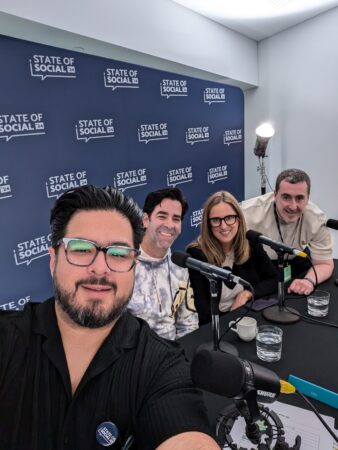
Joining our host Andrés López-Varela this time:
- managing partner at social media consultancy Frankly, Michael Corcoran
- creator economy expert and author of the ICYMI newsletter Lia Haberman
- the ‘only writer’ at Mobile Tech Journal and founder of Emojipedia Jeremy Burge.
Get our panel’s take on what’s going on with the big social platforms and where they’re headed, from Meta to TikTok to X and beyond:
- Are social media companies good or bad for society at large?
- How and why are social platforms reinventing themselves?
- What role should regulation play in the future of social media?
- And much, much more…
Take this with you
- Remember every platform is rented land run for profit, so plan for features, reach and support for creators to disappear tomorrow.
- Use Reddit for social listening and early trend spotting, including checking snark subreddits for the real sentiment around a creator you work with.
- Bank on a new platform’s free organic reach lasting only until advertising arrives, then budget to pay for the same audience.
- Check the licence on any music your brand uses on TikTok: copyright on that platform is a ticking time bomb for brands.
- If your product suits it, test live selling on TikTok Shop: one pre-loved luxury seller runs bidding on its broadcasts and sells well.
Keep reading
- SOS26Nine years in, and the theme argued back
- Delegate resourcesThe reading list
- Delegate resourcesWhat to pack for State of Social